

Why Families Choose Above Ground Entombment
Above ground entombment places casketed remains in a mausoleum crypt or cremated remains in a columbarium niche, rather than in an in-ground grave. It gives families a dedicated place to visit and can help cemeteries and churches make use of limited space.
For families, the choice often comes down to how they want to remember someone: in a shared mausoleum, a private family structure, or a niche for an urn. For the people planning these spaces, access, weather exposure, and long-term care matter too. This guide explains the options and the questions worth asking before choosing one.
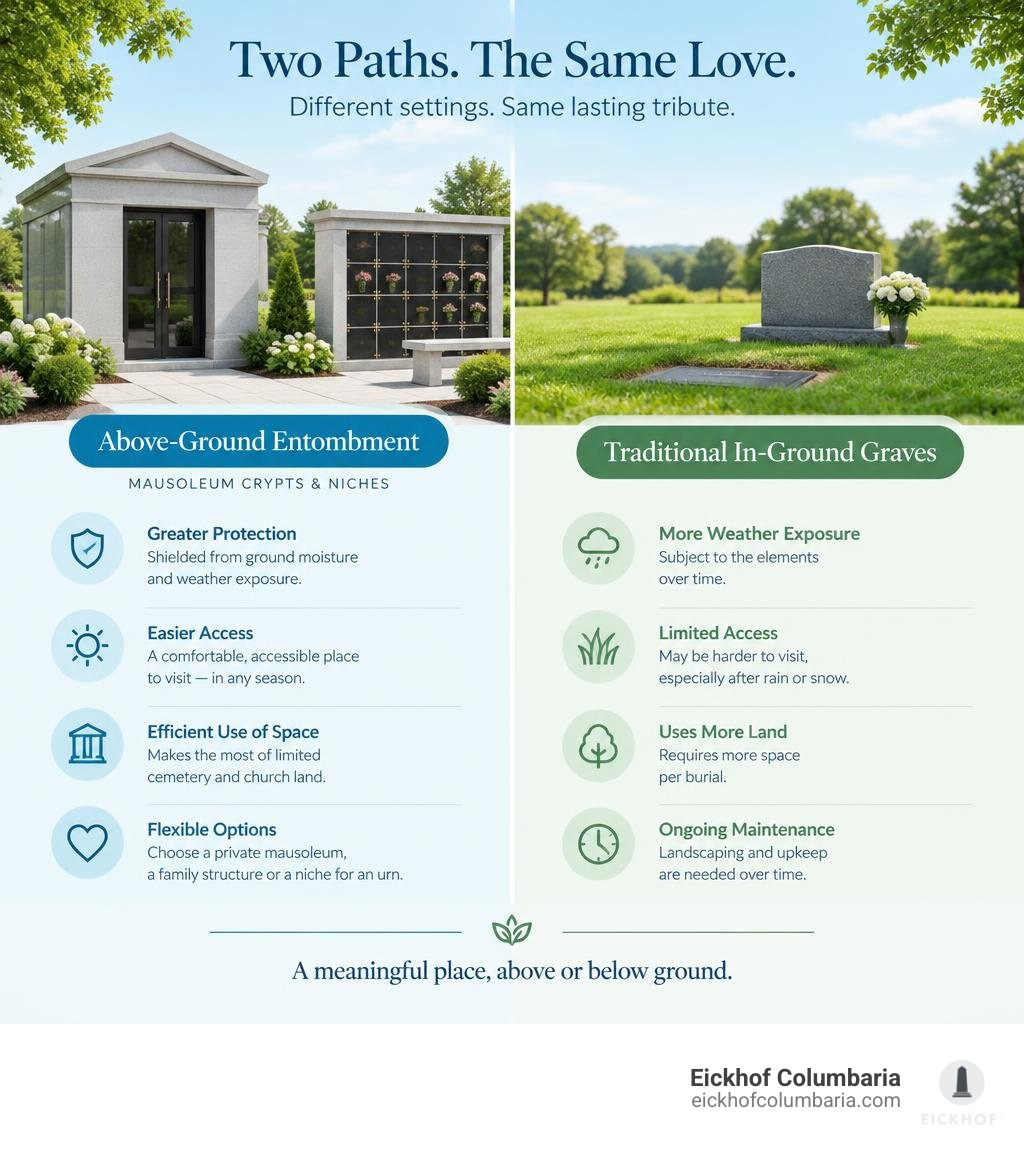
Above ground entombment vocab explained:
What Is Above Ground Entombment and How Does It Compare to Traditional Burial?
At its core, above-ground entombment is the permanent placement of human remains inside a clean, sealed chamber within an engineered stone or concrete structure. Instead of excavating soil and lowering a casket into the earth, the casket is elevated and sealed inside an individual crypt. When dealing with cremated remains, the practice is often termed inurnment, where urns rest securely within dedicated columbarium niches.
To understand how these concepts fit together, reviewing cemetery terminology and burial definitions helps demystify the industry terms. While traditional in-ground burial involves backfilling dirt around a concrete grave liner, entombment places the casket behind sealed inner protective barriers and polished stone shutters.
We often guide families through mausoleum vs ground burial dynamics to help them weigh their long-term priorities. One major factor is environmental exposure. Below the surface, high water tables, shifts in soil density, and seasonal freezing can exert intense pressure on outer burial vaults. Above-ground entombment completely avoids subterranean moisture, offering lasting flood protection and structural defense against ground shifts.
Major world religions and diverse cultural traditions embrace above-ground resting places. From the ancient sepulchers of the Mediterranean to modern community garden structures, entombment has stood for centuries as an honorable, dignified memorial choice.
| Feature | Traditional In-Ground Burial | Above-Ground Entombment |
|---|---|---|
| Placement | Excavated plot below ground | Sealed chamber (crypt or niche) above ground |
| Moisture Exposure | Subject to groundwater, soil moisture, and freezing cycles | Elevated, dry, and protected from subterranean water tables |
| Outer Vault Requirement | Usually requires an outer burial vault or graveliner | Vault built directly into the engineered stone/concrete structure |
| Visitation Environment | Open-air turf; weather-dependent, muddy after rain | Paved walkways, garden courtyards, or climate-controlled halls |
| Land Efficiency | Horizontal footprint (1 grave per plot) | Vertical stacking (saves up to 30% or more cemetery land) |
| Memorialization | Ground-level flat markers or upright headstones | Engraved granite shutters, bronze lettering, or glass fronts |
Primary Types of Above-Ground Structures: Mausoleums, Columbariums, and Lawn Crypts
Above-ground architecture offers several distinct structural designs depending on space, budget, and family preferences.
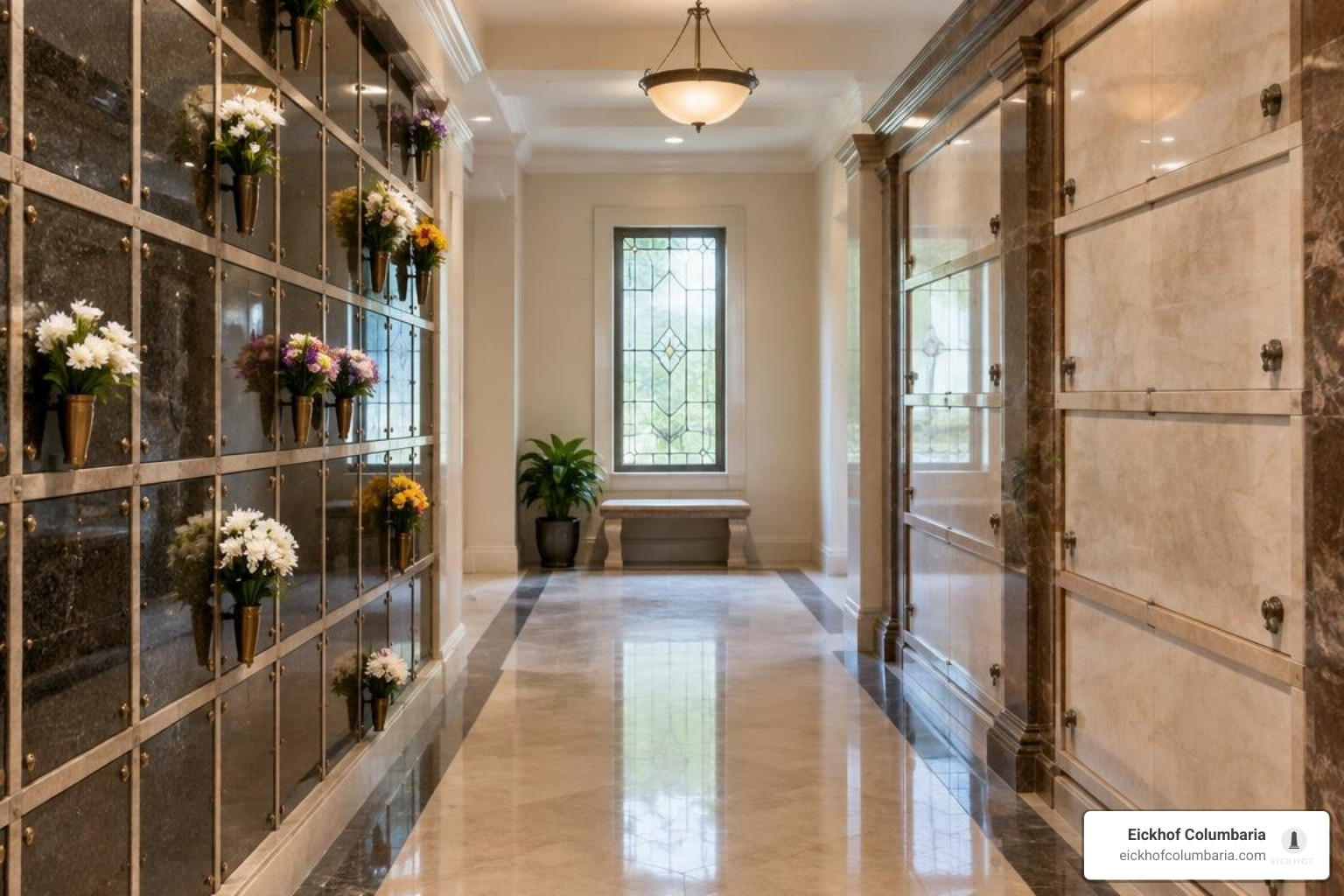
A deeper look into mausoleum architecture and design reveals three primary configurations:
- Indoor (Vestibule) Mausoleums: Walk-in buildings featuring climate-controlled corridors, ambient lighting, and resting benches. Crypts line the interior walls, letting visitors pay their respects protected from wind, rain, and snow.
- Garden (Outdoor) Mausoleums: Open-air stone edifices where crypt openings face exterior courtyards, landscaped walkways, or serene gardens.
- Columbaria: Structures engineered specifically for cremated remains. These contain compact, secure compartments called niches.
- Lawn Crypts: Hybrid systems where pre-installed, reinforced concrete double-depth chambers sit just at or slightly below ground level, covered by manicured lawn.
Families evaluating these layouts can explore comprehensive mausoleum entombment options to choose between full-casket spaces and cremation walls.
For columbarium niches, standard dimensions usually measure 12x12x12 inches (or 10x10x10 inches in compact settings). Niche fronts vary from durable exterior granite shutters to elegant indoor glass fronts that showcase personalized urns and biographical keepsakes.
How Above Ground Entombment Differs for Casketed and Cremated Remains
While casket crypts are engineered to bear significant weight and feature dedicated ventilation channels, cremation niches focus on elegant, compact security. Modern above-ground wall burial systems integrate both options into unified memorial landscapes.
With cremation chosen for over half of all final dispositions across the country, families frequently combine disposition methods. Companion niches can hold two urns together, while tandem or couch crypts allow couples choosing traditional caskets to rest side by side in a single shared footprint. Learn more about burial options for cremated remains to determine which layout suits your family’s wishes.
Public Community Mausoleums vs. Private Family Estates
When choosing an above-ground resting place, families generally decide between shared community structures and dedicated family buildings:
- Public (Community) Mausoleums: Multi-story buildings or large garden walls maintained by a cemetery. Families purchase individual or companion crypt spaces within a shared, grand architectural setting, keeping individual costs manageable.
- Private Family Estates: Standalone, custom-built buildings owned exclusively by a single family. Rooted in private family mausoleum traditions, these structures can range from a two-crypt outdoor sarcophagus to an elaborate walk-in granite estate with custom stained glass, bronze gates, and space for multiple generations.
For a thorough breakdown of private engineering styles, consult our complete guide to above-ground mausoleums.
Key Advantages Driving the Shift Toward Above-Ground Resting Places
Why do more families choose entombment over ground burial each year? Much of the shift comes down to long-term preservation, simple year-round access, and modern architectural beauty. These structures use protective above-ground burial vaults and high-density stone to ensure the resting space remains dignified for generations.
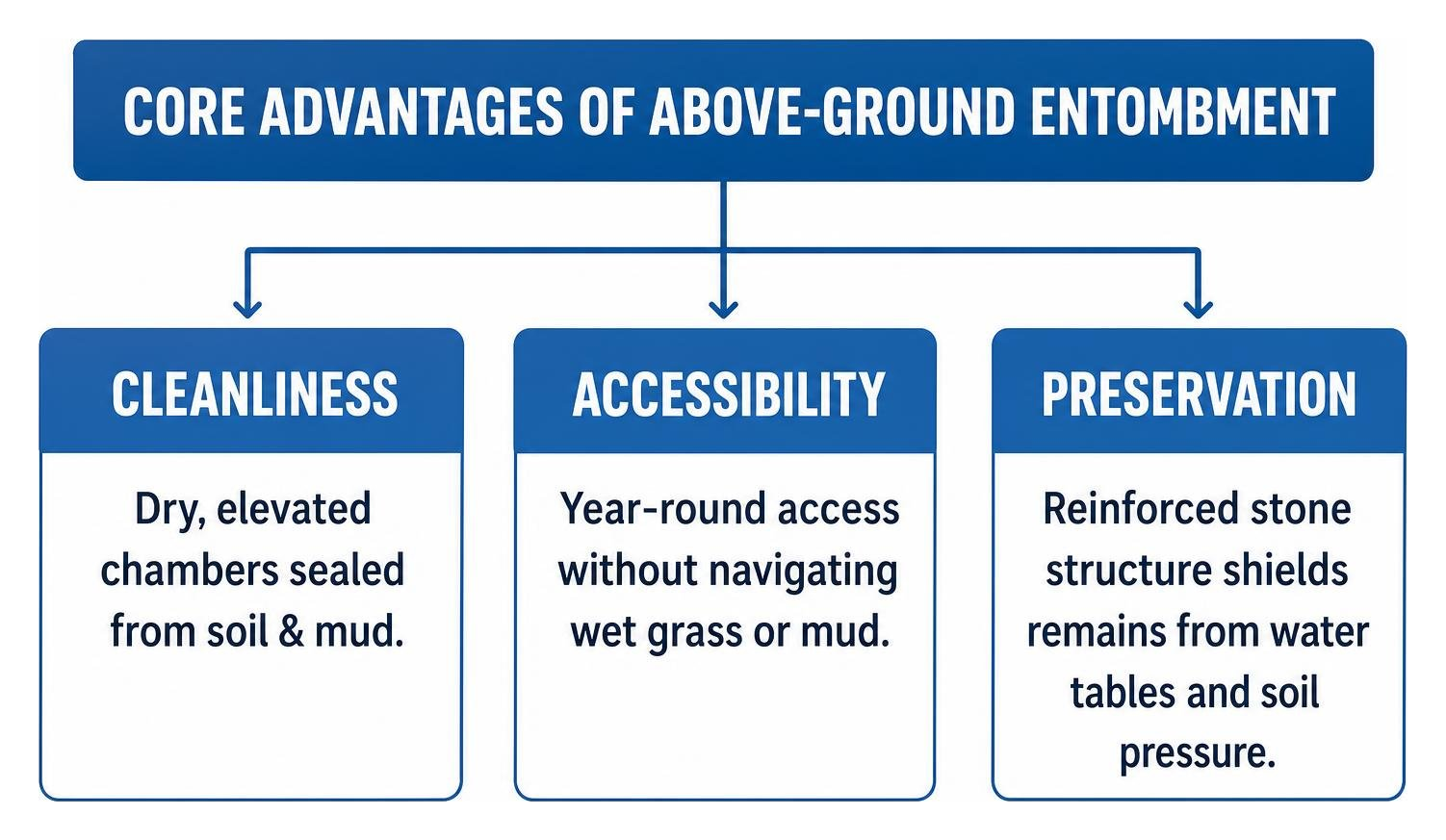
Cleanliness, Climate Control, and Weather Resistance
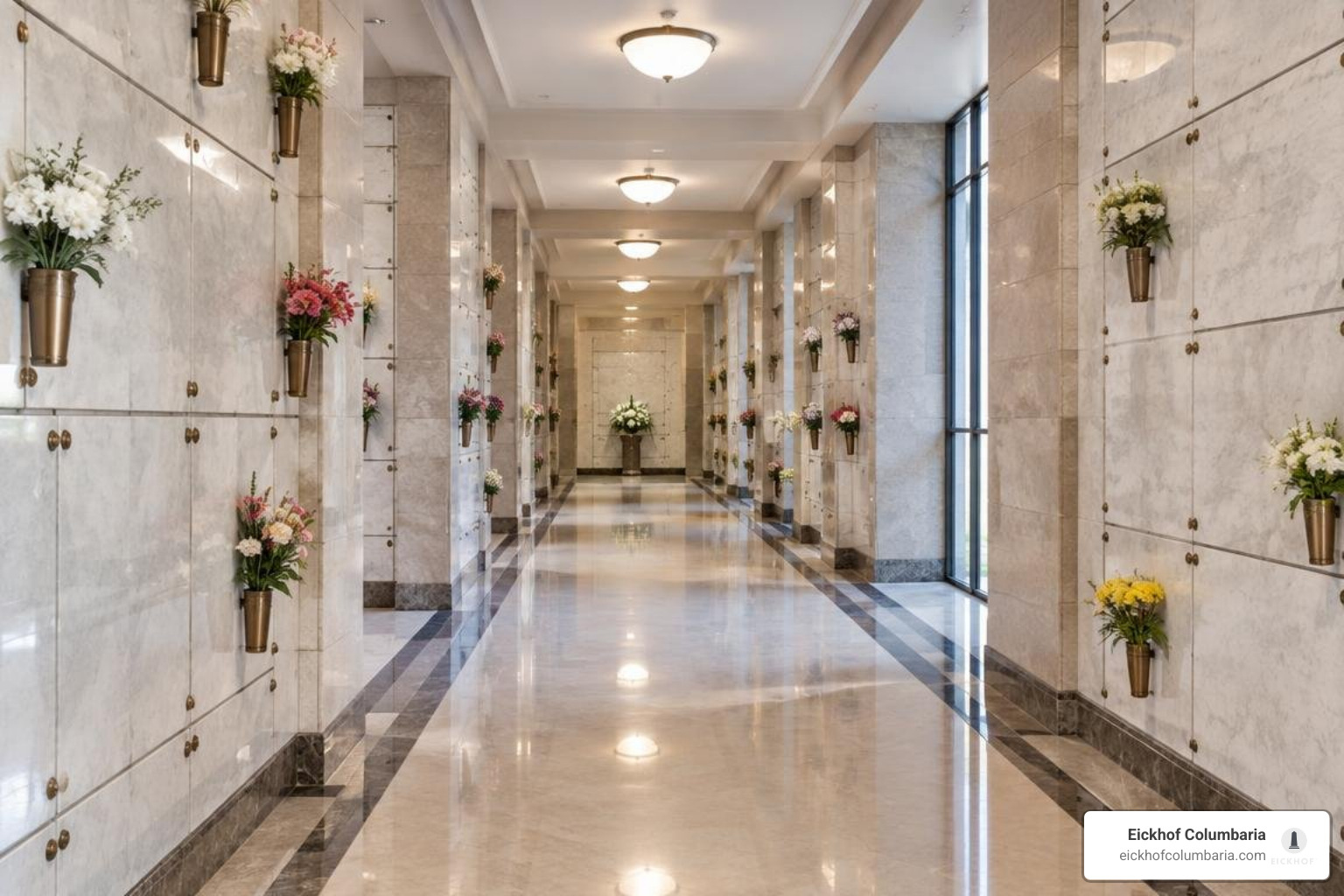
Visiting a traditional in-ground grave can be difficult during winter freezes, autumn downpours, or summer heatwaves. Slogging across waterlogged turf or muddy soil is hardly comfortable for elderly family members.
Indoor mausoleums provide climate-controlled visitation corridors where relatives can reflect in peaceful comfort regardless of the forecast outside. The chamber itself remains elevated, dry, and shielded from exterior elements by heavy stone shutters, protective inner liners, and professional-grade caulking seals.
Structural Preservation, Land Conservation, and Environmental Impact
Durable granite and reinforced concrete structures dramatically reduce a cemetery’s horizontal footprint, conserving up to 30% of surface land compared to sprawling in-ground plots.
From an environmental standpoint, entombment avoids the constant soil displacement of mechanical grave digging. For full caskets, sealed chambers rely on engineered airflow dynamics—a process explored in our guide on preservation dynamics in sealed crypts.
Cost Breakdown and Planning Considerations for Entombment
Budgeting for end-of-life arrangements requires understanding both baseline property prices and secondary cemetery fees. The median cost of a traditional funeral with viewing, service, and ground burial frequently reaches $10,000 once outer burial vaults and plot fees are tallied.
When comparing these figures with cemetery plot and crypt cost breakdowns, above-ground options offer competitive value by eliminating separate vault purchases and routine grave-digging expenses.
| Entombment Space Type | Typical Cost Range | Included Elements & Key Considerations |
|---|---|---|
| Columbarium Niche (Single) | $500 – $3,000 | Compact space for one urn; granite or glass front shutter |
| Columbarium Niche (Companion) | $1,200 – $4,500 | Holds two urns; shared engraved memorialization plaque |
| Public Mausoleum Crypt (Single) | $4,000 – $12,000 | Single casket crypt space (average indoor: $7,000–$8,000) |
| Public Mausoleum Crypt (Companion) | $7,000 – $25,000 | Tandem or side-by-side arrangement for two full caskets |
| Lawn Crypt (Pre-installed) | $2,000 – $5,000 | Concrete chamber near turf level; often includes outer container |
| Private Family Mausoleum (2-Crypt) | $26,000 – $40,000+ | Custom standalone exterior granite structure |
| Private Walk-In Estate (4+ Crypts) | $95,000 – $400,000+ | Walk-in vestibule, custom stained glass, private gates |
Managing the Financial Costs of Above Ground Entombment
While an elaborate private mausoleum represents a significant investment, public mausoleum spaces often save money over time. A mausoleum companion space can cost around $2,190 in certain garden developments, offering an economical choice compared to two separate grave plots, two outer burial vaults, and two separate excavation fees.
To protect against inflation, families frequently turn to a comprehensive burial planning guide to secure their arrangements in advance. Pre-planning locks in current pricing for crypt spaces, inscription services, and opening and closing fees, shielding loved ones from unexpected costs later on.
The Entombment Process, Memorialization, and Pre-Planning Steps
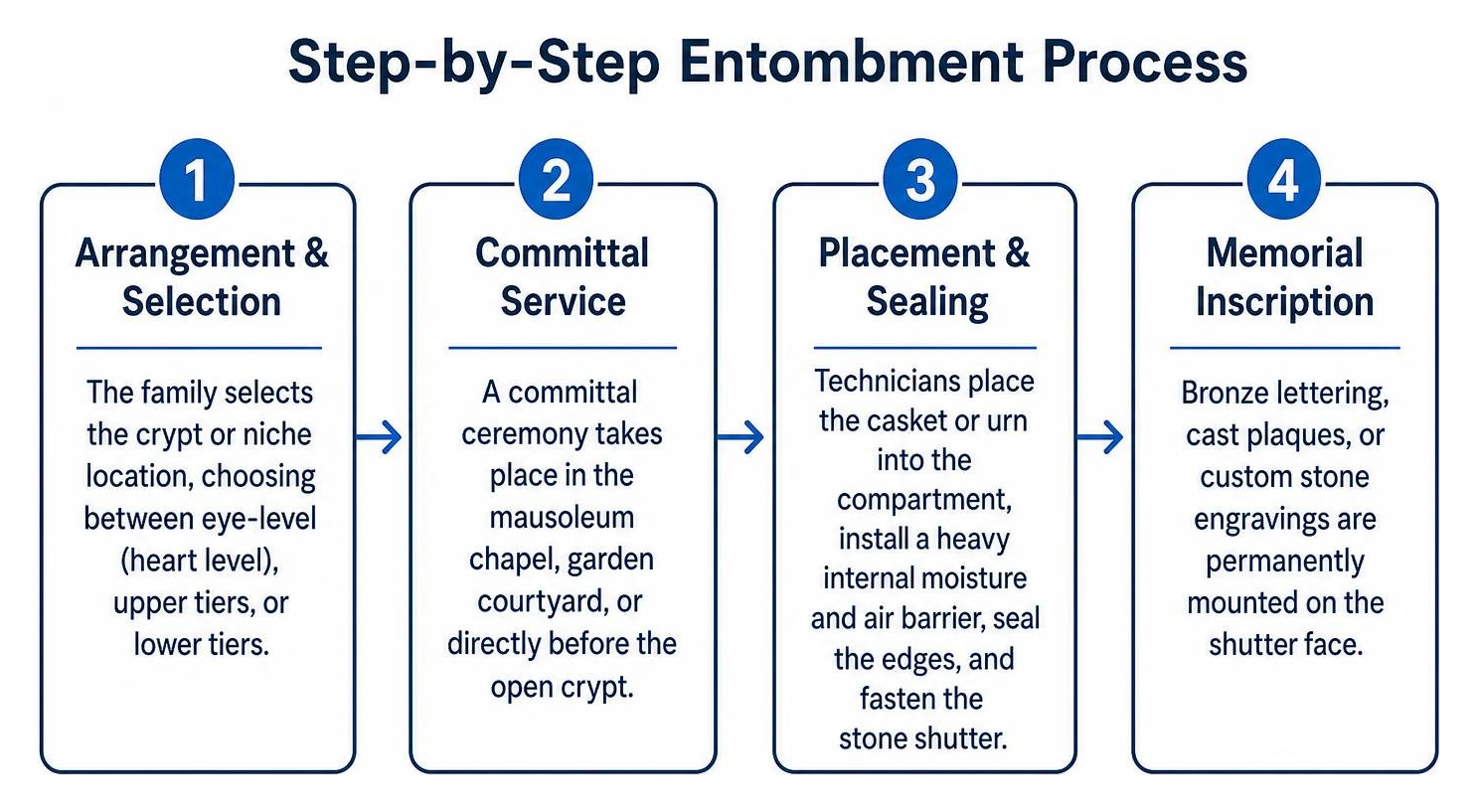
The entombment process follows a clear, dignified sequence:
- Arrangement & Selection: The family selects the crypt or niche location, choosing between eye-level (heart level), upper tiers, or lower tiers.
- Committal Service: A committal ceremony takes place in the mausoleum chapel, garden courtyard, or directly before the open crypt.
- Placement & Sealing: Technicians place the casket or urn into the compartment, install a heavy internal moisture and air barrier, seal the edges, and fasten the stone shutter.
- Memorial Inscription: Bronze lettering, cast plaques, or custom stone engravings are permanently mounted on the shutter face.
Frequently Asked Questions About Above-Ground Entombment
Is above-ground entombment more expensive than in-ground burial?
Not always. While high-tier indoor crypts carry premium prices, a standard garden crypt often costs the same as or less than an in-ground burial once you factor in the grave plot, excavation fees, concrete burial vault, and stone foundation costs.
What happens to a body inside a sealed mausoleum crypt?
Modern mausoleum crypts feature integrated, one-way ventilation systems and protective interior liners. These channels let air circulate while moisture vents safely away, allowing the body to desiccate naturally in a clean, sanitary space without odor or structural strain.
Can cremated remains be entombed in the same structure as caskets?
Yes. Many modern cemeteries build hybrid community mausoleums that feature both full-casket crypts along the main walls and dedicated columbarium niche banks in alcoves and side chapels. Private walk-in family estates can also be designed with both crypts and cremation niches inside the same granite building.
Conclusion
Above-ground entombment provides a dignified, structurally sound, and weather-protected resting place that eases the burden on visiting families. Whether you choose an indoor community mausoleum crypt, a standalone multi-generational family estate, or a finely crafted columbarium niche wall, entombment preserves your family’s heritage cleanly above the earth.
At Eickhof Columbaria, we design, manufacture, and install premium columbaria—including custom niche walls and pre-assembled systems—for cemeteries, churches, and mausoleums nationwide. Our handcrafted, concealed-hardware stone systems are built in-house for seamless, turnkey installation.
Take the next step in your planning journey by understanding resting places beyond traditional in-ground burial and discovering how modern above-ground architecture can honor your loved ones for generations.