

Why Consider an Above-Ground Burial Vault?
An above-ground burial vault is a space for a casket or urn in a structure rather than in the soil. Caskets are placed in mausoleum crypts; cremated remains can be placed in columbarium niches. Unlike an in-ground grave, these spaces do not require a burial plot to be dug for each placement.
For cemetery and church managers, above-ground structures can make better use of limited land and offer families an easy-to-find place to visit. The right choice depends on the remains being placed, available space, cemetery rules, cost, and who will maintain the structure over time.
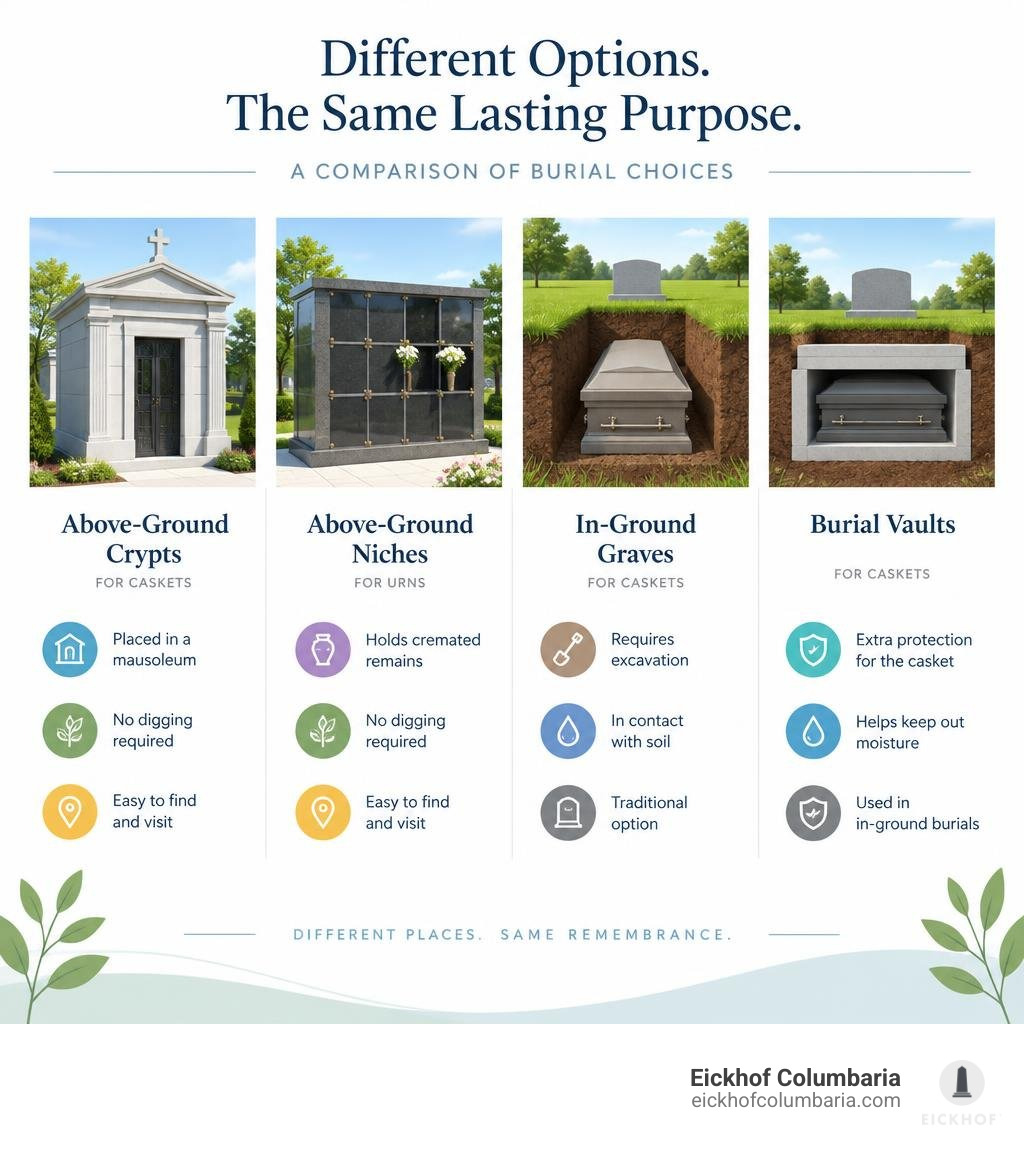
What Is an Above-Ground Burial Vault and How Does It Work?
Choosing a final resting place involves both practical logistics and deep emotional significance. For generations, traditional earth burial was the default assumption for many families. However, an above-ground vault provides a completely dry, clean, and elevated alternative. Instead of lowering a casket or an urn into an excavated trench where it interacts directly with soil moisture and shifting subterranean pressures, entombment takes place within an engineered, structurally sound chamber.
Understanding the various memorial terms is often the first step in planning. A standard glossary of cemetery terminology clarifies that while an in-ground vault serves as an outer concrete box to prevent the earth above from caving in, an above-ground crypt or niche serves as both the secure container and the permanent architectural memorial.
The internal environment of an above-ground chamber functions very differently from an underground grave. When a casket is sealed within a dry, ventilated crypt, the absence of standing groundwater and the presence of steady airflow significantly change how natural breakdown occurs. To better understand these preservation dynamics, families often explore the biological processes of resting above ground, where dehydration and natural mummification occur rather than rapid, moisture-driven decomposition.
| Feature | In-Ground Burial Vault | Mausoleum Crypt (Above-Ground) | Columbarium Niche (Above-Ground) |
|---|---|---|---|
| Intended Remains | Casketed full-body remains | Casketed full-body remains | Cremated remains (urns) |
| Location | Below ground level | Elevated inside or outside a mausoleum wall | Elevated niche wall or freestanding columbarium |
| Moisture Exposure | High (surrounded by soil and groundwater) | None (dry, engineered stone/concrete chamber) | None (sealed, weather-protected compartment) |
| Space Utilization | High land footprint per grave | Low (vertical stacking of multiple crypts) | Minimal (hundreds of urns in a compact footprint) |
| Accessibility | Outdoor turf; uneven or muddy terrain | Flat paved corridors, indoor climate control | Paved courtyards, indoor chapels, or gardens |
Structural Components of an Above-Ground Burial Vault
The structural integrity of an above-ground chamber relies on multi-layer protection engineered to endure for centuries. These units are typically cast from dense, steel-reinforced concrete or precision-cut structural stone.
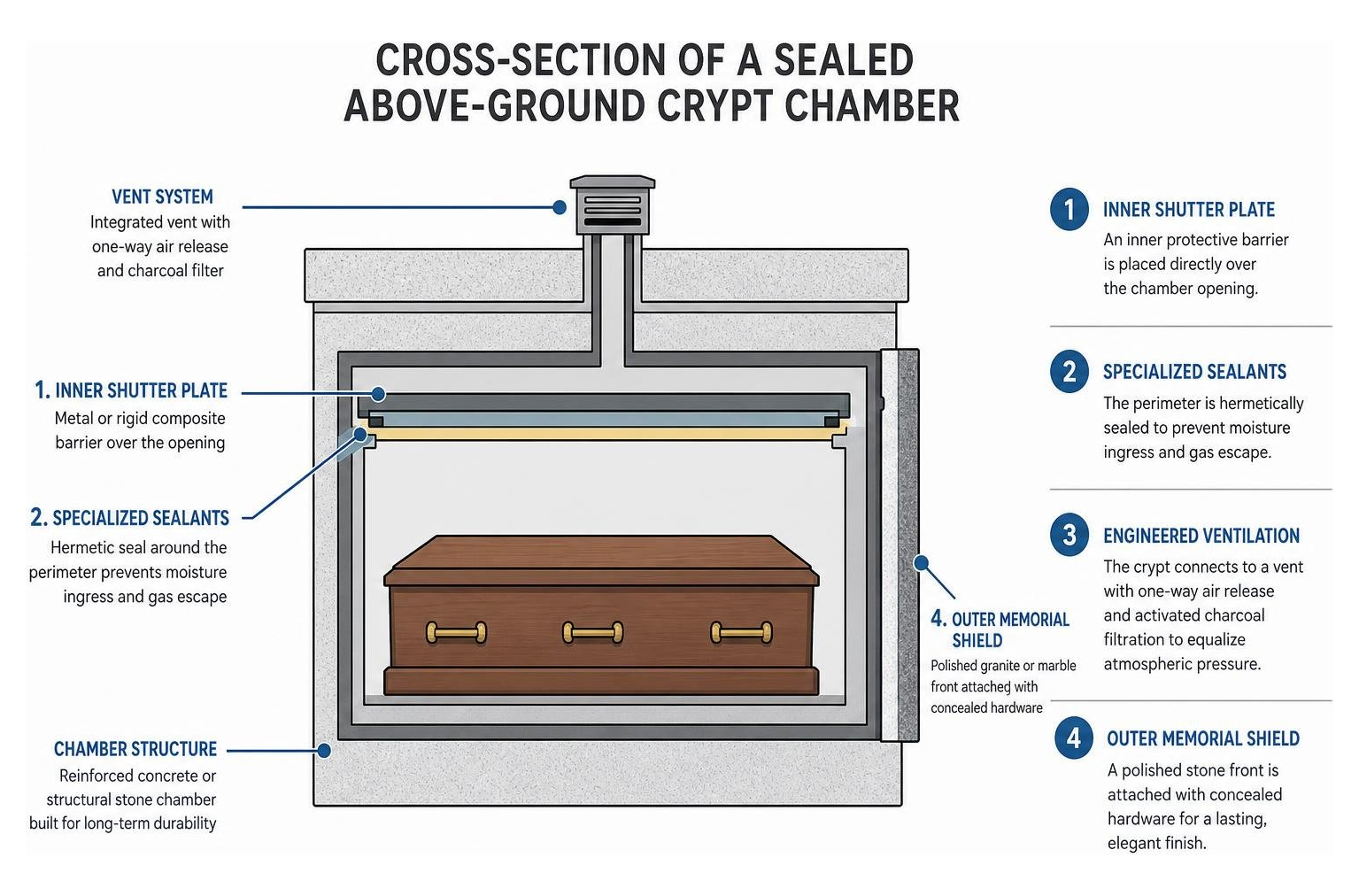
Once a casket is placed inside:
- Inner Shutter Plate: An inner protective barrier made of metal or rigid composite is positioned directly over the chamber opening.
- Specialized Sealants: The perimeter of the inner shutter is hermetically sealed using heavy-duty caulking compounds or industrial-grade bonding adhesives, preventing any moisture ingress or gas escape.
- Engineered Ventilation: The crypt is tied into an integrated venting channel equipped with one-way air release valves and activated charcoal filtration to equalize atmospheric pressure.
- Outer Memorial Shield: A polished exterior front—usually carved from enduring granite or marble—is attached over the sealed inner wall using concealed hardware, creating an elegant final presentation.
These exacting construction methods align with established cemetery conservation guidelines, ensuring that historic monuments and contemporary structures alike resist environmental degradation.
Casket Entombment vs. Cremation Niche Inurnment
Above-ground structures accommodate both traditional full-body caskets and cremated remains, though their internal dimensions differ significantly. Full-body crypts are built with spacious depth and reinforced support to safely bear the weight of heavy metal or hardwood caskets.
By contrast, cremation niches are much more compact. A standard niche measures approximately 12x12x12 inches, providing ample room for one or two standard urns alongside small sentimental keepsakes. Understanding the layout of wall burial options for caskets and cremated remains helps families choose between individual crypts, companion (tandem) crypts where two caskets rest end-to-end, or columbarium banks. For communal memorialization, some cemeteries also incorporate ossuaries—dedicated above-ground or semi-subterranean vaults designed for the collective, dignified placement of cremated remains.
Main Types of Above-Ground Burial Structures
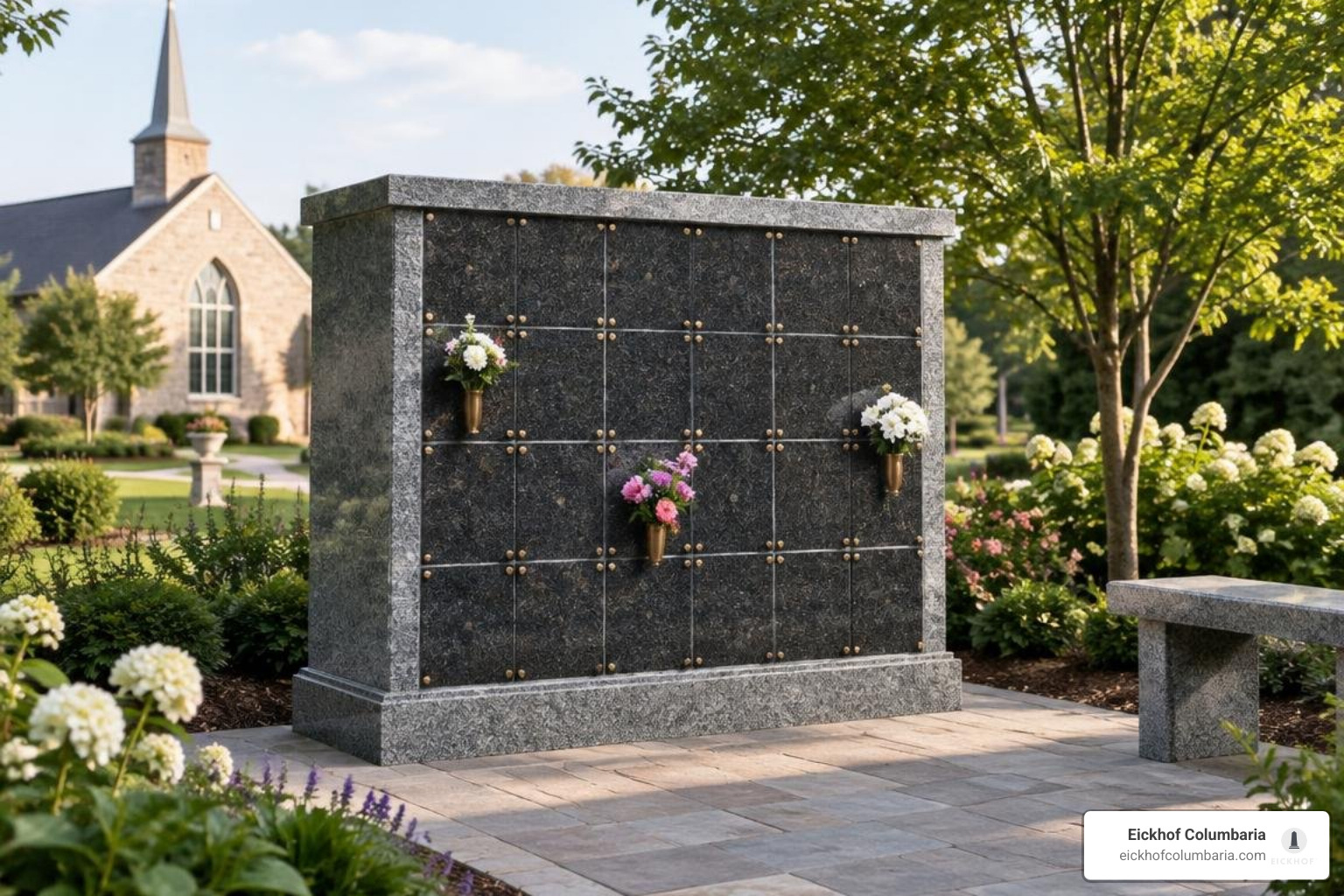
Above-ground entombment has a rich architectural heritage spanning thousands of years, from the Great Pyramids of Giza to the historic mausoleums across Europe. In the United States, public interest expanded dramatically during the 1920s when cemeteries across the country began constructing large-scale public mausoleums. This historic shift transformed above-ground resting places from exclusive luxury monuments into accessible options for everyday families. Today, reviewing a comprehensive guide to mausoleum entombment options reveals a wide variety of architectural forms.
Community Mausoleums vs. Private Family Mausoleums
Above-ground structures generally fall into two primary ownership models:
- Community Mausoleums: These are large, stately buildings owned and managed by a cemetery or memorial organization. They contain hundreds or thousands of crypt spaces and cremation niches available for purchase by individual families. Community mausoleums may feature indoor climate-controlled atriums decorated with stained-glass artwork, or outdoor garden crypts that open directly to landscaped courtyards.
- Private Family Mausoleums: These standalone structures are commissioned exclusively for a single family. They can be custom-designed as walk-in estate buildings featuring classical columns and private bronze gates, or as compact, non-walk-in vestibules. When exploring above-ground mausoleum styles, families find that private buildings allow for deeply personalized architectural tributes that endure for generations.
Columbarium Niches and Cremation Vaults
A columbarium (derived from the Latin word columba, meaning dove) is a dedicated structure designed specifically for the respectful placement of cremated remains. At Eickhof Columbaria, we specialize in designing, manufacturing, and installing precision-crafted columbaria for cemeteries, churches, and civic memorial parks across the United States.
Modern columbaria can be designed as:
- Outdoor Granite Niche Walls: Featuring monolithic granite shutters, weather-tight internal framing, and concealed locking hardware that ensures both security and a clean, stone-faced aesthetic.
- Indoor Glass-Front Niches: Often installed within church chapels or indoor mausoleum galleries, glass-front niches allow families to view the decorative urn and display cherished personal mementos, photographs, or heirloom jewelry behind museum-grade protective glass.
- Modular Memorial Vaults: Compact stone vaults—such as individual or companion granite cubes—placed along memorial garden pathways to create an intimate visitation setting.
Lawn Crypts and Semi-Above Ground Options
For families who appreciate the benefits of pre-constructed vault protection but prefer the look of a traditional open lawn, lawn crypts offer an effective middle ground. A lawn crypt consists of a precast reinforced concrete vault installed just at or slightly below ground level during cemetery development.
These units feature built-in drainage gravel beds and integrated weep-holes that channel rainwater away from the casket. Because the vault structure is pre-installed—frequently in double-depth configurations to accommodate couples—the cemetery does not need to excavate unstable dirt graves at the time of need, providing a secure, dry interment beneath manicured sod.
Key Benefits of Choosing Above-Ground Entombment
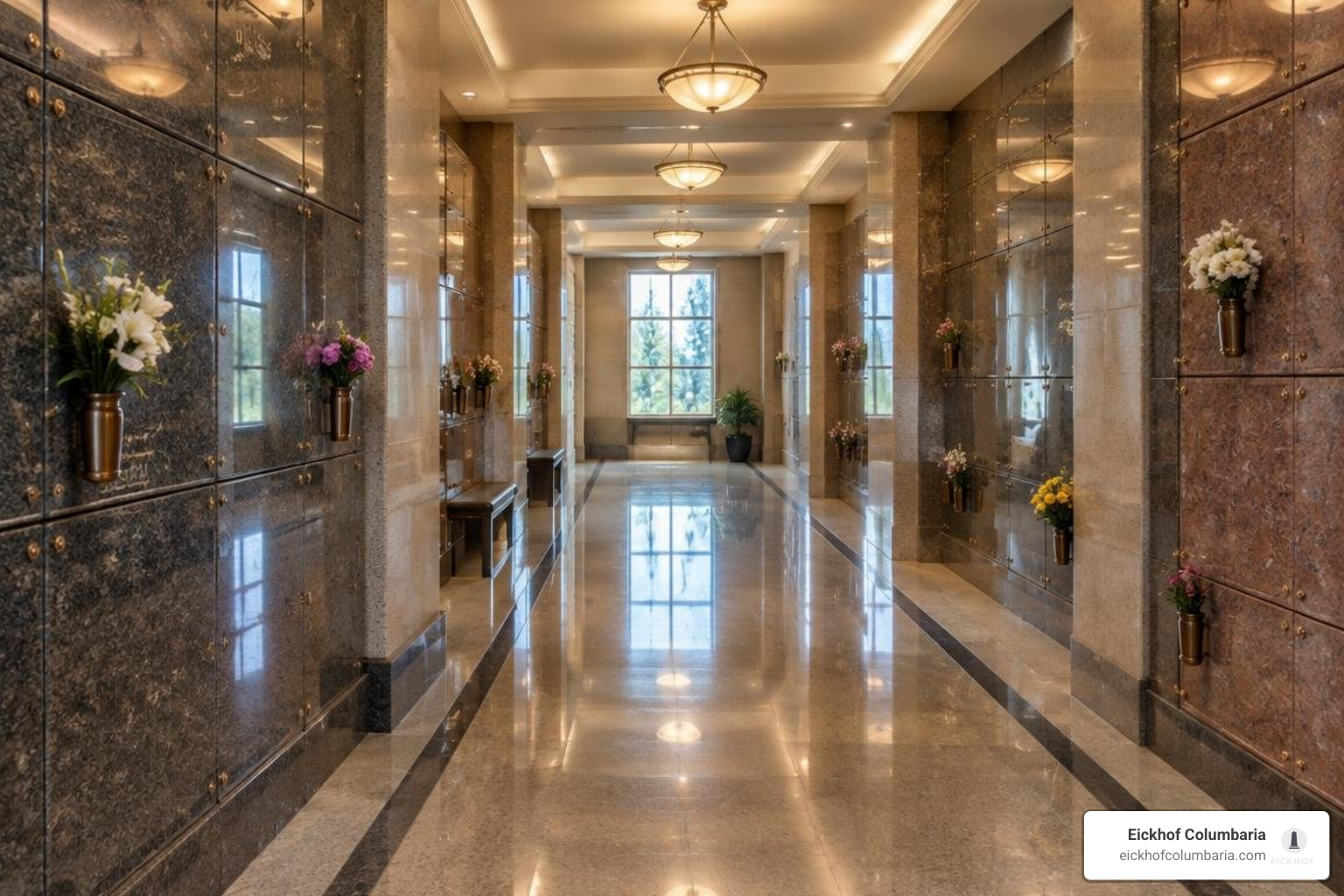
When weighing mausoleum entombment against ground burial, many people find that above-ground placement resolves the long-term environmental concerns associated with subsurface graves. Exploring modern resting place choices beyond traditional burial highlights several distinct practical advantages.
Protection from Soil Elements and Settling
The underground environment is naturally dynamic. Seasonal freeze-thaw cycles cause the ground to expand and contract, while high water tables can subject underground containers to constant hydrostatic pressure. Over decades, this moisture and soil movement can cause graves to settle or sink, necessitating periodic lawn regrading and headstone realignment.
Above-ground vaults completely eliminate these subterranean issues. Because the crypt or niche sits above the ground on a solid foundation, the casket or urn remains entirely clean and dry, protected from mud, corrosive soil chemistry, and shifting earth.
Comfortable and Accessible Year-Round Visitation
Visiting a gravesite in a traditional cemetery often requires walking across uneven grass, soft mud, or snowbanks, which can be difficult or hazardous for aging relatives and visitors with mobility challenges.
Indoor community mausoleums and paved columbarium courtyards offer clean, level, and well-lit walkways. Indoor facilities provide climate-controlled heating and air conditioning, comfortable seating benches, and background music, allowing families to visit and reflect in complete comfort regardless of rain, snow, or summer heat.
Materials, Durability, and Maintenance Requirements
Above-ground memorial structures are designed to stand as permanent tributes, making material selection a critical consideration for long-term preservation.
Selecting Materials for an Above-Ground Burial Vault
- Granite: The gold standard for outdoor mausoleum exteriors and columbarium shutters. Granite is an igneous rock formed under intense heat and pressure, giving it exceptional density and resistance to acidic rainwater, freeze-thaw cracking, and biological growth. It can be finished to a mirror-like polish that retains its luster for centuries.
- Marble: Renowned for its classical elegance and delicate veining patterns. While marble is slightly softer and more porous than granite—making it better suited for indoor crypt fronts or sheltered pavilions—it provides a timeless, warm aesthetic.
- Reinforced Concrete: The structural backbone of mausoleum interiors. Modern precast crypts use high-strength, low-porosity concrete reinforced with corrosion-resistant rebar to guarantee structural stability.
- Bronze: Commonly used for memorial plaques, ornamental lettering, and artistic bas-relief accents. Bronze forms a natural, protective brown-green patina over time that shields the underlying metal from decay.
Maintaining these structures is remarkably straightforward. Reputable cemeteries maintain an endowed perpetual care trust fund, where a percentage of every purchase is set aside to cover routine building maintenance, roof inspections, climate control operation, and periodic stone cleaning using non-abrasive, pH-neutral cleaners.
Cost Comparisons and How to Arrange Above-Ground Entombment
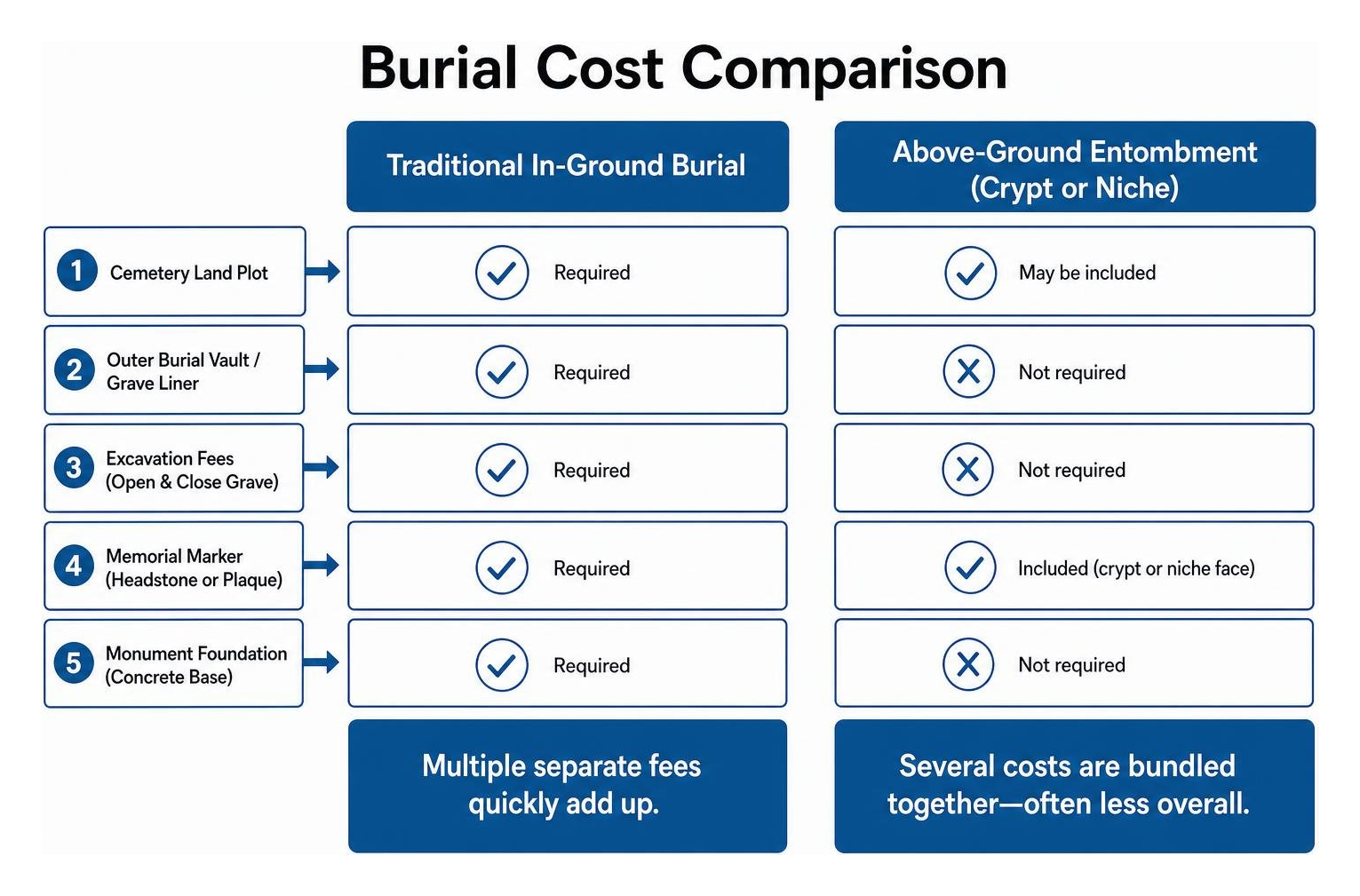
When families evaluate burial expenses, they are often surprised to discover that above-ground entombment is comparable to—and sometimes less expensive than—traditional in-ground burial. When evaluating mausoleum and niche pricing structures, it is essential to look at the total combined cost rather than just the initial price tag.
Financial Breakdown: Above-Ground vs. In-Ground Burial
A traditional earth burial includes several separate fees that quickly accumulate:
- The cemetery land plot.
- The outer burial vault or grave liner (required by almost all modern cemeteries).
- Heavy machinery excavation fees (opening and closing the grave).
- An engraved granite headstone or bronze marker.
- The concrete foundation fee to support the monument.
With an above-ground crypt or columbarium niche, several of these expenses are bundled together. You do not need to purchase a separate outer burial container, pay for backhoe earth excavation, or buy an independent monument foundation. The crypt or niche face itself serves as the permanent memorial marker.
Step-by-Step Guide to Arranging Above-Ground Placement
Arranging an entombment involves a straightforward sequence of steps, whether you are planning ahead (preneed) or making immediate arrangements (at-need):
- Select the Structure Type: Decide between an indoor community mausoleum, an outdoor garden crypt, or a dedicated columbarium niche wall based on your family’s personal preferences and budget.
- Choose the Elevation Level: In a crypt or columbarium wall, spaces are arranged in tiers. Eye-level spaces (often called “heart-level” or “touch-level”) typically carry a premium price, while upper tiers (“heaven-level”) or lower tiers (“faith-level”) are generally more economical.
- Review Cemetery Regulations: Verify what lettering styles, bronze emblems, or vase attachments are permitted on the stone face.
- Coordinate Placement Services: When the time comes, review the step-by-step casket placement procedures with your funeral director and cemetery superintendent to ensure the entombment service flows smoothly and respectfully.
Frequently Asked Questions About Above-Ground Burials
How does an above-ground burial vault prevent odors and moisture?
Engineered crypts are built with internal slope lines and integrated venting systems. When the inner shutter is sealed with industrial bonding caulk, air within the chamber is directed through one-way air release valves and activated charcoal filtration units. This pressure-equalization system prevents internal pressure spikes while filtering out all odors and moisture vapor.
Can two people share a single above-ground crypt or niche?
Yes. Cemeteries offer companion crypts for full-body burial, which come in two common configurations: tandem crypts (where two caskets rest end-to-end lengthwise) and couch crypts (where caskets rest side-by-side). For cremation, standard 12x12x12-inch columbarium niches are frequently designed to accommodate two companion urns under a shared inscribed shutter.
What happens to an above-ground vault during severe weather or flooding?
Above-ground structures are engineered to withstand severe weather events. Because mausoleums and columbaria are elevated on reinforced concrete slab foundations, the interred caskets and urns remain safely above ground-level flash flooding, mudslides, and subsurface water intrusion. High-grade granite and precision-anchored stone panels also offer exceptional wind and impact resistance during major storms.
Conclusion
Choosing a final resting place is one of the most lasting and considerate decisions you can make for your loved ones. Above-ground burial vaults offer an exceptional blend of dignity, structural permanence, and practical convenience—shielding remains from the elements while providing a serene, accessible environment for future generations to visit.
Whether you are considering a shared community space or planning an above-ground burial in a private mausoleum or columbarium, modern stone engineering ensures that your family’s legacy will be honored with beauty and enduring strength. At Eickhof Columbaria, we take pride in manufacturing handcrafted, concealed-hardware stone systems that stand the test of time. Reach out to our design and installation team today to discover how our custom columbarium solutions can enhance your cemetery, church, or private estate memorial garden.