

How Much Does It Cost to Bury Cremated Ashes in 2026?
If you’re asking how much it costs to bury cremated ashes, budget $1,000 to $5,000 for a cemetery burial in the U.S. That typically covers a cremation plot, a $300 to $800 opening and closing fee, an urn, and any required urn vault. A memorial marker can add $500 to $2,000 or more. Cremation itself is a separate expense.
Using an existing family grave may lower the burial cost to about $500 to $2,500, if the cemetery permits another interment. Ask for an itemized quote before choosing a plot: cemetery rules and local prices can change the total.
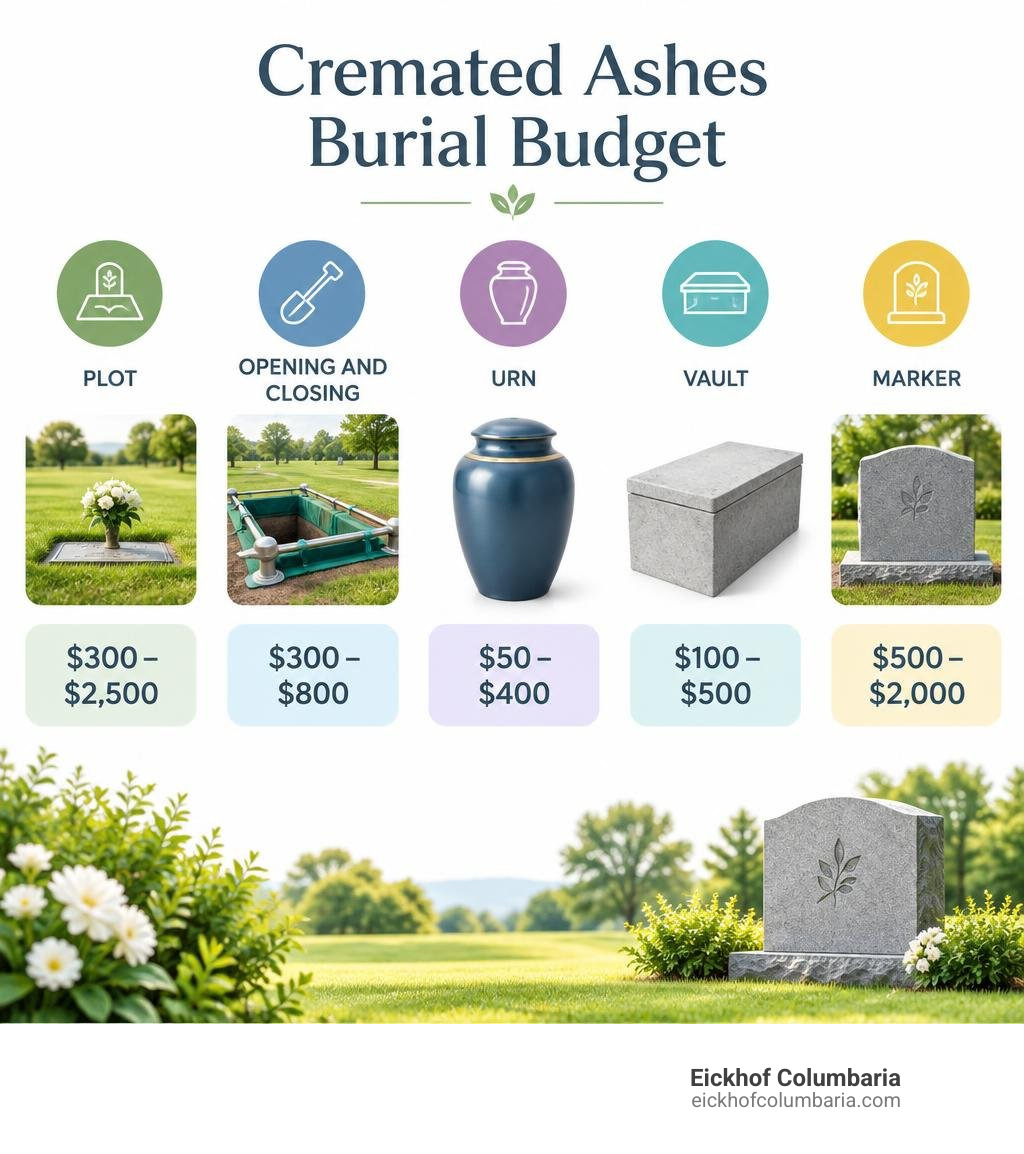
Simple guide to how much does it cost to bury cremated ashes terms:
Line-by-Line Breakdown: How Much Does It Cost to Bury Cremated Ashes?
When planning a permanent resting place, many families are surprised to discover that the cemetery bill contains several distinct line items. Burying cremated remains is not simply a matter of purchasing a small patch of earth; it involves labor, protective structures, memorialization, and ongoing care endowments.
To help you budget accurately, here is a breakdown of what each component typically costs across the United States.
| Expense Category | Low Estimate | Average / Mid-Range | Premium / High-End |
|---|---|---|---|
| Cremation Burial Plot | $300 | $1,000 | $2,500+ |
| Opening & Closing Fees | $300 | $550 | $800 – $1,200 |
| Urn Vault / Outer Container | $100 | $300 | $500 – $1,500 |
| Cremation Urn | $50 | $200 | $400 – $2,000 |
| Memorial Marker / Headstone | $500 | $1,200 | $2,000 – $5,000+ |
| Administrative & Permits | $25 | $100 | $250 |
| Total Estimated Burial Cost | $1,275 | $3,350 | $6,450+ |
Cremation Plot and Interment Rights Pricing
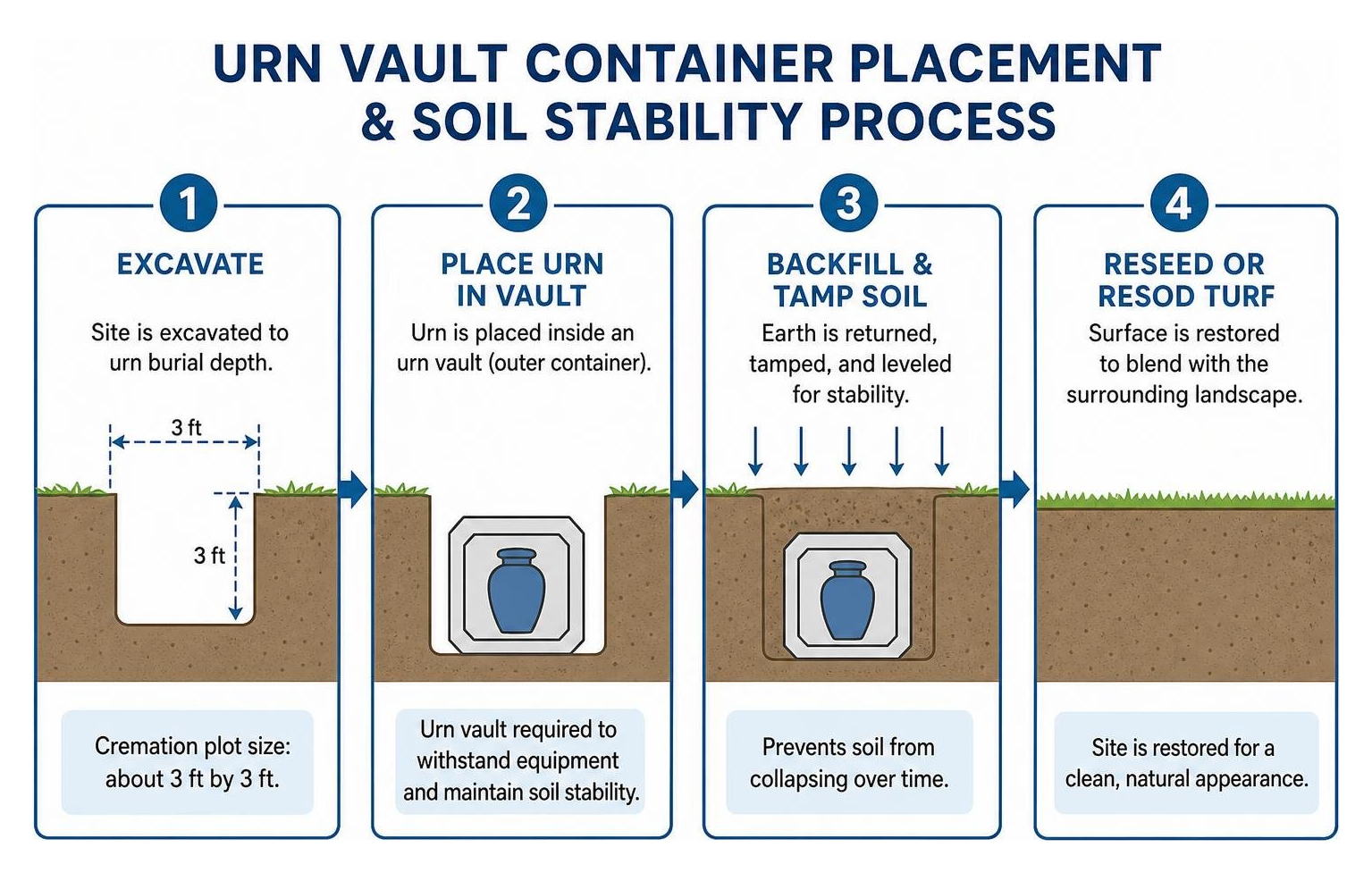
A standard in-ground cremation plot is smaller than a traditional casket plot, usually measuring about 3 feet by 3 feet. Because less square footage is required, plots for ashes cost substantially less than full-body graves.
- Public/Municipal Cemetery Plots: Typically range between $300 and $1,000.
- Private or Commercial Cemeteries: Frequently cost between $1,000 and $2,500+.
- Dedicated Cremation Gardens: These beautifully landscaped sections often price plots between $500 and $2,000, with some premium garden spaces charging more for proximity to water features or mature trees.
When you buy a plot, you are purchasing the “right of interment”—the perpetual right to be buried in that specific location—rather than the actual piece of real estate.
Opening and Closing Fees for Urn Burial
Opening and closing fees cover the professional excavation of the site, hand-digging or mechanical digging, placing the urn, backfilling the earth, tamping down the soil, and reseeding or resodding the turf.
For an in-ground urn burial, standard opening and closing charges range from $300 to $800. In some prestigious metropolitan cemeteries, this fee can climb above $1,000.
Timing also dictates labor costs. Most municipal and private cemeteries add surcharges for weekend, late-afternoon, or holiday burials. Checking official municipal bereavement fees reveals that weekend interments frequently carry an additional surcharge ranging from $100 to $300 due to overtime labor. Scheduling your committal service during standard weekday working hours is an easy way to avoid these extra fees.
Urn Vault Requirements and Container Expenses
An urn vault is an outer burial container that encases the urn in the ground. Its primary purpose is not necessarily to protect the ashes from moisture, but to withstand the weight of heavy earth-moving equipment and prevent the soil above from collapsing over time.
- Basic Composite or Polymer Vaults: $100 to $250
- Concrete Urn Vaults: $200 to $600
- Lined Bronze, Copper, or Marble Vaults: $600 to $1,500+
Under the Federal Trade Commission’s (FTC) Funeral Rule, cemeteries cannot legally force you to purchase an urn vault directly from them. However, cemetery bylaws can mandate that an outer container be used. Green cemeteries and natural burial grounds generally waive this requirement, permitting direct-earth burials with biodegradable urns.
Permanent Memorial Markers and Engraving Fees
Marking a final resting place ensures future generations have a physical landmark to visit. Pricing depends on material, size, and cemetery regulations:
- Flat Bronze or Granite Markers: The most common choice for cremation sections, costing between $500 and $2,000.
- Upright Headstones: If the cemetery section permits upright monuments, prices range from $1,500 to $5,000+.
- Engraving and Inscription: Adding custom names, dates, or epitaphs usually costs $100 to $300, or around $20 to $30 per character.
- Concrete Foundation and Installation: Cemeteries often charge an installation or setting fee of $100 to $400 to pour a level concrete pad and place the stone.
Administrative, Permit, and Perpetual Care Charges
Cemeteries incur long-term landscaping and administrative costs. These show up on your itemized invoice as:
- Burial / Disposition Permits: Usually under $25 to $50, mandated by local health departments.
- Administrative Filing Fees: $25 to $200 for processing deed transfers and recording interment registries.
- Perpetual Care Fees: Many states require cemeteries to allocate 10% to 15% of the plot price into an endowment care trust fund. This one-time fee—typically $100 to $400—ensures lawn mowing, road maintenance, and general grounds upkeep continue indefinitely. Reviewing columbarium niche and maintenance pricing provides clear insight into how perpetual care funds are structured across different memorial environments.
Comparing Final Resting Places for Cremated Remains
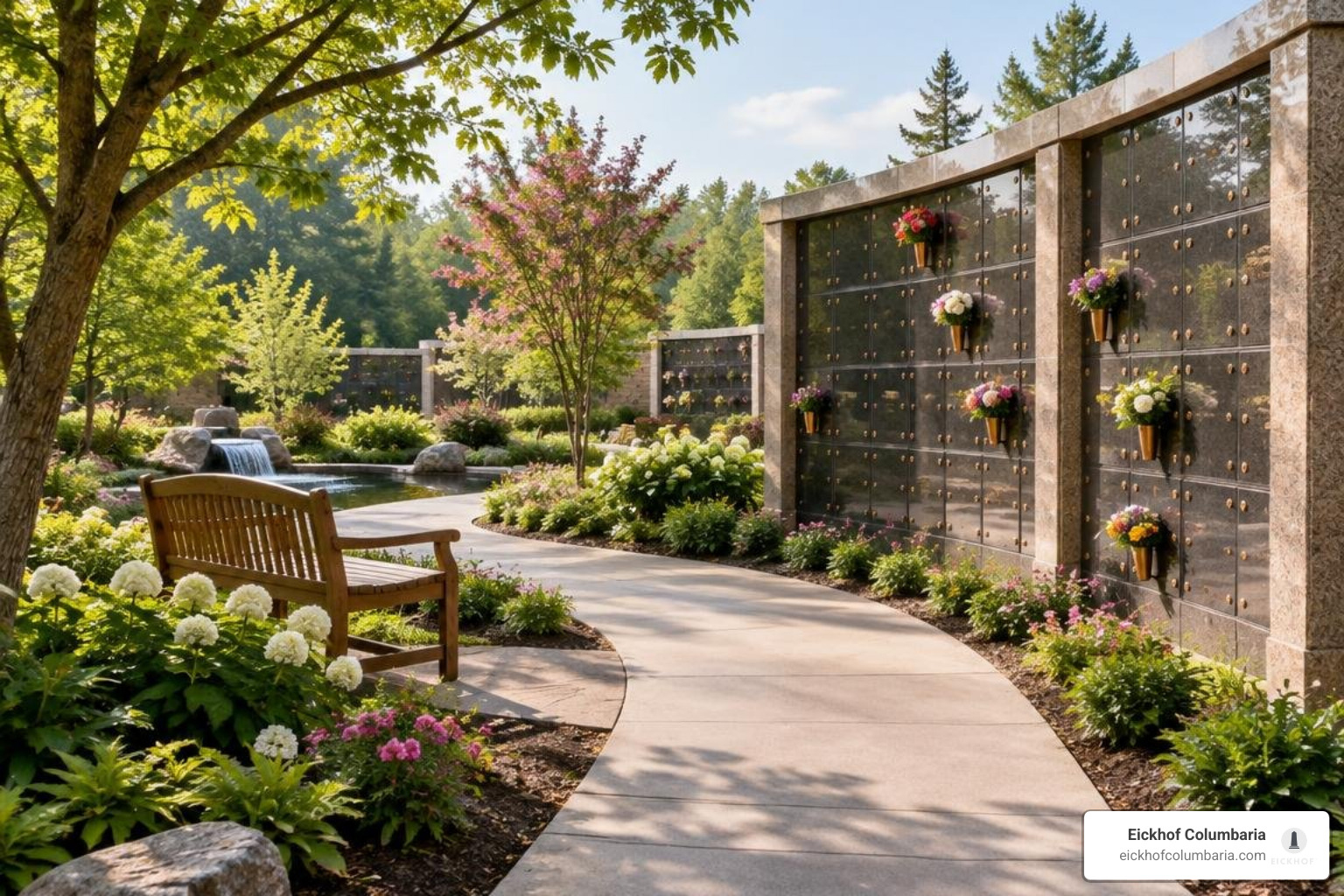
While in-ground burial is the traditional approach, families exploring cremation today have multiple distinct resting place options. Comparing these alternatives helps clarify both the aesthetic experience and the long-term expenses.
How Much Does It Cost to Bury Cremated Ashes in an Existing Grave?
If your family already owns a standard full-size burial plot where a relative is buried (or where a plot was purchased years ago), you can often add an urn to that space.
By sharing a cemetery plot with family, you eliminate the need to purchase new land. However, it is not completely free. Cemeteries typically charge:
- A “Second Right of Interment” fee: $200 to $1,000
- Opening and closing fees: $300 to $800
- Vault and marker updating fees: $200 to $600
In total, burying an urn in an existing grave typically costs $500 to $2,500, saving you 30% to 60% compared to starting from scratch. Always ensure you obtain written authorization from the primary deed holder before finalizing plans.
In-Ground Burial vs. Columbarium Niches and Mausoleums
An increasingly popular alternative to ground burial is above-ground placement in a dedicated structure called a columbarium. An outdoor or indoor columbarium houses individual compartments (niches) designed specifically for urns.
| Feature | In-Ground Cremation Plot | Columbarium Niche | Mausoleum Crypt Niche |
|---|---|---|---|
| Average Space Cost | $300 – $2,500 | $700 – $4,000 | $2,000 – $10,000 |
| Requires Urn Vault? | Yes (in most cemeteries) | No | No |
| Opening / Closing Labor | $300 – $800 | $150 – $400 | $300 – $600 |
| Memorialization Type | Ground marker / headstone | Engraved stone/glass face | Inscribed marble shutter |
| Maintenance Exposure | Subject to ground settling | Protected stone wall | Climate-controlled or outdoor |
To evaluate costs across different styles, exploring a realistic columbarium niche cost breakdown or reading about alternative resting places beyond in-ground burial can help you decide whether an above-ground granite niche wall or a ground plot better fits your family’s preferences.
Graveside Committal Ceremonies
A committal service is a brief gathering held directly at the graveside or columbarium wall just before the urn is interred.
- Basic Graveside Setup: If you request chairs, a canopy tent, and a lowering device or urn stand from the cemetery, expect an equipment rental fee of $150 to $400.
- Clergy or Celebrant Honorarium: $150 to $300.
- Service Comparisons: Examining differences between burial and cremation service costs highlights how simple committal ceremonies provide deep closure without the large venue fees associated with traditional chapel visitations.
Key Factors That Influence Cremation Burial Pricing
Two families purchasing the exact same style of urn and marker can end up with wildly different final bills depending on where the interment takes place.
How Much It Costs to Bury Cremated Ashes Across Public vs. Private Cemeteries
- Municipal / City Cemeteries: Owned and subsidized by local taxpayers, public cemeteries offer the most affordable plot and opening/closing rates. Total burial packages often stay between $800 and $2,000. However, non-residents of the municipality are often subject to surcharges of 50% to 100%.
- Religious Cemeteries: Church-owned or diocesan cemeteries provide mid-tier pricing, often incorporating consecrated ground and perpetual spiritual care, with packages averaging $1,200 to $3,500.
- Private Commercial Cemeteries: Corporate-owned or historical private memorial parks offer immaculately curated landscaping, extensive security, and premium amenities. Here, total cremation burial expenses regularly range from $3,000 to $6,000+.
Urban vs. Rural Cemetery Fee Variations
Real estate valuation and prevailing labor wages heavily dictate cemetery pricing:
- Urban Centers (e.g., New York, Chicago, San Francisco): Cemetery land is extremely scarce. A single cremation plot can easily cost $2,500 to $5,000, with opening/closing fees exceeding $1,000.
- Rural and Small-Town Cemeteries: Ample land and lower overhead keep rural plot costs between $200 and $700, with opening and closing charges frequently under $400.
Practical Strategies to Reduce Ash Burial and Memorial Expenses
You do not have to overspend to create a dignified, lasting tribute. Use these practical strategies to keep expenses manageable:
- 1. Inquire About Existing Plots: Check family records to see if an ancestor’s plot has available space for second interment rights.
- 2. Shop for Urns Online: Buying a direct-to-consumer urn online can save you 40% to 60% compared to purchasing directly from a funeral home catalog.
- 3. Check Vault Rules Early: If cost is a primary concern, inquire whether the cemetery allows direct burial without a vault, or consider a green burial section.
- 4. Choose Flat Ground Markers: Flat bronze or lawn-level granite markers cost hundreds less to purchase, engrave, and set than upright monuments.
- 5. Schedule for Mid-Week: Avoid weekend and holiday surcharges by holding the burial service between Tuesday and Thursday.
- 6. Consider Public Municipal Cemeteries: Municipal grounds provide serene, respectful final resting places at a fraction of commercial rates.
Understanding Urn and Vault Costs
You have the legal right under federal law to provide your own urn and urn vault without paying a handling fee or penalty to the cemetery or funeral home.
Standard decorative urns from funeral providers range from $150 to $600, while equivalent durable metal, wood, or ceramic urns purchased independently often cost $50 to $200. If you are placing the urn inside a sturdy, sealed concrete vault, there is no structural need to buy an expensive, heavy-duty urn; a simple, elegant container will perform just as well.
Budgeting for Memorial Markers and Scheduling
When selecting headstones, simplicity often yields timeless beauty. Standardizing font choices, avoiding complex photo-ceramic inlays, and purchasing granite sourced regionally can reduce monument bills by $500 or more.
Additionally, request an itemized fee sheet from the cemetery administrator before locking in your service date. Ensuring your ceremony finishes before 3:00 PM on a weekday avoids both late-day overtime fees and weekend penalty rates.
Frequently Asked Questions About Burying Cremated Ashes
Do cemeteries legally require an urn vault for cremated ashes?
There is no state or federal law requiring an urn vault. However, individual cemetery bylaws frequently require them for in-ground burials. The requirement exists for maintenance purposes: over time, decomposing containers or empty air pockets can cause the topsoil to settle, creating uneven lawn dips that can damage mowing equipment.
How deep are cremated ashes buried in a cemetery?
Unlike traditional casket burials that require depths of 5 to 6 feet, cremated remains are typically buried between 18 and 36 inches deep. This provides sufficient soil coverage above the frost line to protect the urn and vault while making hand excavation straightforward.
Is it cheaper to bury cremated ashes than a traditional casket?
Yes, substantially cheaper. A traditional casket burial in the U.S. averages between $8,000 and $15,000, accounting for large burial plots, heavy metal caskets ($2,000–$5,000), large concrete vaults ($1,500+), embalming, and complex grave excavation. Burying cremated ashes averages $1,000 to $5,000, representing an overall savings of 50% to 80%.
Conclusion
Calculating the cost of burying cremated ashes comes down to understanding the individual fees involved: plot purchase, grave opening and closing, outer burial containers, and permanent markers. By asking for itemized price lists, exploring municipal grounds, or utilizing an existing family plot, you can arrange a deeply meaningful, permanent resting place that fits your family’s budget.
At Eickhof Columbaria, we partner with cemeteries, churches, and memorial parks across the nation to build handcrafted stone columbaria that provide families with beautiful, space-efficient above-ground resting places. To discover how modern memorial designs can provide dignified, cost-effective options for your community, explore our complete guide to cemetery ash placement options and memorial pricing.