

A Great Cemetery Niche Design Balances Durability, Space, and Meaning
A successful cemetery niche design starts with three practical choices: use weather-resistant materials, size each compartment for the intended urn capacity, and choose a clean memorial face that fits the setting and cemetery rules. For facilities managers, the best systems also simplify installation, limit long-term upkeep, and create an accessible place for families to visit.
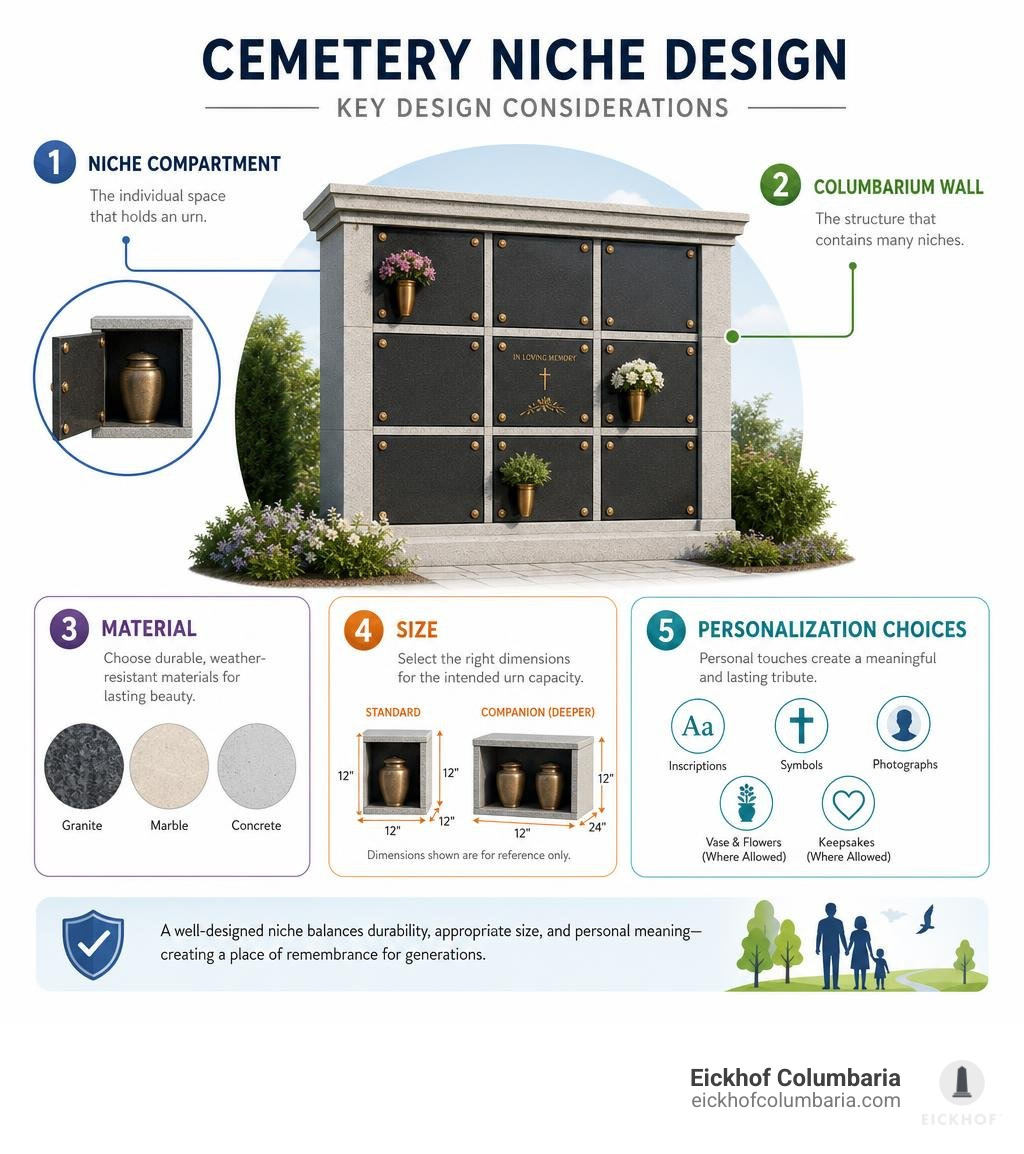
A niche is the individual compartment that holds an urn. A columbarium is the larger structure that contains many niches. Thoughtful designs can make efficient use of limited land while still giving every family a permanent, dignified memorial.
Whether the project is an outdoor garden wall, a church columbarium, or an indoor display, planning should account for:
- Material performance: Granite and other durable stone finishes stand up well to long-term exposure.
- Niche dimensions: Standard compartments are often about 12 by 12 by 12 inches, while deeper companion niches can accommodate two urns.
- Site conditions: Outdoor walls need sound drainage and water-shedding caps; indoor spaces allow more options for glass fronts and displayed keepsakes.
- Personalization rules: Inscriptions, symbols, photographs, and temporary flowers may be possible, but each cemetery or church sets its own standards.
The goal is not simply to build storage for cremated remains. It is to create a well-made memorial structure that looks appropriate for decades, serves visitors with care, and supports efficient cemetery operations.
Important cemetery niche design terms:
Understanding Niches, Columbaria, and Memorialization Options
As cremation continues to rise across the United States, columbaria supply between 25 and 50 percent of total cemetery burials nationally. This shift reflects modern preferences for sustainable, cost-conscious, and flexible memorialization. Above-ground placement offers families a secure, dignified resting place without requiring the extensive ground space of traditional casket interments.
When evaluating long-term cemetery planning, having a clear walkthrough of columbarium structures and purposes allows cemetery boards, religious institutions, and families to understand how these architectural installations protect memories across generations.
| Memorial Option | Typical Cost Range | Land Footprint | Personalization Opportunities | Permanence & Protection |
|---|---|---|---|---|
| Columbarium Niche | $1,200 – $5,000 | Very low (vertical density) | Engraved granite fronts, bronze plaques, glass display | High (weatherproof stone compartments or climate-controlled interiors) |
| In-Ground Burial | $3,000 – $10,000+ | High (requires full plot) | Upright monuments, flush grass markers, flat headstones | High (requires vault and ongoing turf/grounds maintenance) |
| Scattering Garden | $200 – $1,500 | Minimal (shared communal area) | Communal plaque, memorial bench inscription | Variable (no individual physical resting place or retrieval option) |
Columbarium vs. Niche Terminology
The term columbarium originates from the Latin word columba, meaning dove. Historically, it referred to nesting boxes built into dovecotes, which closely resemble the grid-like compartments seen in memorial walls today.
In modern memorial architecture:
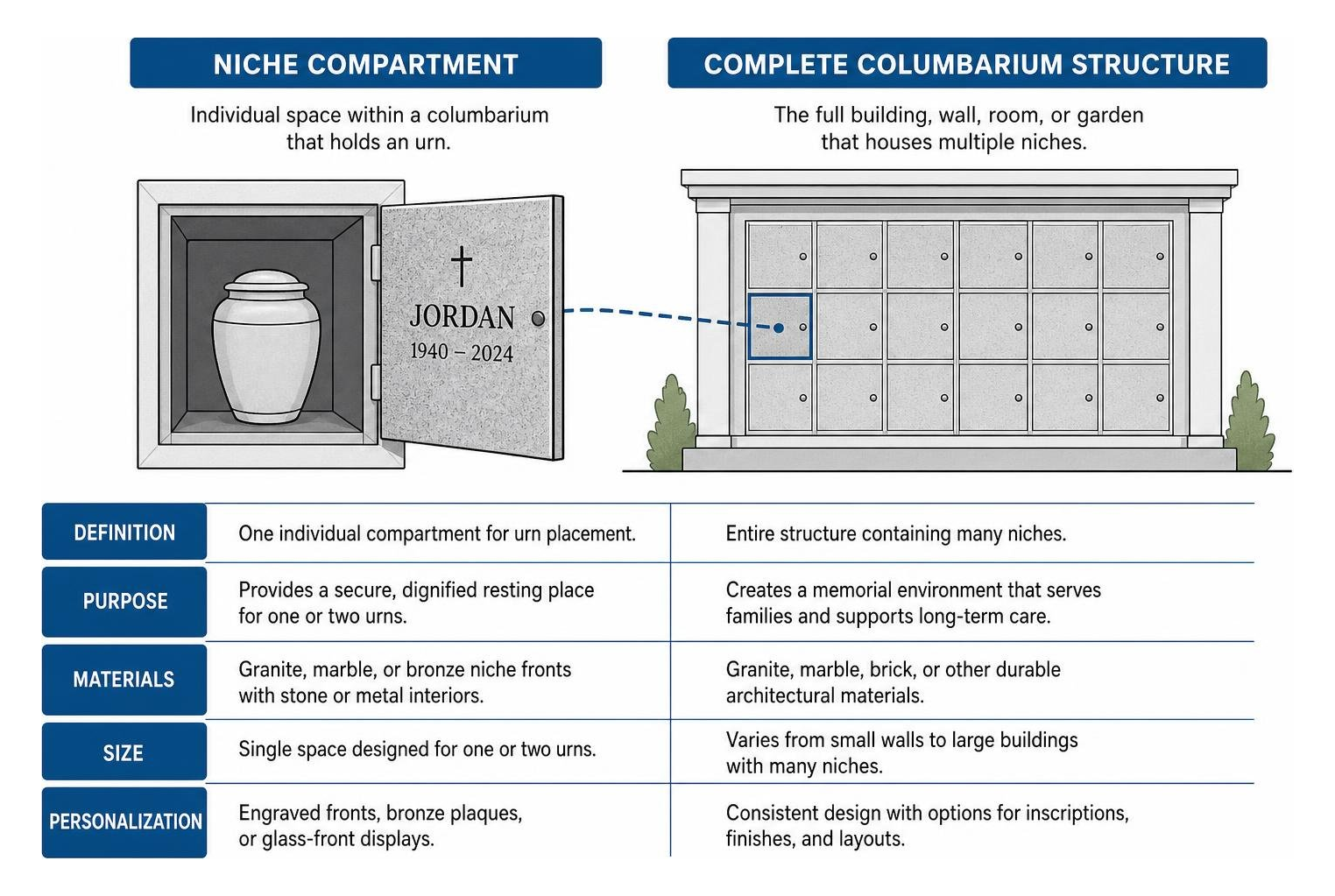
- A columbarium is the entire standalone building, outdoor wall, garden structure, or indoor room dedicated to housing cremated remains.
- A niche is the individual recessed compartment inside the columbarium structure where an urn is permanently placed.
Columbaria integrate seamlessly into diverse architectural landscapes, ranging from peaceful outdoor cemetery gardens and memorial paths to historic church courtyards and dedicated indoor mausoleum chapels.
Benefits of Above-Ground Niche Memorials
Choosing an above-ground niche provides clear benefits over alternative burial options:
- Land Conservation: A single columbarium wall can accommodate hundreds of urns in the footprint of only a few traditional burial plots, preserving precious cemetery acreage.
- Accessible Visitation: Niches provide an upright, eye-level visitation gallery, making it easier for older adults and visitors with limited mobility to view plaques without navigating uneven lawn terrain.
- Weather Resistance: Built with durable stone facades, structural concrete, or rust-resistant internal metals, niches protect urns from soil acidity, subterranean water tables, and landscape equipment impact.
- Permanent Continuity: Unlike scattering, a niche provides an immutable physical location where future descendants can pay their respects.
- Cost-Effectiveness: Because above-ground niches eliminate the need for heavy vault liners, large backhoe excavations, and extensive plot upkeep, they present a significantly lower financial investment for families.
For an in-depth look at this decision process, review everything families need to know about choosing a cremation niche.
Core Elements of Cemetery Niche Design: Materials, Dimensions, and Structure
Engineering a memorial structure requires exceptional structural integrity. Premium systems utilize pre-assembled niche structures built for long-term durability, combining structural interior frameworks with precision stone engineering.
Standard Dimensions and Structural Constraints for Cemetery Niche Design
Niche sizing varies based on design intent and single versus companion requirements:
- Standard Single Niches: Typically measure approximately 12 x 12 x 12 inches, providing ample clearance for a single standard urn.
- Extended/Companion Niches: Often measure 12 x 12 x 16 inches or deeper, offering the space required to inter two companion urns front-to-back or side-by-side.
- VA National Cemetery Standards: Compartments are standardized at 10 ½ inches wide by 15 inches high by 20 inches deep, measured at the face, ensuring uniform accommodation of official military urns and standard niche covers.
To balance structural loading and accessibility, industry best practices recommend limiting columbarium walls to a maximum of five units high. This keeps top-tier compartments within comfortable sightlines and reachable without specialized ladders, while maintaining a balanced visual profile.
Modern designs frequently feature concealed-hardware stone systems, eliminating exposed exterior screws, clips, and visible metal brackets. This creates a refined, continuous stone aesthetic that prevents water penetration, reduces vandalism risks, and enhances weather protection.
Material Selection: Granite, Marble, Bronze, and Glass
Material choice establishes the aesthetic tone, long-term maintenance requirements, and weather resilience of the installation:
- Granite: The gold standard for outdoor columbaria. Granite is virtually impervious to freeze-thaw cycles, thermal expansion, acid rain, and UV fading. It is available in a broad palette of colors—from classic Charcoal and Barre Gray to warm Sierra White, Sunset Red, and Autumn Buff.
- Marble: Prized for its natural veining and timeless beauty, marble is ideally suited for indoor columbaria and covered mausoleums. When used outdoors in harsh freeze-thaw climates, it requires regular monitoring to manage surface weathering.
- Bronze: Bronze accents, decorative borders, and cast front plates add architectural warmth and depth to stone facades. Over time, outdoor bronze develops an attractive protective patina.
- Glass: Used exclusively in climate-controlled indoor environments. Heavy tempered glass-front niches transform memorial walls into luminous display galleries.
Indoor vs. Outdoor Placement and Site Planning
The environmental setting dictates the structural engineering, site layout, and maintenance schedules of a columbarium. Good planning helps the space feel warm and personal while balancing these site constraints.
Indoor Glass-Front Niches and Display Aesthetics
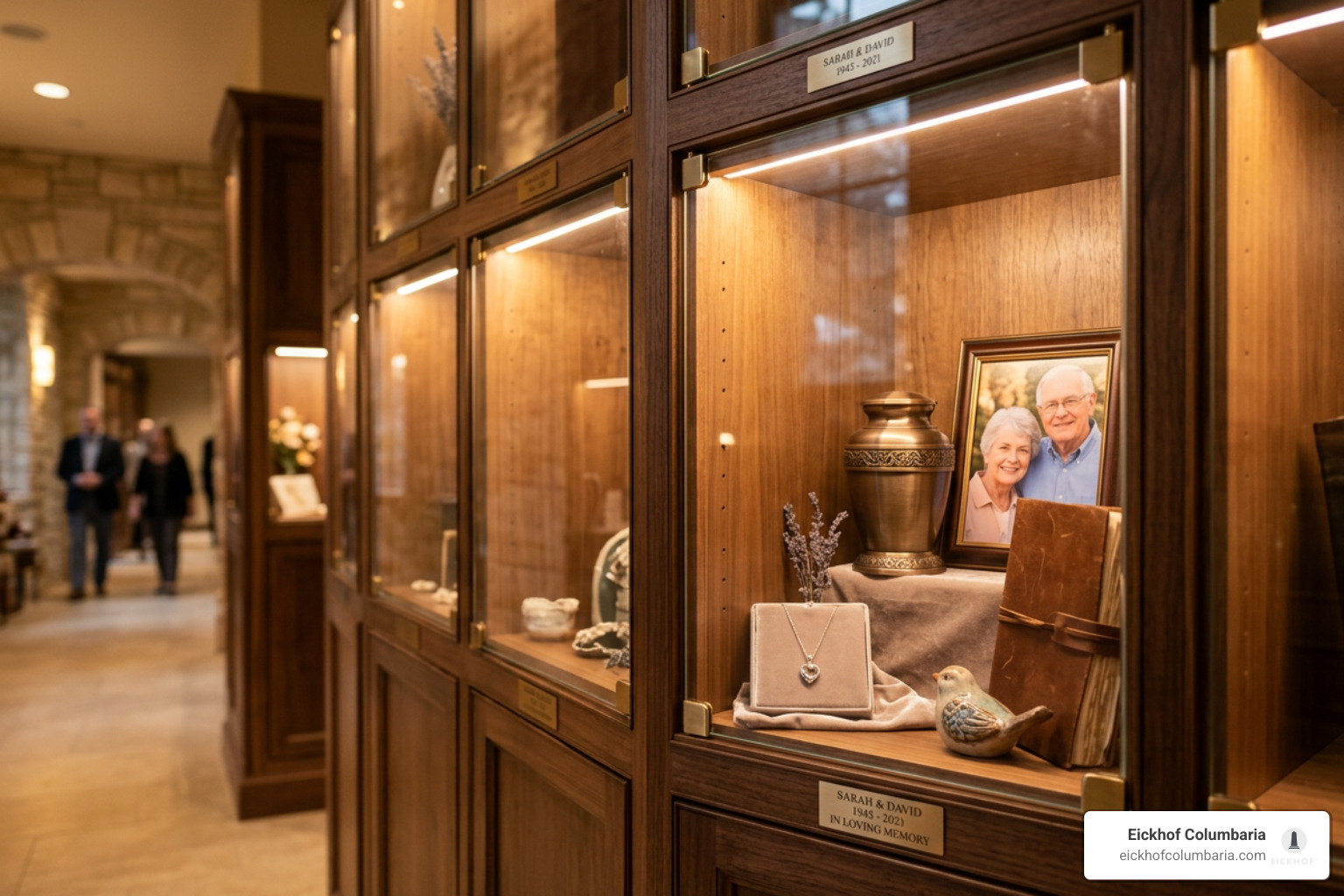
Indoor columbaria—housed in dedicated mausoleums, church chapels, or memorial pavilions—create an intimate, year-round sanctuary protected from outdoor elements.
Glass-front niches are particularly desirable in these settings:
- Curated Memory Spaces: Families can view the urn directly alongside cherished keepsakes, military medals, family photographs, and personalized heirlooms.
- Integrated Lighting: Built-in LED backlighting or overhead track systems softly illuminate the compartments, highlighting the polished urn materials.
- Aesthetic Flexibility: Urns made of polished wood, delicate hand-blown art glass, porcelain, or spun bronze can be displayed safely without risk of moisture damage or tarnishing.
Because of this heightened display craftsmanship, glass-front niches generally command higher purchase costs than sealed exterior granite panels.
Outdoor Columbaria Engineering and Landscape Layout
Outdoor installations must endure sun, heavy rain, wind, and freezing temperatures. Successful site planning requires strict attention to civil engineering principles:
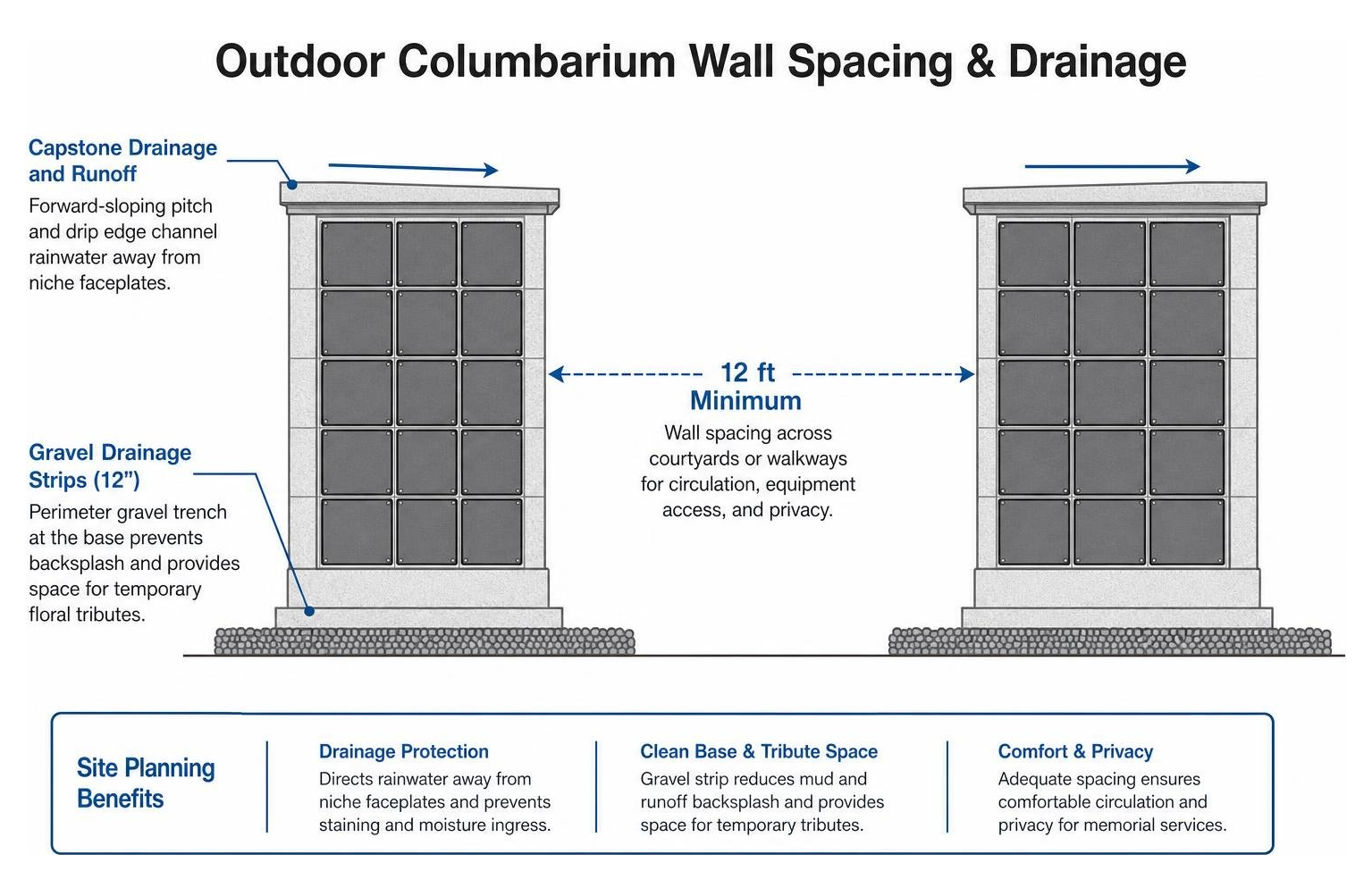
- Capstone Drainage and Runoff: The top columbarium capstone must be engineered with a forward-sloping pitch and integrated drip edges to channel rainwater away from niche faceplates, preventing staining and moisture ingress.
- Gravel Drainage Strips: Installing a 12-inch perimeter gravel drainage trench at the base slab prevents backsplash from mud and storm runoff while providing an area for families to place temporary floral tributes.
- Circulation and Privacy: Columbarium walls should be spaced at least 12 feet apart across courtyards or garden walkways. This ensures comfortable visitor circulation, accommodates maintenance machinery, and offers privacy for grieving families during memorial services.
Personalization, Urn Compatibility, and Cemetery Regulations
A memorial should reflect the unique character and history of the individual. Understanding how to select a niche for cremated remains and reviewing what you will pay for a cremation wall niche helps families navigate their choices comfortably within cemetery guidelines.
Creative Personalization in Cemetery Niche Design
Personalization transforms a stone wall into an enduring family tribute:
- Precision Sandblasting & Laser Etching: High-contrast laser etching allows fine lettering, detailed landscape scenes, family crests, and intricate religious iconography to be engraved directly into polished dark granites.
- Typography: Traditional serif fonts (such as Times Roman or Roman Monumental) convey timeless dignity, while softer script fonts can be used for personal sentiments, scripture verses, or favorite quotes.
- Porcelain & Ceramic Portraits: Vitrified, UV-resistant ceramic medallions fired at extreme temperatures allow photographic portraits to be permanently adhered to granite faces without fading or weather deterioration.
- Insignia and Emblems: Bronze military rank markers, fraternal emblems, civic insignias, and custom metal emblems can be mounted to stone panels to commemorate life achievements.
Urn Sizing and Multi-Urn Companion Placements
When designing for companion or family placements, selecting matching or dimensionally compatible urns is essential:
- Standard rectangular sheet-bronze urns typically measure 8.5 x 6 x 4 inches, allowing two units to easily sit side-by-side or stacked in a 12 x 12 inch compartment.
- Decorative vase-style urns, cast bronze sculptured urns, or organic wooden vessels require wider diameters and greater vertical clearance.
- For companion niches purchased by spouses, the cemetery panel is often engraved in stages: the family name, shared marriage date, and first spouse’s details are engraved initially, leaving planned space to engrave the second spouse’s information later in the exact same font and style.
Cemetery Guidelines and Decoration Restrictions
Cemeteries enforce specific operational rules to preserve safety, aesthetic harmony, and maintenance access:
- Flower Policies: Many cemeteries prohibit adhesive tape, suction cups, or non-approved brackets on granite panels, as they can stain or chip the stone.
- Approved Hardware: Cemeteries frequently specify approved bronze floral vases mounted directly to base rails or ground receptacles. Facility managers should select permanent columbarium niche holders that meet cemetery rules to avoid damage to niche facades.
- Perpetual Care Fees: These one-time or annual fees are placed into an endowment trust to guarantee long-term cemetery grounds maintenance, stone cleaning, and landscape preservation.
- Faith-Based Practices: Catholic and orthodox religious cemeteries may require that all niches receive a formal blessing during the Rite of Committal, and that only consecrated, permanent materials are selected.
To learn more about our broader range of memorial options, see our guide on how columbarium memorials explained for families considering cremation can help clarify cemetery requirements.
Frequently Asked Questions About Cemetery Niches
How much does a cremation niche cost on average?
Across the United States, cremation niches generally cost between $1,200 and $5,000. Entry-level pricing typically covers standard exterior granite single niches located in lower or higher tiers. Centrally positioned eye-level niches, larger companion (double-depth) niches, and indoor glass-front compartments feature higher price points due to increased material dimensions and custom fabrication.
Can two urns fit into a single cemetery niche?
Yes. Companion niches are engineered specifically for two urns. While standard cubic niches (12 x 12 x 12 inches) can accommodate two compact rectangular urns, deeper companion niches (measuring 12 x 12 x 16 inches or more) easily fit two larger individual urns placed front-to-back. Always confirm internal dimensions before purchasing urns.
What is the primary difference between a columbarium and a niche?
A columbarium is the entire freestanding structure, wall, or indoor room containing multiple compartments. A niche is the individual, secure space within that structure where a specific urn is placed and memorialized.
Conclusion
A well-executed cemetery niche design balances engineering integrity, long-term weatherproofing, and meaningful personalization. By pairing durable materials like granite and bronze with concealed-hardware stone systems and efficient dimensions, cemeteries and churches can provide enduring memorial spaces that serve their communities for generations.
Whether you are expanding an existing cemetery garden, adding a church columbarium, or selecting an individual family memorial, we build handcrafted, pre-assembled, and custom niche systems designed for beauty and rapid, turnkey installation.
Explore our full range of design options and custom urns and inscriptions to create a permanent tribute tailored to your vision.