

What Inurnment Means for Families and Memorial Spaces
Inurnment means placing cremated remains in an urn. The word can also describe placing that urn in a final resting place, such as a columbarium niche or a cemetery plot. Unlike traditional burial of a casket, inurnment gives families a way to choose where an urn will rest and where loved ones can visit.
For cemeteries and churches, a columbarium offers a dedicated place for urns without requiring a full-size burial plot for each person. This guide covers the choices families face, from planning a committal service to checking urn and niche sizes before placement.
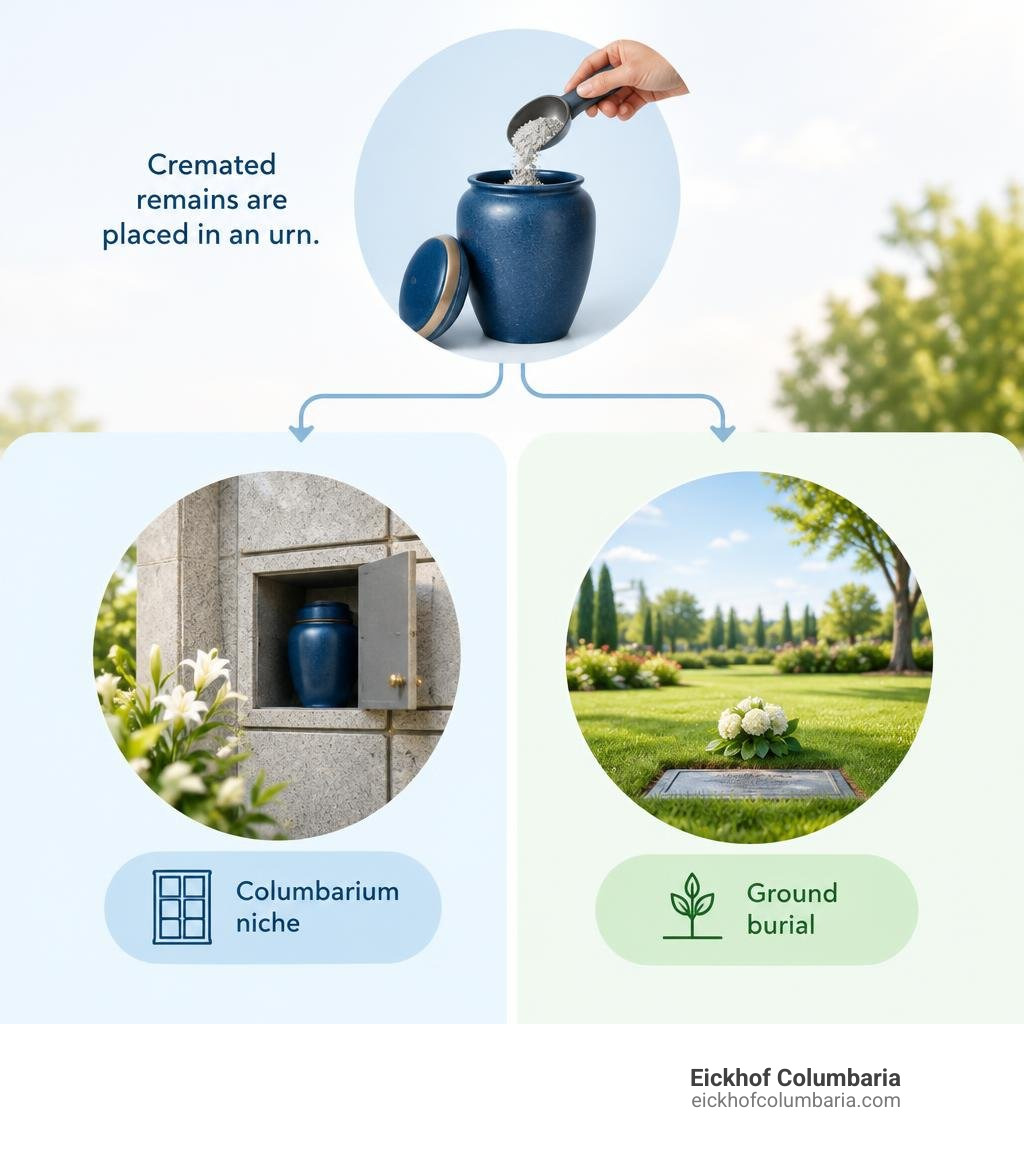
Inurnment basics:
What Is Inurnment? Core Meaning and Critical Distinctions
When navigating memorial planning, the terminology can quickly become confusing. The word inurnment (pronounced in-URN-ment, placing emphasis right on the “urn”) traces back to late 18th-century English, combining the prefix in- with urn. At its most literal, it means placing cremated remains into an urn. In modern funeral and cemetery practices, the term has broadened: it represents both the act of placing ashes into a vessel and the subsequent placement of that urn into a permanent resting space, such as an above-ground columbarium niche or an in-ground memorial garden.
To protect consumers and provide transparency, the Federal Trade Commission outlines specific funeral terms and contact information so families understand exactly what services they are purchasing. The vocabulary revolves around the form of the remains and where they rest.
| Term | Form of Remains | Primary Resting Place | Typical Structure |
|---|---|---|---|
| Inurnment | Cremated ashes in an urn | Niche, urn garden, or plot | Columbarium, niche wall, memorial bench |
| Interment | Whole body or cremated remains | Earth or underground vault | Cemetery grave plot or lawn crypt |
| Entombment | Casketed intact body | Crypt within an above-ground building | Public or private mausoleum |
Distinguishing Between Interment and Entombment
While people often use these words interchangeably, the funeral industry recognizes technical differences between them:
- Interment is the traditional term for ground burial. It involves excavating earth, placing a casket or an urn into the ground (often inside a protective outer burial container or vault), and covering it with soil.
- Entombment refers specifically to placing a casketed body into an above-ground crypt inside a building, such as a community or private mausoleum.
When families decide to place an urn into an above-ground cremation wall, they are participating in an inurnment rather than an entombment, though both share the benefit of clean, dry, above-ground preservation.
Clearing the Confusion: Inurnment vs. Inurement
It is surprisingly common to see inurnment misspelled or misheard as inurement. While they sound nearly identical, their definitions could not be further apart.
- Inurnment is the sacred memorial act of placing cremated remains into an urn and securing them within a final resting space.
- Inurement is a legal and accounting term used primarily in tax law. Under IRS rules, “private inurement” occurs when a tax-exempt nonprofit’s insider improperly benefits from the organization’s net earnings.
Unless you are auditing a balance sheet during a board meeting, the memorial process you are planning is inurnment vs inurement.
Primary Resting Places for Cremated Remains
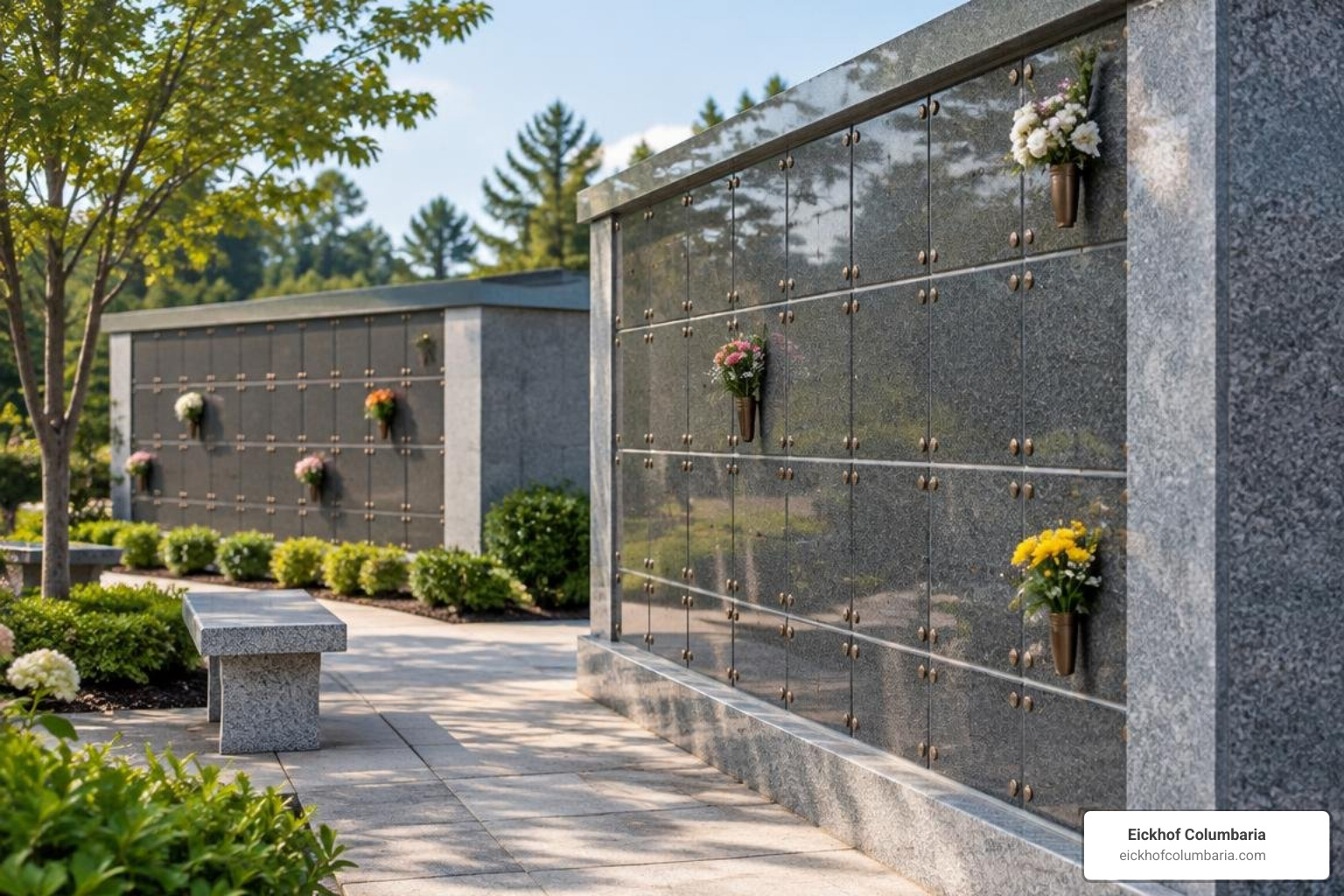
Cremation provides flexibility that traditional casket burial cannot match. When deciding where to put the urn after cremation, families generally consider several paths:
- Columbarium Niche Placement: Securing the urn within an above-ground indoor or outdoor wall structure.
- In-Ground Urn Burial: Interring the urn in a cemetery plot or dedicated urn garden.
- Home Keepsake: Displaying the urn on a mantel or shelf.
- Scattering or Water Burial: Dispersing ashes at sea or across natural landscapes in compliance with local environmental regulations.
Many families create a hybrid arrangement: placing the primary urn in a permanent columbarium while retaining small portions of ashes in keepsake jewelry or scattering a small amount in a meaningful location.
Columbarium Niches and Cremation Walls
For those who desire a permanent, physical memorial without the footprint of a traditional grave, columbaria have become the premier choice. A columbarium is an architectural structure featuring individual compartments called niches, designed specifically to hold cremation urns.
We see columbaria installed across church courtyards, cemetery memorial parks, and municipal gardens. Learning everything families need to know about choosing a cremation niche allows you to select between indoor glass-front niches—which allow visitors to view personalized urns and mementos—and outdoor granite-faced niche walls that stand resilient against all weather conditions. Exploring columbarium structures and purposes helps communities create beautiful, dignified gathering spaces that endure for generations.
How to Plan a Meaningful Committal Service

An inurnment ceremony, often called an urn committal service, serves as an emotional turning point for grieving families. Just like a traditional graveside service, it marks the formal transition of your loved one to their final resting place. Because cremation does not require immediate burial, families have the flexibility to schedule this service weeks or even months later, allowing out-of-town relatives time to travel.
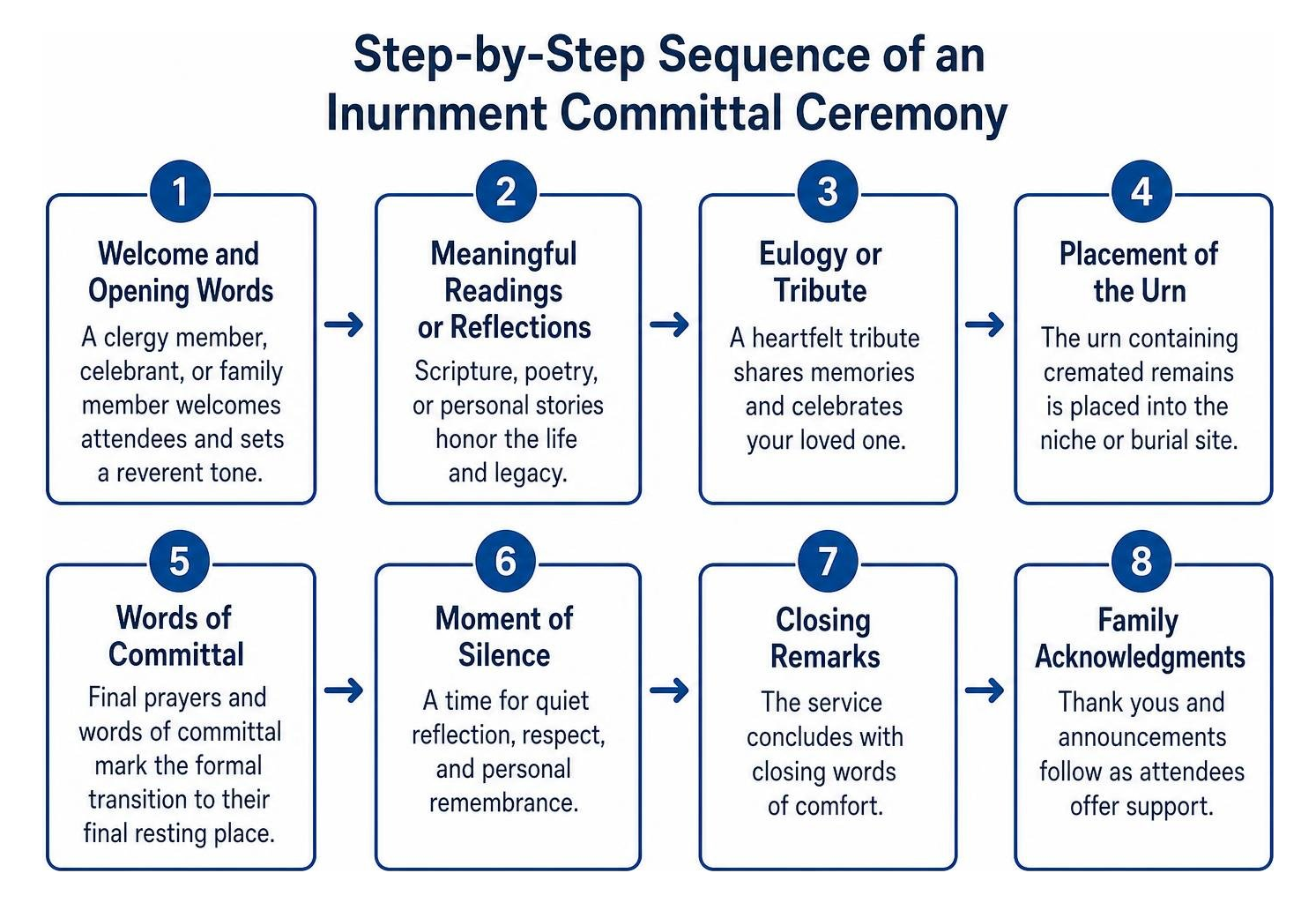
Step-by-Step Structure of an Inurnment Ceremony
Planning an inurnment service can be deeply personalized, whether you prefer a formal religious liturgy or an intimate family reflection. A standard committal service typically lasts 15 to 30 minutes and follows this general structure:
- Welcome and Opening Words: A clergy member, celebrant, or family member welcomes attendees and sets a reverent tone.
- Readings and Music: Loved ones share favorite scripture passages, poems, or acoustic music.
- Eulogy and Shared Memories: Brief reflections honoring the deceased’s life and legacy.
- The Urn Blessing and Placement: The officiant offers a blessing over the urn before it is reverently placed inside the columbarium niche or lowered into the ground.
- The Urn Touch or Farewell: Attendees are invited forward to place a hand on the urn, leave a flower, or share a quiet moment of goodbye.
- Closing Blessing and Sealing: The niche shutter is secured, and a closing prayer or moment of silent gratitude concludes the ceremony.
Incorporating Military Honors for Veterans
Veterans who served their country with honor are entitled to special committal tributes. Family members can coordinate through their funeral director or directly with military personnel to incorporate official military funeral honors into an inurnment service.
These honors typically include:
- The presence of at least two uniformed military branch representatives.
- The ceremonial folding and presentation of the United States flag to the next of kin.
- The sounding of Taps, performed by a bugler or high-quality ceremonial recording.
At prestigious resting places like Arlington National Cemetery, above-ground inurnment is available to almost all veterans who completed at least one day of active military duty (beyond initial training) and received an honorable discharge. In fact, reviewing the Arlington National Cemetery eligibility criteria reveals that qualifying for above-ground niche placement is often less restrictive than securing an in-ground casket plot. To learn more about scheduling, documentation requirements, and daily protocols, families can consult the official Arlington National Cemetery funeral FAQs.
Practical Considerations: Niche Capacity, Sizing, and Regulations
Selecting an urn for inurnment requires practical coordination between the dimensions of the vessel and the internal specifications of the columbarium niche.
Niche Dimensions, Durable Materials, and Placement Requirements
Standard single columbarium niches typically measure approximately 12 inches by 12 inches by 12 inches, though companion niches designed for two urns may offer expanded interior cubic space. Before purchasing an urn, verify the cemetery’s exact internal niche dimensions:
- Material Compatibility: Outdoor granite niches withstand moisture and temperature swings. Sturdy urn materials such as bronze, granite, marble, and high-density composite resins are well-suited for long-term above-ground placement.
- Outer Burial Containers: If you opt for in-ground urn burial rather than a columbarium niche, many cemeteries require an urn vault (a reinforced outer box) to prevent the surrounding soil from collapsing over time.
- Inscriptions and Memorialization: Cemetery regulations dictate how niche faceplates are inscribed. Standardized lettering, military medallions, and pre-approved bronze plaques ensure the overall structure retains a cohesive, elegant aesthetic.
Cremation Trends and Columbarium Costs
The landscape of final disposition has shifted dramatically over recent decades. Families are increasingly drawn to cremation because of its scheduling flexibility, reduced land use, and cost-effective nature compared to full-casket burials.
Evolving Disposition Trends and Financial Benefits
According to projections by national funeral director associations, the national cremation rate is reaching 63.4%, more than doubling the rate of traditional casket burials. This transition has led cemeteries and faith organizations to expand their above-ground memorial spaces rapidly.
From an economic perspective, choosing an urn committal can save families thousands of dollars by eliminating large expenses such as full-size cemetery plots, heavy excavation fees, concrete casket vaults, and costly embalming processes. Reviewing an itemized columbarium prices and niche cost breakdown allows families to understand common line items, including the niche space itself, perpetual care endowment fees, opening and closing services, and permanent faceplate engraving.
Frequently Asked Questions About Urn Placement and Committal
How does placing ashes in a niche differ from traditional ground burial?
Placing an urn in an above-ground niche eliminates the need for grave digging, lowering devices, and heavy burial vaults. It provides a clean, dry, eye-level memorial space that relatives can easily visit without navigating uneven turf or weather-softened ground.
What documents are required for veteran placement at national cemeteries?
To schedule a service at a veterans’ cemetery, families generally need the veteran’s DD214 (or equivalent military discharge documentation verifying active-duty service and honorable discharge), the official death certificate, and a cremation certification proving that the remains represent 100% of the deceased.
Can multiple family members share a single columbarium space?
Yes. Many columbaria feature companion niches specifically engineered to hold two urns. Families can select matching companion urns or individual vessels designed to fit side by side within the niche’s interior dimensions, allowing spouses or family members to rest together.
Conclusion
Making final arrangement decisions is one of the most personal tasks any family will undertake. Inurnment offers a balanced solution: it provides the flexibility and simplicity of cremation while honoring your loved one with a permanent, physical monument where future generations can reflect, and pay tribute.
At Eickhof Columbaria, we design, manufacture, and install handcrafted stone columbaria and niche walls for cemeteries, churches, and civic spaces across the country. Our pre-assembled, concealed-hardware systems are built in-house to ensure timeless structural integrity and rapid installation.
Whether you are pre-planning your own memorial or arranging services for someone you love, understanding resting places beyond traditional in-ground burial gives you the clarity to make confident, peaceful decisions that honor a lifetime of memories.