

What Is Above-Ground Wall Burial?
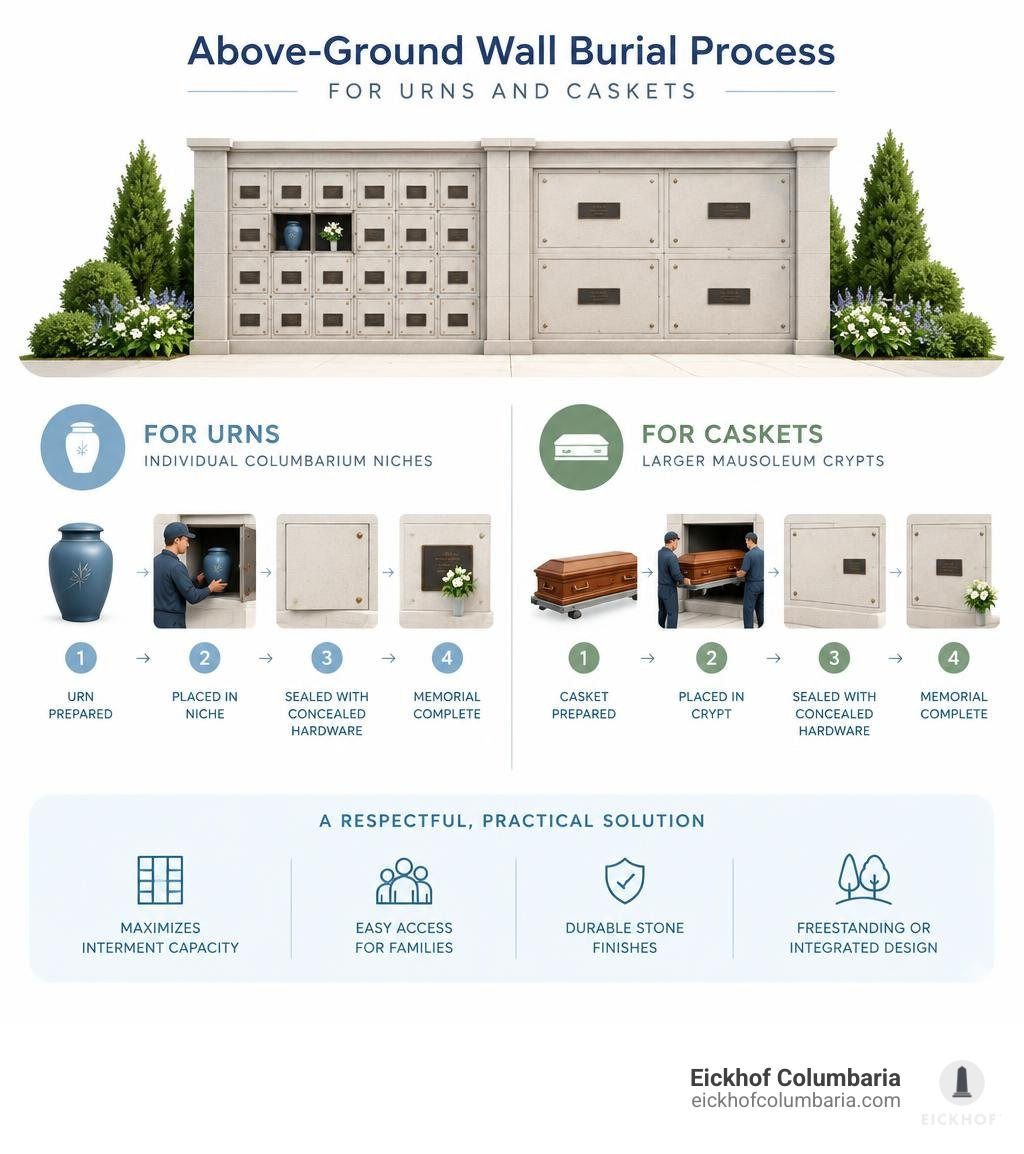
Wall burial is above-ground interment within a purpose-built memorial wall. For cremated remains, the wall contains individual columbarium niches that hold urns. For casketed remains, it contains larger mausoleum crypts. Both options place memorial space vertically rather than requiring a separate in-ground plot for every person. This approach has become increasingly relevant as cemeteries and religious institutions face growing pressure to conserve land while still offering families a dignified, permanent resting place.
For a cemetery or church with limited land, a well-designed burial wall can:
- Add lasting interment capacity in a compact footprint
- Create an accessible, clean place for families to visit
- Use durable stone finishes with concealed hardware for a seamless appearance
- Be designed as a freestanding structure or integrated into an existing mausoleum, chapel, or landscape plan
Modern systems can be prefabricated for efficient installation, but the final design should account for local cemetery rules, foundation needs, climate, drainage, and the type of remains being interred. The result is a respectful memorial solution that supports both present needs and future expansion. Whether a cemetery is planning a small garden columbarium or a large multi-tier mausoleum, wall burial offers a flexible way to serve more families without expanding the property footprint.
The History and Cultural Evolution of Entombing in Walls
Above-ground wall entombment is not a recent innovation. Societies across centuries have constructed vertical memorial spaces to honor ancestors, conserve valuable real estate, and safeguard resting places against moisture and ground disruption. From ancient civic structures to modern cemetery planning, the practice has repeatedly demonstrated that vertical interment can be both practical and deeply respectful.
The word columbarium originates from the Latin columba, meaning “dove.” In ancient Rome, dovecotes housed hundreds of nesting birds along vertical cubbies. Roman architects adapted this efficient layout into vaulted subterranean chambers featuring recessed niches to house cremation urns. Archaeological excavations, such as a burial urn from the Wall Roman site in Staffordshire, demonstrate how early masonry designs securely protected cremated remains along active transit corridors and civic centers. These early examples show that wall burial was not merely a space-saving measure but also a way to keep memorials visible and accessible within the community.
Throughout the medieval and modern eras, above-ground structures evolved to reflect shifting religious and civic practices. In Eastern Europe, the Kremlin Wall Necropolis became an internationally recognized historical example of wall interments, beginning with mass graves in 1917 and transitioning in 1925 to wall niches for cremated ashes. This shift from ground burial to wall niches illustrates how changing cultural attitudes toward cremation and memorialization shaped the design of public commemorative spaces.
When understanding resting places beyond traditional in-ground burial, these historical models highlight a consistent truth: vertical memorialization provides a dignified, architecturally sound method for honoring the deceased across generations. The architectural heritage of columbaria and crypt walls continues to inform modern designs, blending centuries-old principles with contemporary engineering and materials.
Architectural Types of Modern Wall Burial Systems
Modern wall burial systems fall into two structural engineering categories: casketed crypt walls and cremation niche walls. Both options maximize cemetery grounds by expanding capacity upward rather than outward. The choice between them depends on the type of remains being interred, the available site, and the long-term goals of the cemetery or religious institution.
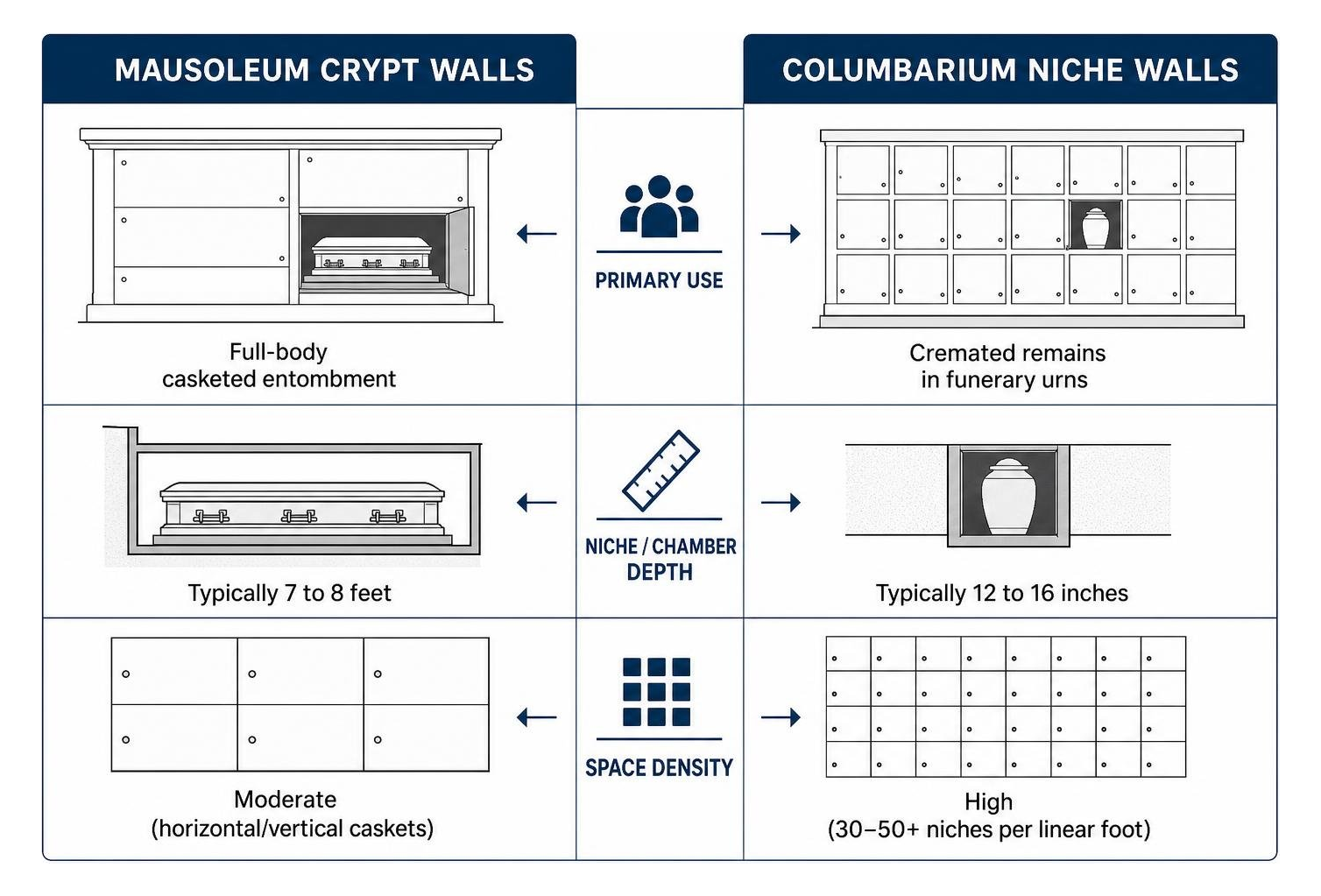
| Feature | Mausoleum Crypt Walls | Columbarium Niche Walls |
|---|---|---|
| Primary Use | Full-body casketed entombment | Cremated remains in funerary urns |
| Niche/Chamber Depth | Typically 7 to 8 feet | Typically 12 to 16 inches |
| Space Density | Moderate (horizontal/vertical caskets) | High (30–50+ niches per linear foot) |
| Installation Weight | Heavy structural loads, thick footings | Modular granite/aluminum assemblies |
| Structural Location | Indoor mausoleums, outdoor garden walls | Freestanding walls, garden walkways, indoor chapels |
Casketed Wall Burial in Mausoleum Crypts
Casketed wall interments occur within mausoleum crypts. These reinforced concrete chambers house caskets above ground level, keeping them dry and shielded from subterranean moisture. Proper crypt engineering requires individual airflow channels to facilitate gradual, natural desiccation. This ventilation is essential for maintaining a clean, odor-free environment and preventing the buildup of moisture that could compromise the structure over time.
Families exploring above-ground burial in a private mausoleum crypt often appreciate the controlled, sheltered environment. Understanding why bodies mummify instead of decay in a mausoleum clarifies the importance of continuous air movement and hermetic sealing techniques, which maintain structural integrity and hygiene within the masonry walls over decades. These systems are designed to protect both the remains and the surrounding memorial space, ensuring that families can visit in comfort for generations.
Cremated Wall Burial in Columbarium Niches
Columbaria are purpose-built walls divided into individual compartments called niches. Each niche holds one or more funerary urns. As the U.S. cremation rate remains above 55%, columbaria have become essential for churches, municipal cemeteries, and private memorial parks looking to expand their capacity. The modular nature of these systems allows them to be configured for a wide range of sites, from intimate garden settings to large indoor chapels.
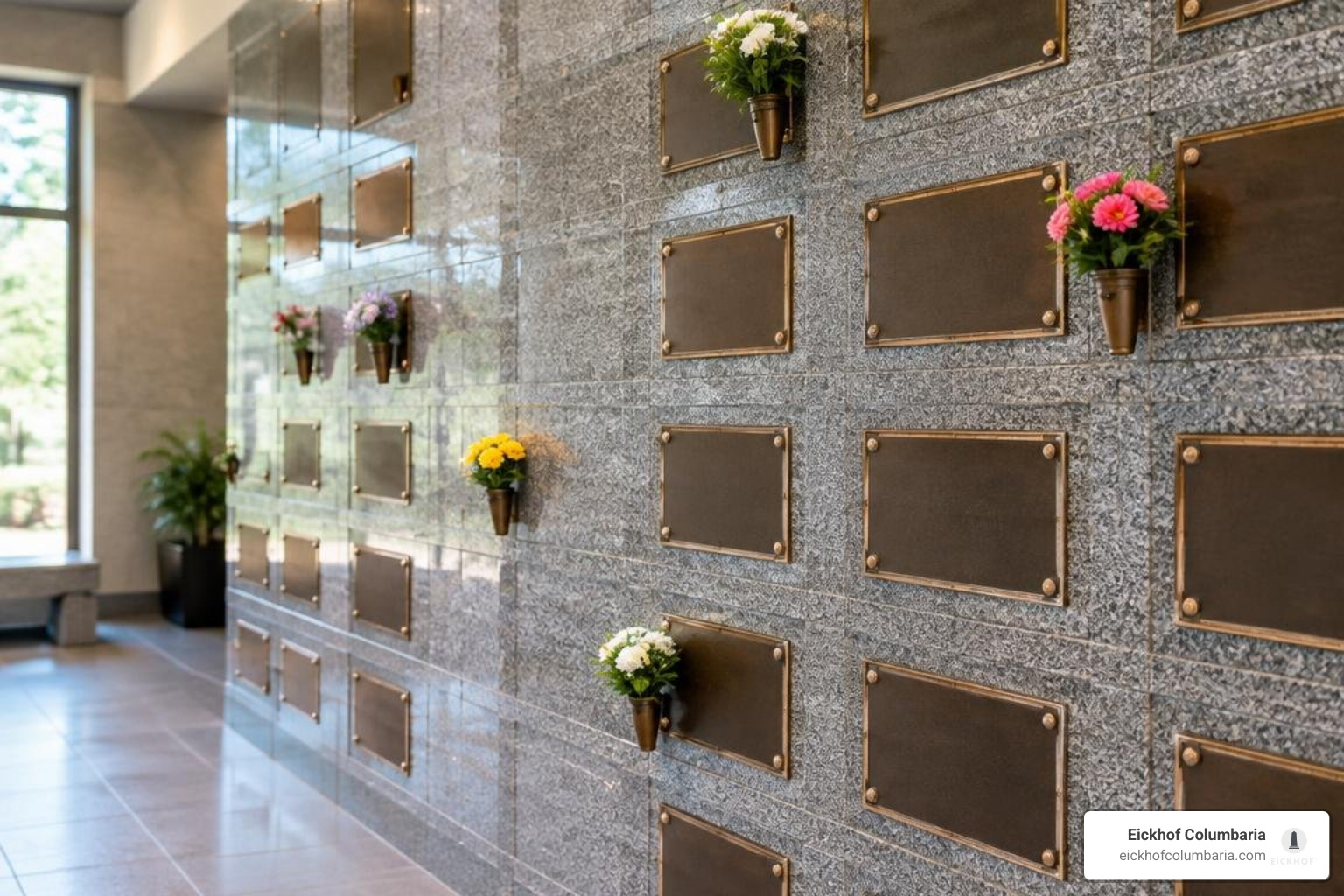
A comprehensive walkthrough of columbarium structures and purposes reveals how modular engineering accommodates diverse landscapes. Implementing great cemetery niche design standards ensures these stone systems feature concealed locking hardware, clean joint lines, and weather-resistant granite or bronze front shutters that protect the urns from external elements. These design details not only enhance durability but also create a polished, respectful appearance that families value.
Key Benefits of Choosing Above-Ground Wall Interments
Opting for an above-ground wall interment provides practical and emotional benefits for families and cemetery operators alike. These advantages make wall burial an increasingly popular choice for both cremated and casketed remains.
- Land Conservation: A single columbarium wall can accommodate hundreds of urns in the footprint of just two or three traditional in-ground grave plots. This efficiency is especially valuable in urban areas where cemetery space is limited and expansion is costly.
- Protection from the Elements: Wall interments isolate caskets and urns from groundwater, shifting soil, and frost heaves. Above-ground placement reduces the risk of water damage and ground movement that can affect traditional graves over time.
- Clean and Accessible Visitation: Wall niches and crypts sit along paved walkways, courtyards, or indoor corridors, providing comfortable year-round access for elderly visitors and individuals with mobility devices. Families can visit in any weather without navigating uneven or muddy ground.
- Long-Term Multi-Generational Grouping: Families can purchase adjacent niches or multi-urn companion spaces, keeping family members together in a shared memorial. This option supports the desire for a lasting family legacy in one location.
- Reduced Maintenance: Unlike in-ground graves that require ongoing turf care, leveling, and marker upkeep, wall burial systems are built from durable stone and require minimal routine maintenance. This helps cemeteries manage long-term operating costs while maintaining a neat appearance.
For families considering cremation, wall niches offer a permanent, dignified focal point for memorialization without the ongoing landscape maintenance associated with traditional ground graves. The combination of practical efficiency and emotional comfort makes above-ground wall interment a compelling option for modern memorial planning.
Wall Burial Costs, Installation, and Planning Considerations
The cost of above-ground wall interment depends on whether the system accommodates caskets or urns, the materials used, regional labor rates, and whether the space is private or public. Understanding these factors helps cemetery operators and families plan effectively.
According to the 2026 price guide for U.S. buyers, public mausoleum crypt spaces generally range from $4,000 to $12,000+, while private family mausoleum structures can range from $25,000 to well over $100,000 depending on stone selection and architectural customization. In contrast, individual columbarium niches for cremation typically cost between $1,500 and $4,500, making them an economical choice. These figures vary by region, with urban installations often carrying higher labor and permitting costs than rural projects.
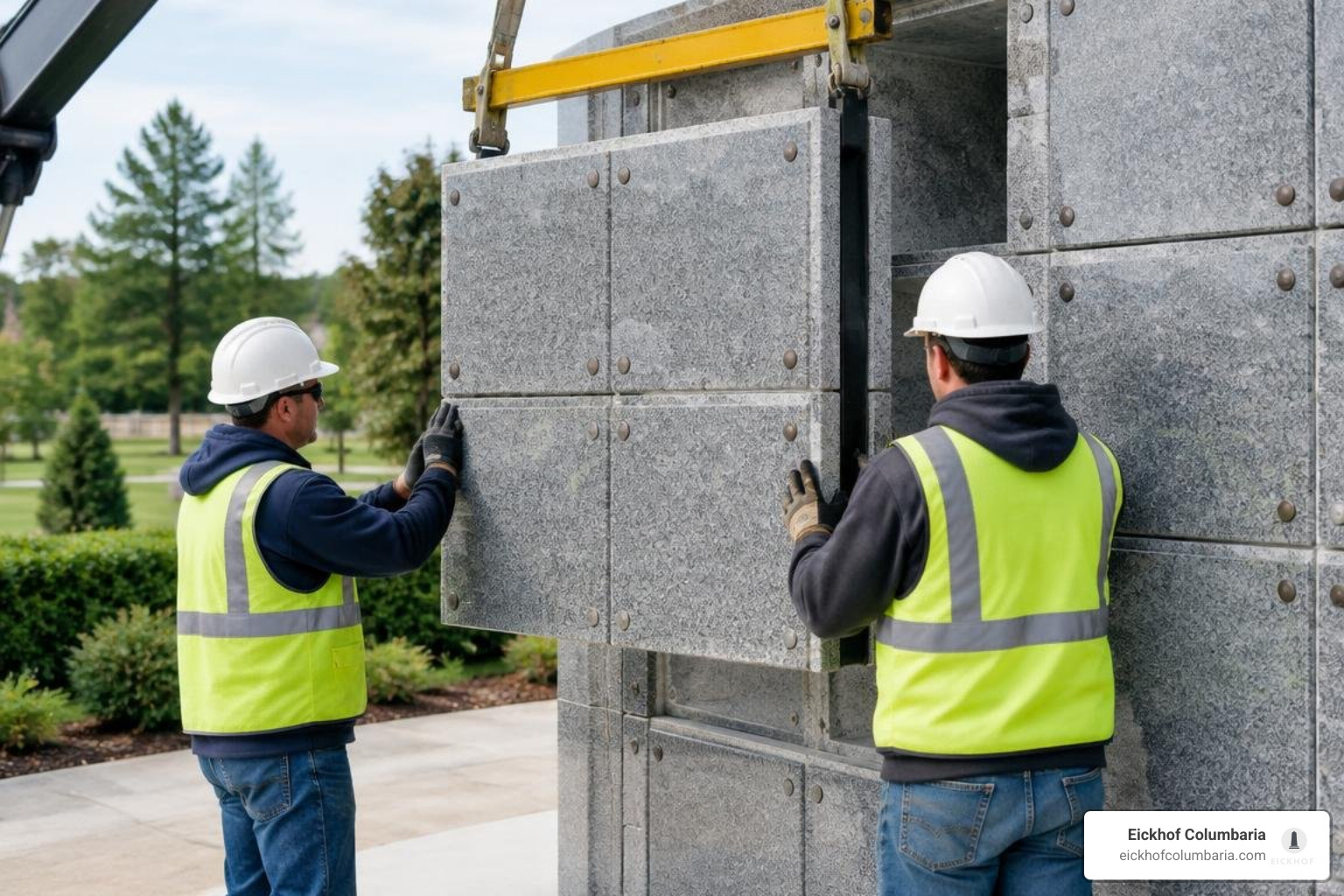
When planning and constructing modern niche walls, key engineering considerations include:
- Foundation Engineering: Poured-concrete footings must extend below regional frost lines to prevent structural tilting or settling over time. Proper drainage around the foundation is also critical to avoid water accumulation that could damage the structure.
- Concealed Hardware Systems: Fasteners and structural clips should be hidden behind stone shutters, protecting the hardware from water intrusion, vandalism, and oxidation. Concealed hardware also contributes to the clean, seamless appearance that families expect from a premium memorial.
- Turnkey Fabrication: Pre-assembled columbarium systems manufactured off-site can be set onto prepared foundations in just a few days, minimizing on-site disruption to cemetery operations. This approach reduces construction time and allows cemeteries to begin offering new interment spaces sooner.
- Permitting and Codes: Local building codes and cemetery regulations may dictate setback requirements, structural load limits, and accessibility standards. Working with an experienced manufacturer helps ensure compliance and avoids costly delays.
Frequently Asked Questions About Wall Burials
How does a wall burial differ from traditional in-ground burial?
A wall burial places remains in vertical, sealed compartments (niches for urns or crypts for caskets) above the earth. Traditional in-ground burial requires excavating individual plots, utilizing outer burial vaults, and maintaining surface turf over large land areas. Wall burial conserves land by using vertical space, reduces the environmental impact of excavation, and provides a cleaner, more accessible visitation environment for families.
How are remains protected and sealed inside a burial wall?
Cremation niches are protected behind interior security shutters and polished granite faceplates secured with concealed mechanical fasteners. Full-body crypts feature inner sealant barriers, reinforced stone covers, and dedicated ventilation pathways that allow gradual drying while preventing exterior odor or moisture buildup. Specialized drainage systems direct water away from the structure, and hermetic sealing techniques help maintain a dry, stable environment for the remains.
Can multiple family members be interred within the same wall space?
Yes. Companion crypts are engineered to hold two caskets either end-to-end (couch crypts) or side-by-side. For cremation, standard columbarium niches can be sized as double or family units capable of accommodating two to four urns behind a single engraved faceplate. Some cemeteries also offer family estate sections within a columbarium wall, allowing multiple generations to be memorialized together in a dedicated area.
Conclusion
As memorial preferences shift toward space-efficient, low-maintenance, and architecturally striking solutions, above-ground wall entombment offers a dependable balance of tradition and modern engineering. Whether providing full-body crypts or high-density cremation niche walls, vertical structures ensure that cemeteries and religious institutions preserve their land while delivering enduring memorial spaces. The growing demand for cremation and the need for sustainable cemetery planning make wall burial a forward-looking choice for communities of all sizes.
At Eickhof Columbaria, we design, manufacture, and install handcrafted, concealed-hardware stone systems built to last for generations. Our turnkey process handles everything from foundation preparation to final installation, allowing cemeteries and churches to expand their interment capacity with minimal disruption. To discover how our turnkey installation process can enhance your cemetery or church grounds, explore our custom columbaria and niche wall systems or contact our design team today.