

What an Above Ground Mausoleum Offers
An above ground mausoleum is a structure that holds caskets in sealed, casket-sized chambers called crypts. It offers a durable alternative to in-ground burial, especially where cemetery land is limited, soil conditions are difficult, or families want a dry, weather-protected place to visit.
For cemetery and church facilities, the main planning choices are:
- Community mausoleums with crypts available for individual or companion purchase
- Private family mausoleums designed for multiple related interments
- Garden or lawn crypts that provide above-ground entombment with a lower visual profile
- Columbaria, which hold cremated remains in smaller niches rather than caskets
Above-ground entombment can use space efficiently, help avoid groundwater and flood concerns, and create a lasting stone memorial with clear options for inscriptions, plaques, and floral vases. The right design depends on available land, local cemetery rules, expected capacity, maintenance planning, and the level of personalization families expect.
This guide explains how mausoleum crypts work, how they compare with ground burial and cremation niches, what they cost, and how to plan a structure built for long-term care.
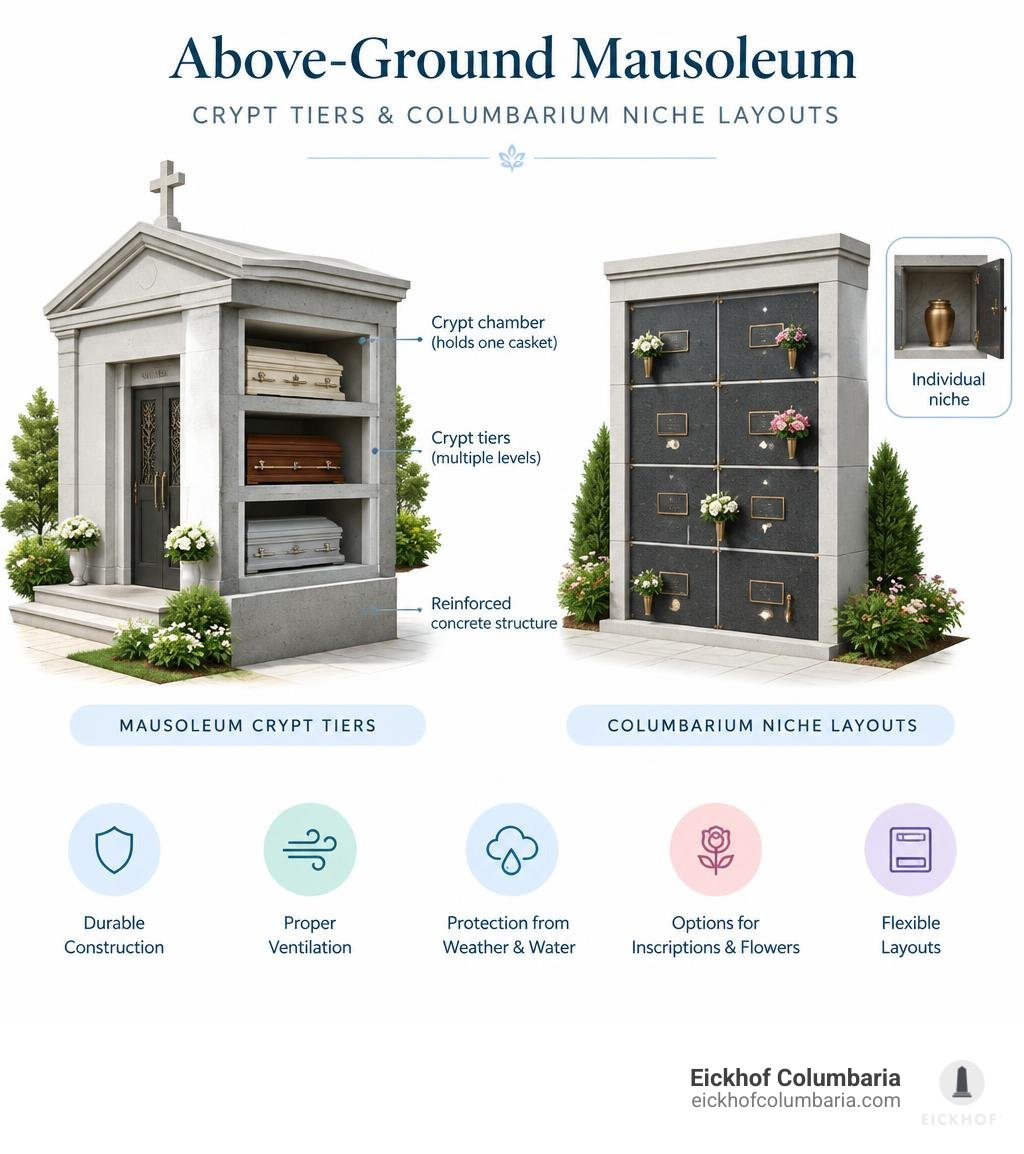
Understanding the Above Ground Mausoleum and Entombment Options
At its core, entombment is the practice of placing human remains inside an above-ground, structurally sealed chamber rather than lowering a casket into the earth. For centuries, this “dry burial” method has appealed to those who wish to avoid direct contact with soil, moisture, and underground pressure.
Modern mausoleum construction combines heavy civil engineering with specialized biological ventilation. Each casket rests inside an individual concrete crypt chamber. These chambers are designed with reinforced, poured-in-place concrete walls—often requiring minimum thicknesses mandated by state health and safety codes—to support thousands of pounds of static load.
Once a casket is entombed, the chamber is sealed using a heavy inner shutter (often concrete or composite), secured with industrial-grade sealants to form an airtight and watertight barrier. A finished stone shutter—typically granite or marble—is then mounted over the front, serving as the visible memorial wall.

Behind those elegant stone faces lies an intricate environmental system. Because a sealed chamber contains organic matter, proper engineering requires an integrated air-exchange and drainage conduit. Crypts are engineered with internal slopes and integrated rear venting pathways that allow gases to escape through filtered rooftop stacks while ensuring no odors or moisture enter public visitation corridors.
Types of Above Ground Mausoleum Structures
Above-ground memorial architecture spans several distinct formats, ranging from sprawling civic structures to intimate family monuments:
- Community (Public) Mausoleums: Large, shared indoor buildings containing hundreds or thousands of crypt spaces. These buildings often feature climate-controlled corridors, stained-glass windows, and comfortable seating areas where visitors can reflect in peace regardless of outdoor conditions.
- Garden Mausoleums: Open-air, outdoor structures where crypt fronts face exterior courtyards, covered walkways, or manicured gardens. They offer the permanence and dry entombment of a building without the high overhead costs of heating, cooling, and interior maintenance.
- Private Family Mausoleums: Free-standing, custom-designed stone structures commissioned for a single family. These can range from simple walk-in chapels to grand monuments housing multiple generations. We explore these multi-generational options in detail in our guide to above-ground burial in a private mausoleum crypt.
- Sarcophagi and Lawn Crypts: A sarcophagus is a standalone, solid stone structure placed above ground to hold one or two caskets. Lawn crypts, by contrast, are pre-installed concrete chambers placed just below or at the surface of the turf, providing an organized hybrid between traditional ground burial and above-ground vaults.
- Columbaria: Dedicated structures designed specifically for cremated remains. Rather than full casket crypts, they feature compact, secure compartments called niches. Understanding the structures and purposes of a columbarium helps families and cemetery planners choose the right balance between casket and urn placement.
Crypt Configurations and Casket Sealing Mechanics
The interior layout of a mausoleum depends on how crypt spaces are arranged. When selecting or designing a facility, families encounter several standard configurations:
- Single Crypts: Designed to hold one casket placed horizontally, typically with the short end facing outward (couch placement or end-to-end placement).
- Companion (Tandem) Crypts: A deep crypt chamber designed to hold two caskets placed end-to-end (head-to-foot), sharing a single visible faceplate. This is an economical choice for couples.
- Couch Crypts: A configuration where the casket is inserted lengthwise, presenting the broad side of the casket to the hallway. These require wider wall spaces and are often considered a premium aesthetic choice.
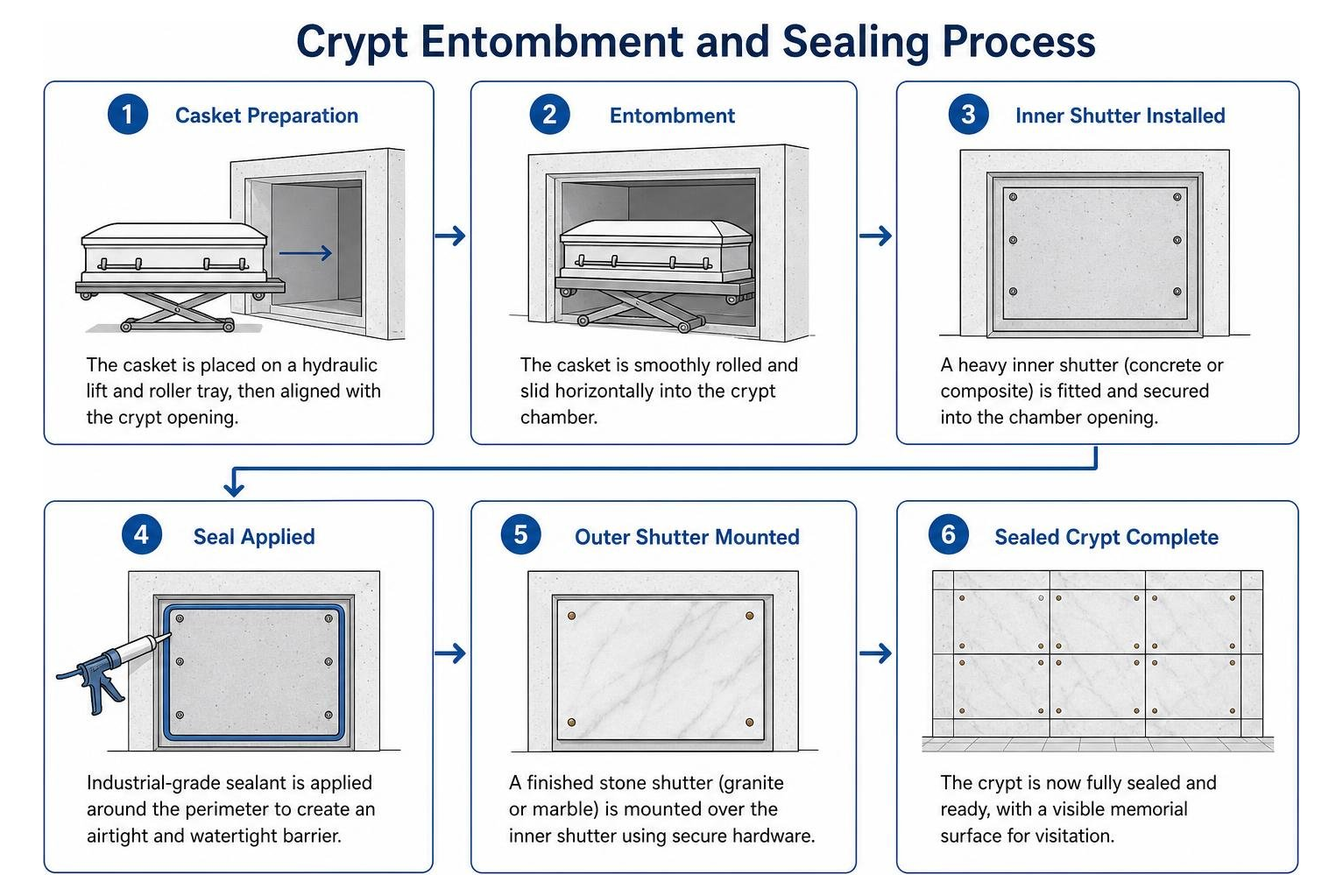
During an entombment service, committal ceremonies typically take place in an adjacent chapel or directly before the crypt face. Afterward, cemetery personnel use specialized hydraulic lifts and roller trays to slide the casket smoothly and horizontally into the chamber. Once positioned, technicians apply an elastomeric or butyl seal to the inner shutter, bolt it into place, and secure the polished granite or marble outer faceplate using concealed or tamper-resistant bronze hardware.
Primary Advantages: Preservation, Accessibility, and Weather Protection
The decision to choose an above-ground burial is often guided by practical, physical, and emotional benefits. Traditional ground burials place heavy steel or wooden caskets in direct contact with underground hydrostatic pressure, shifting soil, and microbial activity. An above-ground crypt completely isolates the casket from these subterranean forces.

Visiting an indoor community mausoleum also transforms the memorial experience. Family members do not need to navigate muddy turf, uneven ground, winter snowbanks, or summer heatwaves. Paved, flat entryways provide seamless accessibility for elderly visitors, wheelchairs, and strollers, creating a clean, quiet sanctuary that encourages unhurried visitation year-round.
Why Families Choose an Above Ground Mausoleum for Long-Term Peace of Mind
The fundamental reason many choose an above-ground structure is structural endurance and dignity. When a casket rests in an elevated, dry, ventilated chamber, the natural decomposition process changes entirely. Moisture cannot pool around the base of the vault, protecting the exterior metal and finish of the casket from corrosive decay.
In fact, the unique airflow dynamics of a properly vented vault create an environment where the lack of trapped moisture fosters desiccation rather than wet rot. For a deeper scientific explanation of this biological phenomenon, read our article on why remains mummify rather than decay in an above-ground vault.
Environmental and Flood-Prone Land Considerations
In regions with high water tables, sandy soils, or frequent seasonal flooding—such as coastal plains and low-lying river valleys—traditional in-ground burial presents severe engineering challenges. Saturated ground can shift subterranean vaults and cause settling over time.
Above-ground structures solve this geographical problem by lifting interments well above local flood plains. Furthermore, as metropolitan cemetery space becomes increasingly constrained, multi-story and vertical mausoleums maximize land efficiency. Stacking interments vertically allows cemeteries to honor thousands of individuals on a footprint that would otherwise accommodate only a few dozen traditional graves, conserving precious urban green space.
Comparing Mausoleum Crypts, In-Ground Burial, and Cremation Niches
Choosing the right resting place requires balancing physical preferences, long-term costs, and space efficiency. The table below outlines how standard options compare across the cemetery landscape:
| Burial Method | Structure / Space Type | Typical Cost Range | Primary Advantages | Considerations & Maintenance |
|---|---|---|---|---|
| Community Mausoleum Crypt | Shared indoor or outdoor multi-tier concrete chamber | $4,000 – $12,000+ | Weather-protected, clean, no outer vault purchase needed | Tier level affects pricing; cemetery handles perpetual exterior care |
| Private Family Mausoleum | Custom standalone granite building (1–12+ crypts) | $94,000 – $2,000,000+ (Median: ~$160,000) | Complete exclusivity, custom architecture, generational legacy | Significant initial investment, requires dedicated land parcel |
| Traditional In-Ground Burial | Subterranean earth plot | $2,500 – $8,000 (Excluding vault & stone) | Familiar tradition, wide cemetery availability | Requires separate purchase of burial vault, headstone, and grave opening |
| Columbarium Niche | Compact stone compartment for 1–2 urns | $1,000 – $4,500 | Cost-effective, compact, highly versatile aesthetic | Designed exclusively for cremated remains; lower spatial footprint |
For families who choose cremation but desire the permanence of an above-ground structure, exploring columbarium memorials for cremation planning offers an elegant, accessible alternative to casket entombment.
Cost Breakdown: Community vs. Private Structures
When purchasing a crypt in a community mausoleum, the location of the space within the wall grid significantly impacts the price. Crypt levels are typically categorized from bottom to top:
- Prayer Level (Tier 1): Located directly along the floor. These are often priced more economically because visitors must look or bend downward to view the inscription.
- Heart / Touch Level (Tiers 2 and 3): Positioned directly at eye and chest height. These represent the most sought-after and expensive spaces in a mausoleum wall due to immediate accessibility and visibility.
- Heaven Level (Tiers 4 and above): Located near the ceiling. Because a ladder or elevated view is needed to inspect inscriptions closely, these tiers are generally priced lower than heart-level crypts.
Beyond the real estate cost of the chamber itself, buyers should budget for line-item administrative fees:
- Entombment / Opening and Closing Fees: Labor and machinery costs for setting up the lift, opening the stone shutters, sliding the casket, and sealing the chamber.
- Endowment / Perpetual Care: A regulated percentage of the purchase price deposited into a state-monitored trust fund to pay for long-term roof repairs, stone maintenance, and facility cleaning.
- Lettering and Engraving: Direct carving, bronze plaque manufacturing, or portrait cameos.
Private family mausoleums, while representing a higher upfront investment, eliminate recurring plot fees for future generations. The price of a private structure depends on the quarry origin of the granite, architectural complexity, interior stained glass, foundation engineering, and cemetery site development fees.
Personalization, Inscriptions, and Memorial Accessories
The front of an above-ground crypt or niche serves as a lasting family record. Personalization must balance individual expression with cemetery regulations to preserve the architectural harmony of the building.
Families can personalize crypt fronts through:
- Cast Bronze Lettering and Plaques: Raised bronze letters anchored directly into the stone, available in polished, oxidized, or dark patina finishes.
- Laser and Sandblast Engraving: Direct carving into the polished granite face, often filled with contrasting lithochrome paint for crisp readability.
- Cameo Portraits: Vitrified ceramic or porcelain photo plaques fired at high temperatures to prevent fading from ultraviolet light.
- Vase Mounts: Integrated floral holders. Ensuring that accessories stay secure without cracking the stone facade requires mounting a mausoleum flower vase holder properly.
When planning combined facilities that incorporate both caskets and urns, adhering to the principles of high-quality cemetery niche design ensures clean alignment, while selecting durable niche hardware that meets cemetery regulations prevents long-term corrosion and structural staining.
Architectural Evolution from Historic Crypts to Modern Vertical Memorials
The term mausoleum originates from the magnificent tomb built between 353 and 350 BC at Halicarnassus for Mausolus, a ruler of Caria. Celebrated as one of the Seven Wonders of the Ancient World, its towering stone tiers established the tradition of honoring the deceased through monumental above-ground architecture.
Throughout the 19th and early 20th centuries, mausoleum construction in the United States favored heavy Neoclassical and Romanesque Revival styles featuring thick granite blocks, marble colonnades, and leaded Tiffany glass windows. However, historical preservation demonstrates that without strict perpetual care funds and sound structural engineering, early private and public mausoleums faced serious risks.
A prominent example is the historic Abbey Mausoleum in Arlington County, Virginia). Built in 1924, this luxurious Neoclassical structure housed over 600 crypts beneath stained glass and ornate marble. Yet, when its operating company fell into bankruptcy in the 1960s, the unmaintained structure suffered vandalism and deterioration, eventually leading to its court-ordered demolition in 2000 and the relocation of all entombed remains. Modern cemetery trusts and state-regulated endowment funds were developed directly to prevent such historical failures.
Today, architectural innovation has shifted toward open-air, vertical integration. In dense urban landscapes, architects are reimagining vertical memorials as vibrant cultural spaces. A notable example is the 100-foot-tall vertical mausoleum at Hollywood Forever Cemetery in Los Angeles. Designed with poured-in-place reinforced concrete, open cantilevered terraces, and a rooftop garden overlooking the city, this five-story structure provides tens of thousands of crypts and niches while functioning as an observation deck and community park.
Step-by-Step Guide to Pre-Planning an Entombment
Pre-planning an above-ground resting place removes emotional and financial burdens from surviving family members. By selecting a crypt or niche in advance, you lock in current real estate pricing and ensure your personal resting wishes are respected.
When evaluating potential cemeteries and mausoleum facilities, ask these essential questions:
- What structural warranties exist on the building? Ensure the structure uses non-porous granite, marine-grade hardware, and commercial drainage.
- How is the perpetual care trust structured? Verify what percentage of your purchase price is allocated to state-regulated maintenance funds.
- What are the casket dimension restrictions? Oversized protective caskets (such as heavy steel or solid hardwood models) may require specific crypt dimensions.
- What specific personalization rules apply? Request the cemetery’s written bylaws regarding bronze plaques, direct engraving fonts, floral vase attachments, and vigil candles.
- What are the exact opening, closing, and administrative fees at the time of need? Confirm what is covered in your pre-need contract versus what will be billed to your estate later.
Frequently Asked Questions About Above-Ground Burials
How are caskets placed and sealed in a mausoleum crypt?
During entombment, cemetery technicians place the casket onto a specialized hydraulic mechanical lift equipped with low-friction rollers. The casket slides horizontally into the concrete crypt chamber. Technicians then install an inner shutter plate over the opening. This inner plate is sealed with industrial silicone or butyl tape to ensure an airtight seal. Finally, the decorative marble or granite outer faceplate is anchored flush to the exterior wall using structural bronze rosettes or concealed brackets.
Can a mausoleum crypt be reopened after entombment?
Yes, a sealed crypt can be reopened, but it requires a formal disinterment process. Because crypts are hermetically sealed, opening one requires written authorization from next of kin, formal permits from local public health departments, and execution by licensed cemetery technicians. Reopenings most commonly occur to accommodate a surviving spouse in a tandem crypt or to relocate remains to another family estate.
What is the difference between a crypt and a cremation niche?
The fundamental difference is scale and purpose. A crypt is an engineered chamber (typically measuring roughly 32 inches wide, 24 inches high, and 88 inches deep) built to house a full-sized casket. A cremation niche is a much smaller compartment (often 12 by 12 by 12 inches) designed to safely hold one or two urns containing cremated remains. Niches may feature solid granite shutters or clear glass fronts for indoor display.
Conclusion
Whether choosing a quiet space in an indoor community building, designing a custom granite family monument, or planning a multi-tier columbarium, above-ground entombment provides enduring beauty, protection from the elements, and a peaceful environment for future generations.
At Eickhof Columbaria, we bring decades of specialized engineering experience to the design, manufacture, and installation of precision stone niche systems and columbaria across the United States. If your church, cemetery, or family is evaluating memorial options, take the next step by exploring resting places beyond traditional in-ground burial to find a solution built for permanent remembrance.