

Above Ground Burial: What It Is and How It Works
Above ground burial places remains in a structure rather than a grave beneath the soil. A casket goes into a crypt, often inside a mausoleum. An urn of cremated remains goes into a smaller space called a niche, often in a columbarium. Traditional in-ground burial places a casket or urn below the surface.
Above-ground structures can offer a lasting place to visit while making use of limited cemetery space. They also help keep remains out of wet soil, a concern that helped shape New Orleans’ historic tombs. For cemeteries and churches planning new space, the key choices are the type of remains, available space, materials, access, and long-term care.
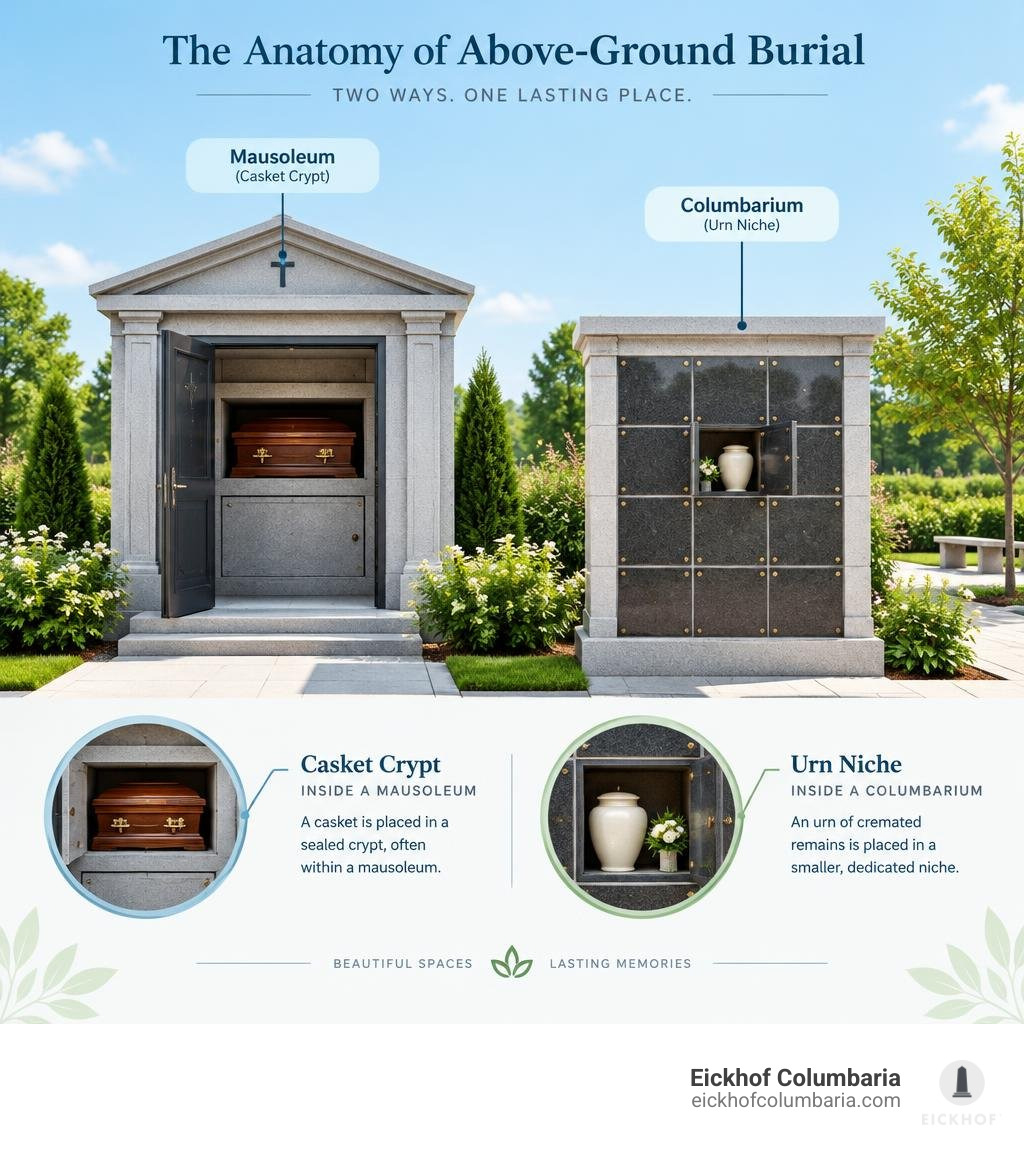
Understanding Above-Ground Entombment and Cemetery Architecture
Choosing a final resting place is one of the most personal decisions a family ever makes. While in-ground graves remain common across modern memorial parks, above-ground entombment has experienced a steady resurgence as families seek cleaner, more durable, and architecturally striking alternatives. Exploring resting places beyond traditional in-ground burial helps clarify why these elevated stone structures continue to provide peace of mind across generations.
The Mechanics of Entombment vs. Traditional In-Ground Burial
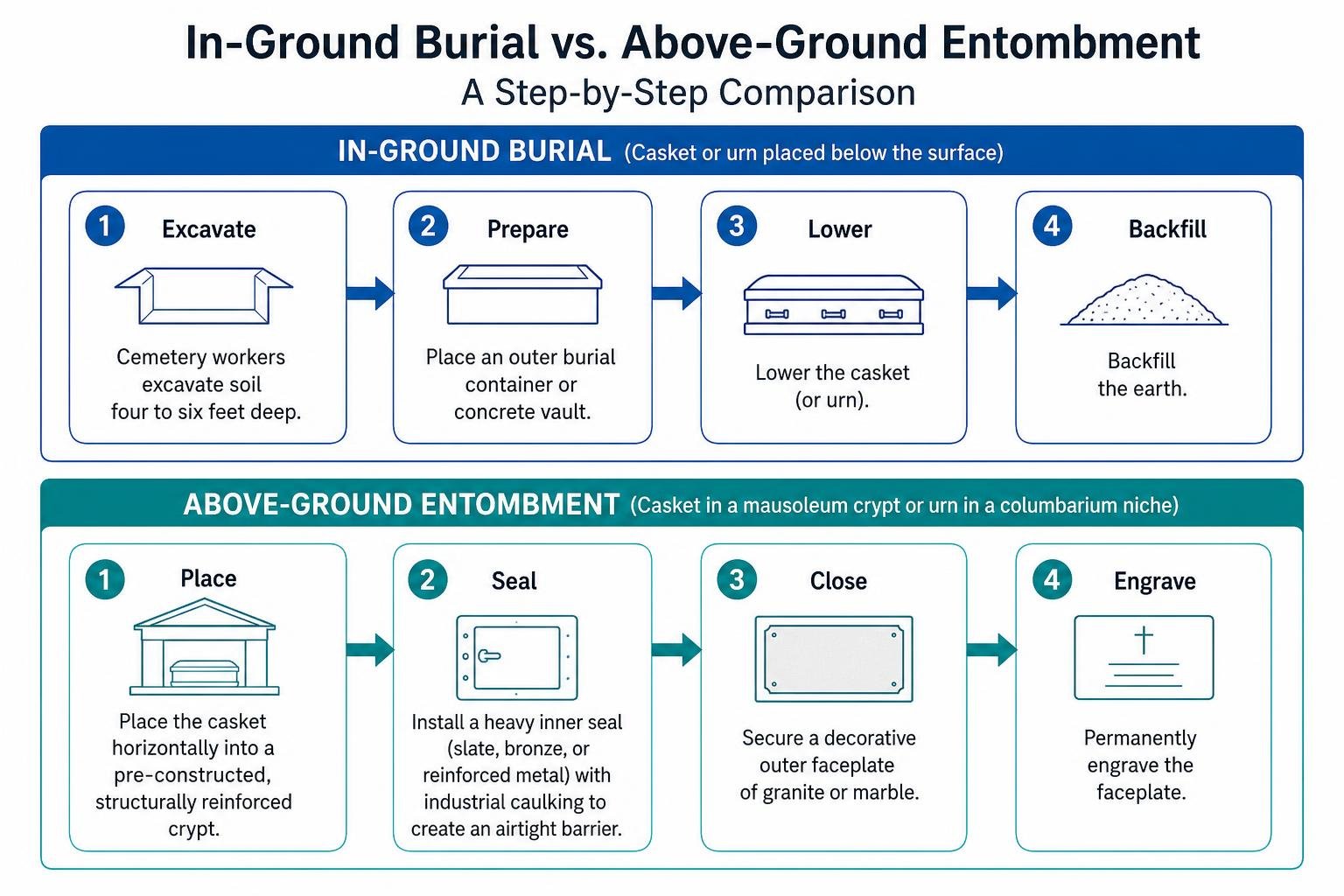
The entombment process differs fundamentally from lowering a casket into an excavated earthen grave. In a traditional subterranean plot, cemetery workers excavate soil four to six feet deep, place an outer burial container or concrete vault, lower the casket, and backfill the earth.
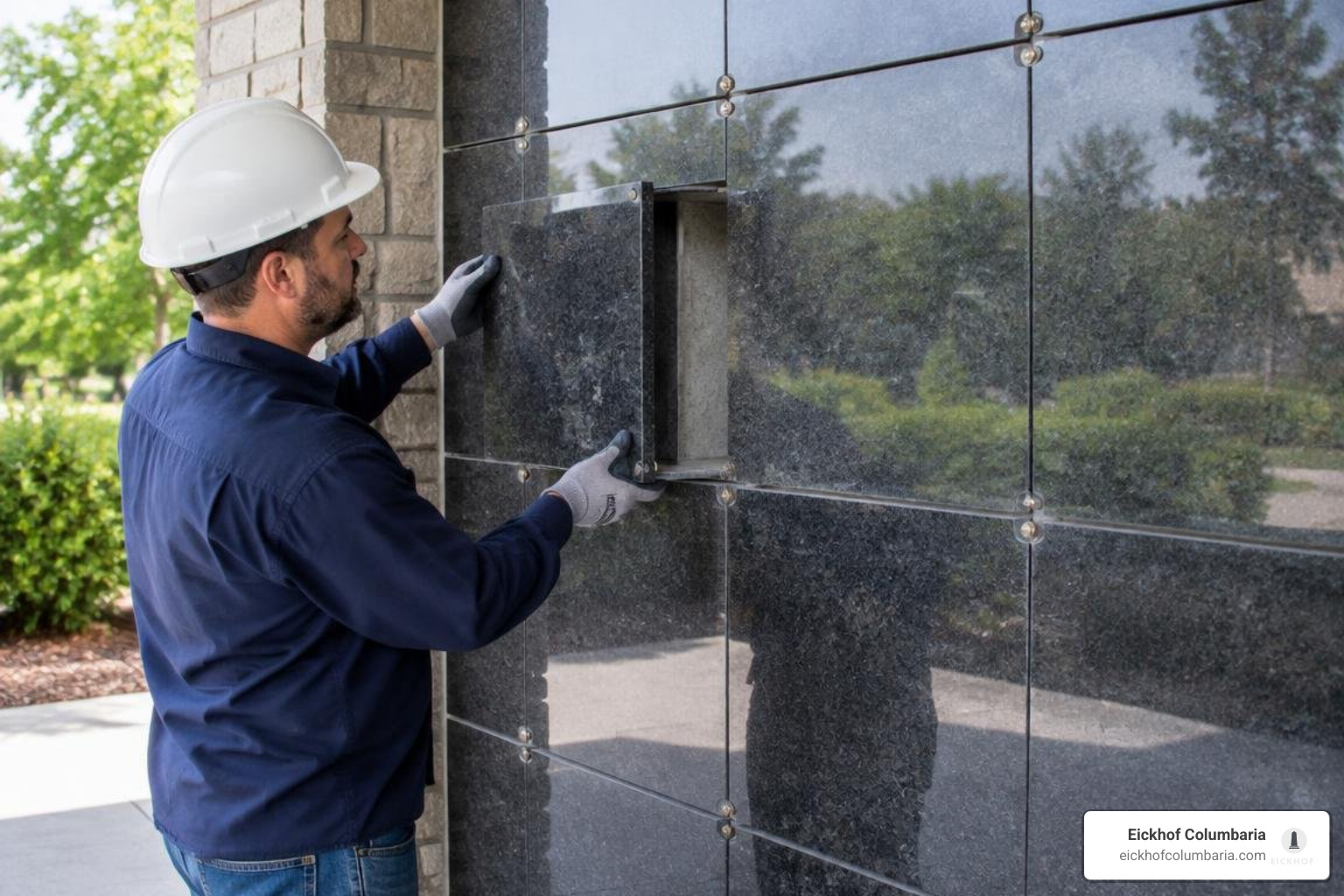
In contrast, above-ground entombment places the casket horizontally into a pre-constructed, structurally reinforced chamber known as a crypt. Once the committal service concludes, cemetery staff follow a precise process for placing caskets in a mausoleum. The casket rests on interior support rails, after which technicians install a heavy inner seal—often crafted from slate, bronze, or reinforced metal treated with industrial caulking—to create an airtight barrier. A decorative outer faceplate made of polished granite or marble is then secured and permanently engraved. Familiarizing yourself with a standard glossary of cemetery and funeral terms makes navigating these distinct structural components straightforward.
History and Evolution of Mausoleums
Above-ground memorial architecture holds deep historical roots. The word mausoleum originates from ancient Caria in 350 BC, where the grief-stricken Queen Artemisia commissioned a monumental tomb for her husband, King Mausolus. The structure was so awe-inspiring that it was designated one of the Seven Wonders of the Ancient World.
Across centuries, iconic above-ground tombs have honored history’s most prominent figures:
- The Taj Mahal in India, constructed in the 17th century as a magnificent white-marble monument of love.
- Westminster Abbey in London, serving as an above-ground sanctuary for British monarchs, poets, and scientists.
- Castel Sant’Angelo in Rome, originally commissioned by Emperor Hadrian as an imperial resting place.
By the 1920s, a major shift occurred across the United States, particularly throughout California. Cemeteries began developing large public community mausoleums, transforming what was once an exclusive luxury for royalty into an accessible, dignified option for everyday families. Reviewing mausoleum entombment options illustrates how historical monumental masonry evolved into today’s accessible cemetery landscapes.
Practical Advantages of Above Ground Burial Over Ground Graves
Families select above-ground entombment for practical convenience as much as aesthetic beauty. Among the primary benefits:
- Weather-Protected Visitation: Indoor public mausoleums offer climate-controlled corridors with carpeted walkways, subdued lighting, and comfortable seating. Families can visit their loved ones year-round without braving snow, mud, or heavy summer rain.
- Protection from Moisture and Settling Earth: Ground graves can shift over decades due to seasonal groundwater changes. Sealing remains inside elevated stone chambers ensures above-ground burial vaults remain dry and secure regardless of climate volatility.
- Optimized Land Use: Vertical engineering allows cemeteries to offer multiple tiers of resting places within a compact footprint, conserving green space while providing a structured, orderly memorial setting.
- Permanent Structural Security: High-grade granite and marble construction provides long-term resistance to external weather, pests, and soil erosion. Comprehensive overviews of mausoleum construction and features highlight how heavy stone architecture maintains its integrity over centuries.
Types and Architecture of Above Ground Burial
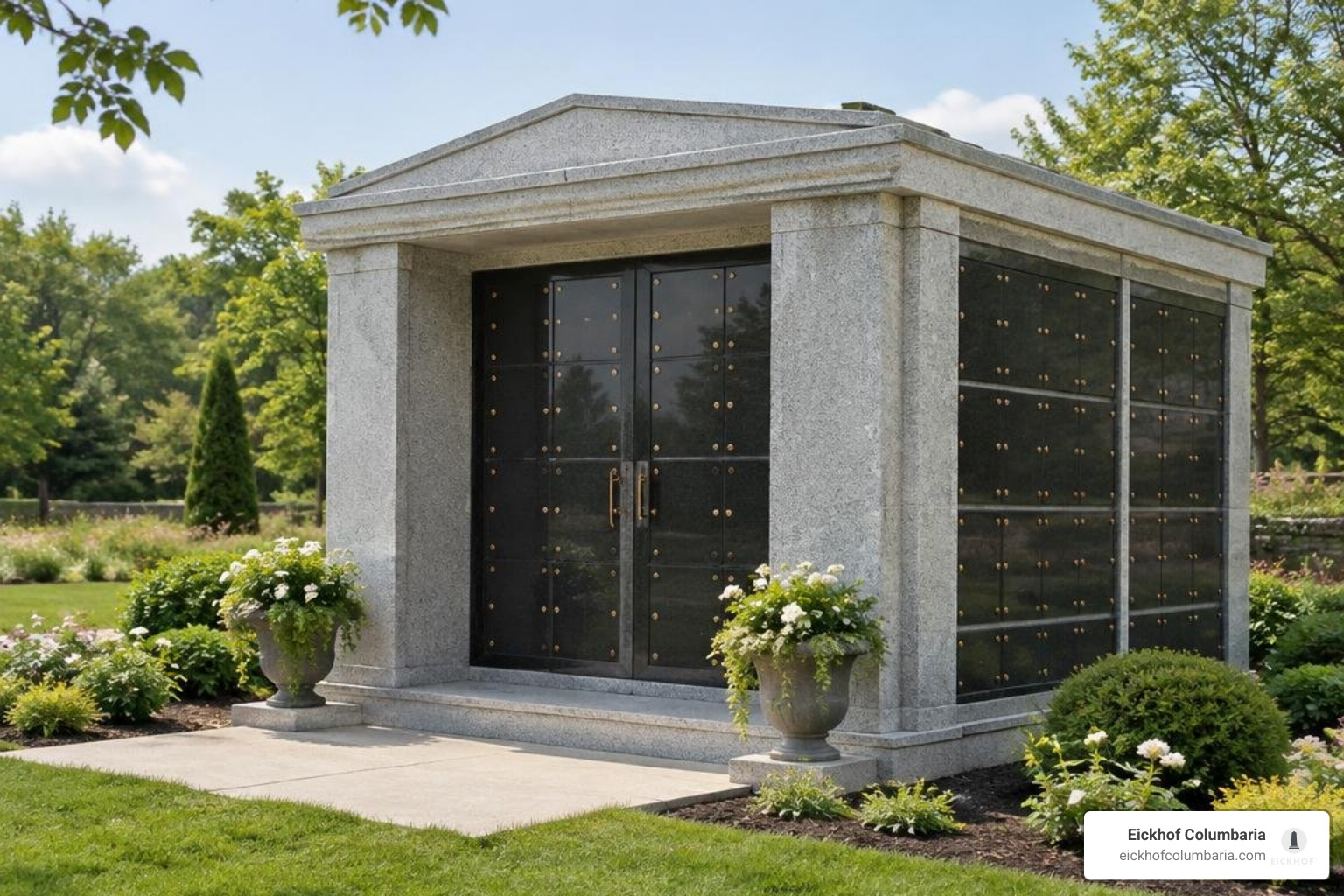
Above-ground architecture encompasses a wide variety of structural designs, from expansive community halls to serene outdoor garden complexes and intimate family shrines.
Public Community Mausoleums vs. Private Family Estates
When choosing an above-ground casket space, families generally select between public community facilities and custom private estates:
- Public Community Mausoleums: These grand structures accommodate hundreds or thousands of unrelated individuals. They are divided into indoor atrium mausoleums featuring climate control, stained glass, and chapel facilities, or garden mausoleums, which feature outdoor-facing crypts along covered stone porticos.
- Private Family Mausoleums: Built exclusively for a single family, these custom structures range from modest single-crypt and companion-crypt buildings to walk-in granite estates containing private stained glass, bronze entry gates, and interior sitting areas.
When comparing mausoleum vs ground burial, families often discover that community mausoleums eliminate the separate costs of purchasing land, excavation equipment, outer burial vaults, and ground headstones. Additional options, such as lawn crypts with integrated subsurface drainage, are also cataloged across modern cemetery burial and cremation options.
Columbarium Niches and Options for Cremated Remains
As cremation rates rise nationwide, above-ground memorialization has expanded through the use of dedicated columbaria. A columbarium is a freestanding stone structure or interior wall engineered specifically with secure individual compartments called niches.
Understanding wall burial for cremated and casketed remains helps families choose the right configuration. Niches typically measure 12 by 12 by 12 inches and comfortably house one or two urns. Outdoor columbaria feature polished granite faceplates inscribed with names and dates, while indoor glass-front niches allow families to display decorative urns alongside meaningful personal mementos. Modern memorial guides explaining what is a mausoleum and columbarium emphasize that above-ground niches give cremated remains the same permanence and prominence as traditional casket entombment.
At Eickhof Columbaria, we specialize in designing, manufacturing, and installing premium columbaria for cemeteries, churches, and civic memorial parks across the United States. Our handcrafted, concealed-hardware stone systems are precision-fabricated in-house, enabling rapid, turnkey installation that provides immaculate aesthetics without visible screws or mounting plates.
The New Orleans Tradition and Oven Vault Dynamics
No discussion of above-ground entombment in America is complete without examining New Orleans. Visitors touring St. Louis Cemetery No. 1 immediately notice walls of gleaming stucco and brick tombs rising like miniature urban skylines.
This distinctive style arose from geographical necessity. Because New Orleans sits below sea level with an exceptionally high groundwater table, early settlers discovered that digging in-ground graves often resulted in waterlogged excavations. In 1803, the city passed an official ordinance recommending above-ground interment to protect public health and preserve cemetery grounds.
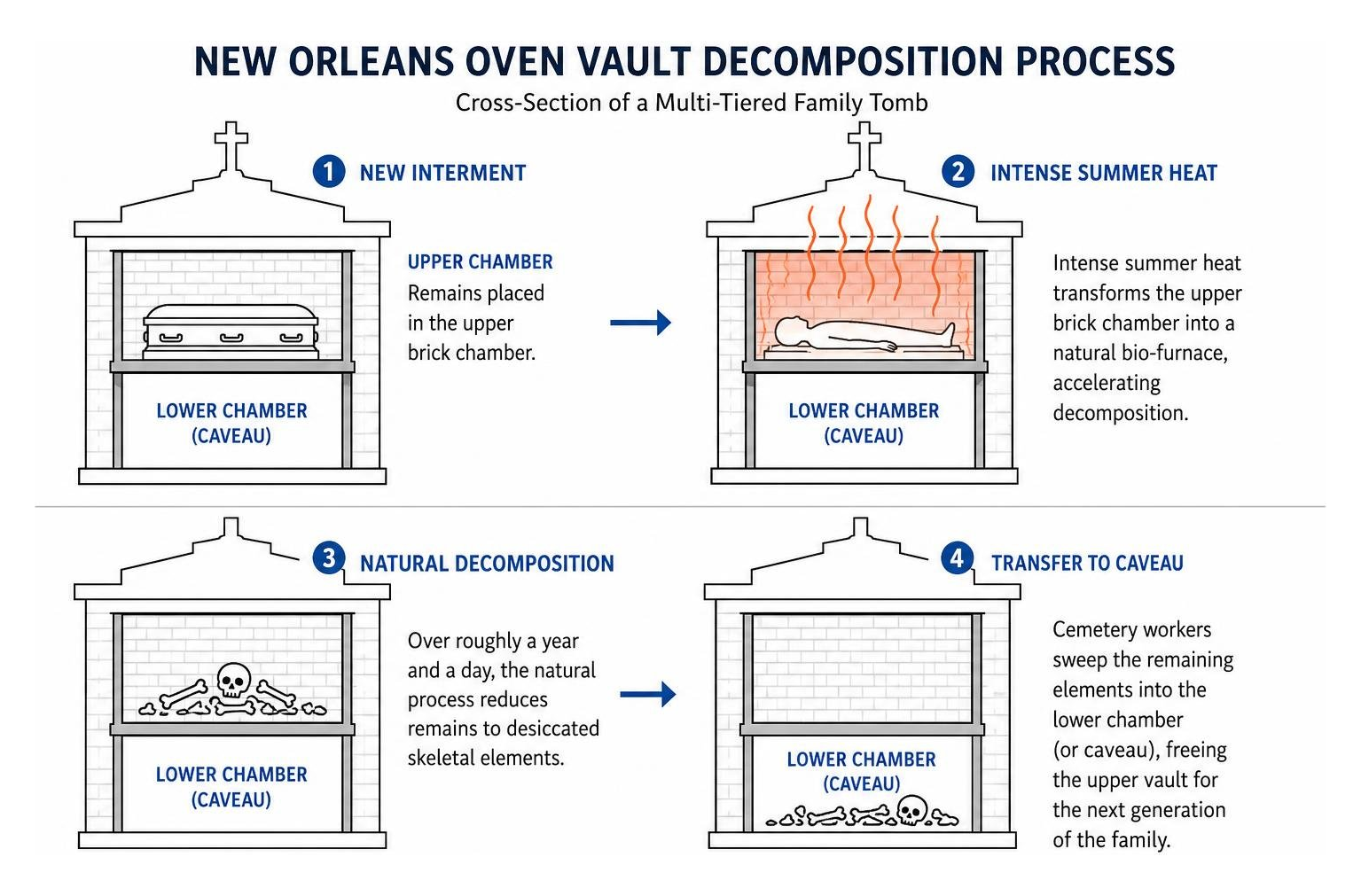
This requirement gave rise to the legendary oven vault tradition. In these multi-tiered family tombs, intense summer heat transforms the upper brick chamber into a natural bio-furnace, accelerating decomposition. Over roughly a year and a day, the natural process reduces remains to desiccated skeletal elements. Cemetery workers can then respectfully sweep the remaining elements into a lower chamber (or caveau), freeing the upper vault for the next generation of the family. The science behind how bodies mummify instead of decay in arid, sealed spaces explains how these historical vaults have served families for centuries.
2026 Cost Guide: Above-Ground Entombment vs. Traditional Burial
Many families assume that above-ground entombment is significantly more expensive than in-ground burial. However, when evaluating the total costs of an in-ground plot—including land purchase, concrete outer burial vaults, professional excavation fees, and memorial monuments—a community mausoleum crypt or columbarium niche often proves surprisingly comparable.
Cost Breakdown of Above Ground Burial Options in 2026
According to national cemetery data compiled in recent burial plot and crypt cost reports, above-ground pricing varies based on the structure’s exclusivity, architectural materials (such as imported granite or polished limestone), and geographic location.
- Single Crypt in a Community Mausoleum: An indoor single casket space averages $7,000 to $8,000, with typical pricing ranging from $3,000 to $10,000 depending on the tier level. (Eye-level “heart” crypts often cost more than bottom “touch” or top “prayer” tiers).
- Companion Crypt (Two Caskets): Side-by-side or end-to-end “couch” crypts in a community building average $6,000 to $15,000.
- Columbarium Niche (Cremation): A single or double niche ranges from $500 to $3,500, with the national average falling near $1,500 to $2,500. Detailed mausoleum niche pricing breakdowns can help you plan for these variations.
- Custom Private Family Mausoleums:
- Single-crypt private building: Starts around $15,000 to $25,000.
- Two-crypt companion building: Typically $26,000 to $35,000.
- Four-crypt private estate: Approximately $40,000 to $65,000.
- Walk-in private estate with custom stained glass: Begins at $95,000 and can exceed $400,000 to $1,000,000+ for large, multi-chamber stone buildings.
Inclusions, Ancillary Fees, and Long-Term Maintenance
When comparing quotes from cemeteries and funeral homes, always verify what is included in the base fee. An all-inclusive agreement should detail:
- Opening and Closing Fees: The labor required to lift stone faceplates, slide the casket or urn into place, secure the inner seal, and remount the stone facade ($800–$2,000).
- Inscription and Memorialization: Professional stone carving, bronze plaque attachment, or laser engraving ($250–$1,000).
- Endowment Care Funds: A state-mandated percentage of the purchase price placed into an irrevocable trust to guarantee ongoing landscaping, stone washing, roof maintenance, and structural repairs.
| Memorial Type | Average 2026 Price Range | Key Structural Inclusions | Primary Cost Drivers |
|---|---|---|---|
| Traditional In-Ground Grave | $2,000 – $7,500 | Soil plot only (Vault & monument extra) | Excavation, outer liner, headstone carving |
| Community Mausoleum Crypt | $4,000 – $10,000 | Sealed concrete/granite crypt, exterior stone | Level tier placement, indoor climate control |
| Columbarium Urn Niche | $500 – $3,500 | Compartment, stone faceplate, lock mechanism | Glass-front vs. granite, bronze ornamentation |
| Private Family Estate | $26,000 – $400,000+ | Custom granite structure, private foundations | Number of crypts, custom architectural design |
Essential Factors to Consider When Planning Above-Ground Interment
Whether you are arranging a service for immediate need or making advance plans, evaluating a few key structural and logistical factors will ensure a smooth process.
Pre-Need Planning, Location, and Accessibility
Cemetery plot and crypt prices rise approximately 4% to 6% annually due to real estate scarcity and construction costs. Arranging a pre-need purchase allows families to lock in current pricing, select adjacent companion spaces, and avoid rushed decisions during emotional times.
When evaluating facilities using a guide to above-ground mausoleum selections, consider the following:
- Physical Accessibility: Ensure older family members can easily navigate the corridors, parking areas, and ramps.
- Tier Placement: Crypts and niches are arranged in vertical tiers. Eye-level spaces offer effortless viewing, while higher and lower tiers provide cost-effective alternatives with identical structural protection.
- Veteran Benefits: The Department of Veterans Affairs (VA) provides burial allowances and headstone markers, which can offset overall cemetery expenses for eligible service members.
Material Durability, Structural Engineering, and Sealing
Above-ground structures endure natural weather cycles for decades. Consequently, the quality of engineering and raw materials is paramount.
- Stone Selection: Granite remains the industry benchmark for external faces and columbaria due to its near-zero water absorption, high compressive strength, and resistance to acid rain. Marble offers timeless elegance for indoor atriums, while exterior limestone requires specialized sealing in freeze-thaw climates.
- Internal Sealing and Ventilation: Modern crypts incorporate internal vent channels that allow moisture to dissipate naturally while preventing odors from entering public atriums. Inner closure plates must use industrial caulking and commercial-grade sealants to keep the chamber dry.
- Hardware Security: Look for concealed-hardware mounting systems. Exposed brass rosettes or surface screws can oxidize and loosen over time, whereas internal, precision-engineered stone-clamping mechanisms preserve clean architectural lines and prevent tampering.
Frequently Asked Questions About Above-Ground Entombment
Why are above-ground tombs standard in New Orleans?
New Orleans sits below sea level with an extremely shallow water table. Early European settlers found that digging standard in-ground graves often resulted in flooded burial shafts. Influenced by French and Spanish above-ground architectural styles, the city codified the practice in an 1803 ordinance requiring above-ground interment to ensure dry, sanitary, and flood-resilient burials.
How does natural decomposition work inside a sealed crypt?
Unlike an in-ground grave where soil microbes, fluctuating moisture, and groundwater accelerate decomposition, a modern above-ground crypt provides a dry, enclosed environment. The crypt features specialized airflow channels designed to exhaust moisture toward the building’s exterior venting system. This steady, arid airflow desiccates organic tissue over time, leading to natural preservation rather than standard subterranean decay.
Can an above-ground crypt accommodate both caskets and urns?
Yes. Many modern cemeteries provide companion crypts engineered to hold two caskets end-to-end or side-by-side. Additionally, cemeteries frequently permit families to place an urn alongside a casket inside an existing crypt, or they incorporate custom columbarium niches directly into the outer walls of private mausoleums to accommodate both forms of memorialization.
Conclusion
Above-ground entombment remains one of the most resilient, clean, and dignified ways to honor a loved one. By combining timeless architectural beauty with practical advantages—such as protection from seasonal weather, pristine indoor visitation, and sustainable land stewardship—above-ground crypts and columbaria offer families enduring comfort across generations.
For cemeteries, churches, and civic institutions looking to develop durable memorial spaces, Eickhof Columbaria provides turnkey manufacturing and installation of custom, pre-assembled niche walls. Whether your community requires an expansive outdoor granite columbarium or an intimate indoor chapel addition, discovering private mausoleum crypts and modern above-ground burial traditions ensures your final tribute stands as a lasting legacy of remembrance.