

Can Cremated Remains Be Buried With Another Person? Legal and Cemetery Rules
When exploring whether can cremated remains be buried with another person, the short answer is almost always yes, but the long answer involves navigating specific cemetery bylaws and state statutes. Cremation has fundamentally reshaped modern memorialization. The U.S. cremation rate is projected to reach 63.4% in 2025 and climb to 82.3% by 2045, while the Cremation Association of North America (CANA) recorded a 61.8% rate in 2024 with projections reaching 67.9% by 2029. As more people choose cremation, cemeteries across the country have adapted their policies to support shared resting places.
However, the legal ability to inter an urn in an existing grave does not rest solely on whether there is physical dirt left to dig. Every cemetery operates under established rules regarding property boundaries, ground integrity, and record-keeping. State statutes typically govern the legal definition of burial rights, but individual memorial parks set the precise terms for how many remains can occupy a single space.
Understanding Rights of Interment and Required Permissions
A common misconception is that purchasing a cemetery plot means you own the physical real estate. In reality, purchasing a plot grants you a “right of interment”—a contractual license to bury human remains in that designated space.
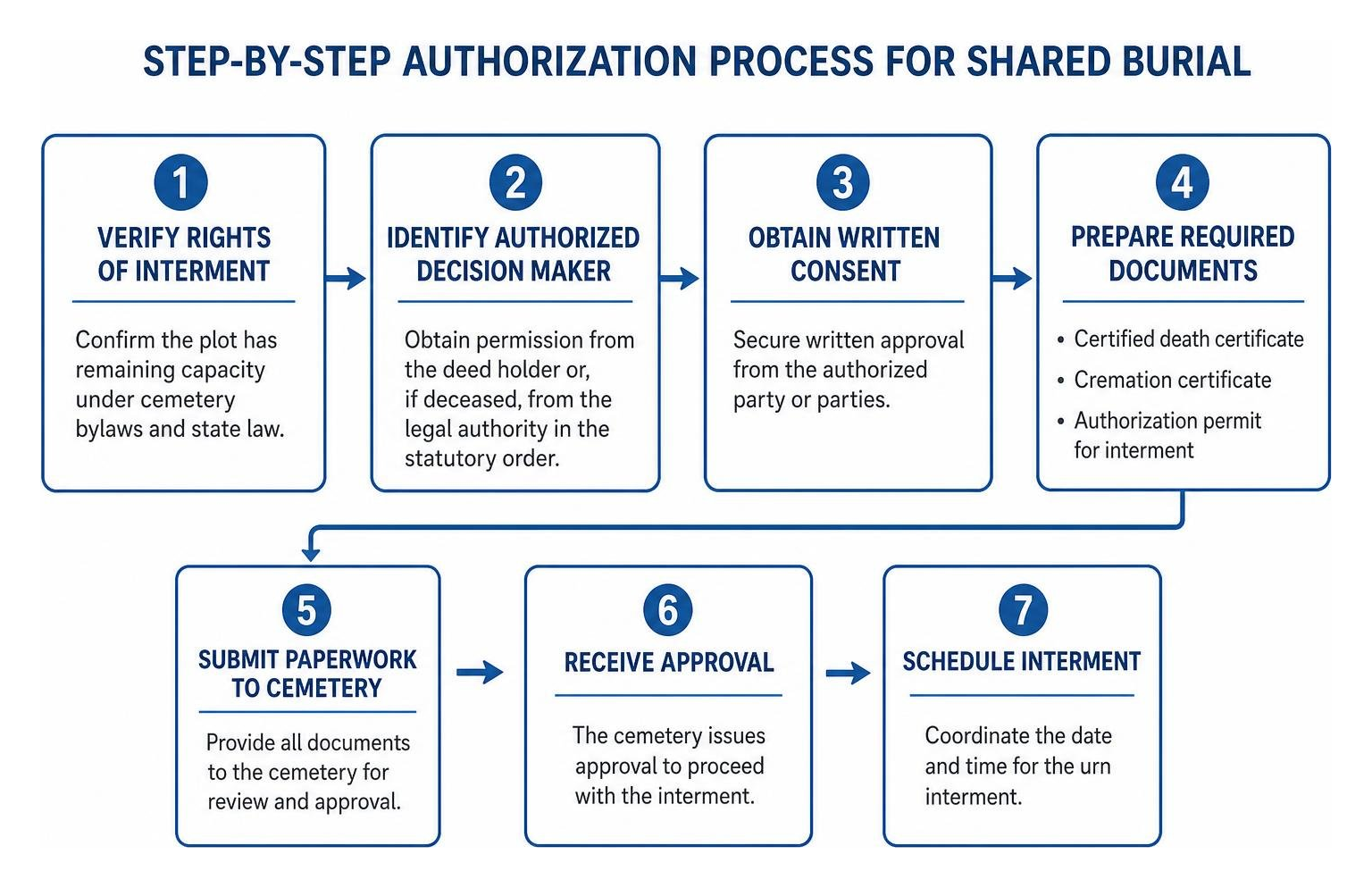
To inter cremated remains alongside an already buried loved one, you must secure authorization from the registered deed holder or their legal heirs. If the original deed owner is deceased, the legal authority transfers according to a statutory hierarchy:
- Designated agent named in a valid legal directive
- Surviving spouse
- Adult children (often requiring unanimous or majority written consent)
- Surviving parents
- Surviving siblings
Alongside written permission from the deed holder, cemeteries require formal paperwork before opening the ground. This includes a certified copy of the death certificate, a cremation certificate (issued by the crematory to confirm the identity of the ashes), and an authorization permit for interment. Attempting an unrecorded burial is illegal and violates cemetery bylaws, which can lead to hefty fines or the disinterment of the urn.
Plot Capacity: How Many Urns Can Share a Single Grave?
Because cremated remains are compact, cemeteries can utilize ground space far more efficiently than with traditional full-body caskets. An adult’s cremated remains typically weigh between four and eight pounds (women average four to six pounds; men average six to eight pounds). Standard industry sizing uses the formula of one cubic inch of urn capacity per pound of body weight before cremation, meaning an average adult requires approximately 200 cubic inches.
Given these modest dimensions, plot capacities vary based on cemetery regulations and physical site conditions:
- Standard Adult Grave (Empty): Typically accommodates between two and four urns, though some private family plots allow up to six or eight depending on depth and layout.
- Standard Grave with an Existing Casket: Usually accommodates one or two additional urns placed above or alongside the casket vault.
- Dedicated Cremation Plot: Smaller plots (often 3×3 feet or 4×4 feet) designed specifically for one or two urns.
Cemeteries establish density caps to ensure the ground remains stable and to prevent equipment from disturbing adjacent burials during future interments.
Methods for Sharing a Burial Space with Cremated Remains
Families looking to unite loved ones have several practical methods available. Whether you are adding an urn to an occupied grave, using a double-capacity container, or exploring above-ground alternatives, each approach comes with distinct structural requirements.
| Placement Method | Typical Space Required | Container Requirements | Primary Considerations |
|---|---|---|---|
| Urn Over Existing Casket | Existing standard plot (approx. 3.5′ x 8′) | Durable urn + rigid urn vault | Requires minimum soil depth (usually 18″–24″ above casket vault) |
| Multiple Urns in Single Plot | Standard plot or cremation plot | Individual urns + individual or shared urn vaults | Cemetery limits total count; each requires opening/closing fees |
| Companion Urn (In-Ground) | Standard or dedicated cremation plot | Companion urn (400–600 cu. in.) + companion vault | Single container holds two individuals; interred simultaneously or reopened |
| Columbarium Niche | Standard niche (e.g., 12″ x 12″ x 12″) | Non-metallic, sealed companion or single urns | Clean, dry above-ground placement; no outer vault needed |
| Urn Placed Inside Casket | Inside casket prior to burial | Compact urn or sealed velvet pouch | Must be arranged before casket is sealed and buried; requires director approval |
Can Cremated Remains Be Buried With Another Person in an Existing Casket Grave?
Yes. Adding an urn to a grave that already holds a casket is one of the most popular shared burial methods. When a traditional full-body burial takes place, the casket sits inside an outer burial container (vault) deep in the earth. Because standard graves are dug between five and six feet deep, there is typically ample soil depth above the vault lid.
The cemetery grounds crew will excavate a shallow trench (usually 18 to 24 inches deep) directly above or slightly to the side of the existing casket vault. The urn, secured inside a smaller urn vault, is then lowered into place. This allows spouses or parent-child pairs to share a single gravesite even if one chose traditional casket burial decades before the other chose cremation. For families weighing ground constraints, options beyond traditional in-ground burial provide durable alternatives when ground space is limited.
Using Companion Urns and Shared Columbarium Niches
A companion urn is a single memorial vessel specifically designed to hold the remains of two people. These urns typically offer an interior volume of 400 to 600 cubic inches. They are manufactured in two standard configurations:
- Divided Compartments: The interior features a physical divider separating the two sets of ashes. This preserves individual identity while keeping the couple housed in one exterior vessel.
- Blended Interior: A single large chamber where the ashes are combined together.
Companion urns can be buried in the ground or placed in an above-ground columbarium niche. Selecting the best companion urns for shared niches requires checking the interior dimensions of the niche wall. When choosing a cremation niche, confirm whether the niche is classified as single or companion capacity to ensure the vessel fits comfortably behind the stone or glass shutter.
Placing an Urn Inside a Casket Before Burial
Families often ask if they can place a deceased loved one’s urn directly inside the casket of another person prior to burial. This is common when a spouse who died years earlier was cremated, and their surviving partner passes away wishing to be buried in a traditional casket.
This is legally permissible in most jurisdictions, provided:
- The cemetery bylaws permit an additional set of remains within the casket.
- The funeral director is informed beforehand to document the placement.
- The urn is placed securely (often at the foot of the casket) before final committal.
- The cemetery records both individuals in their permanent registry, which may involve a second interment fee.
Legalities of Mixing Ashes, Private Property, and Family Plots
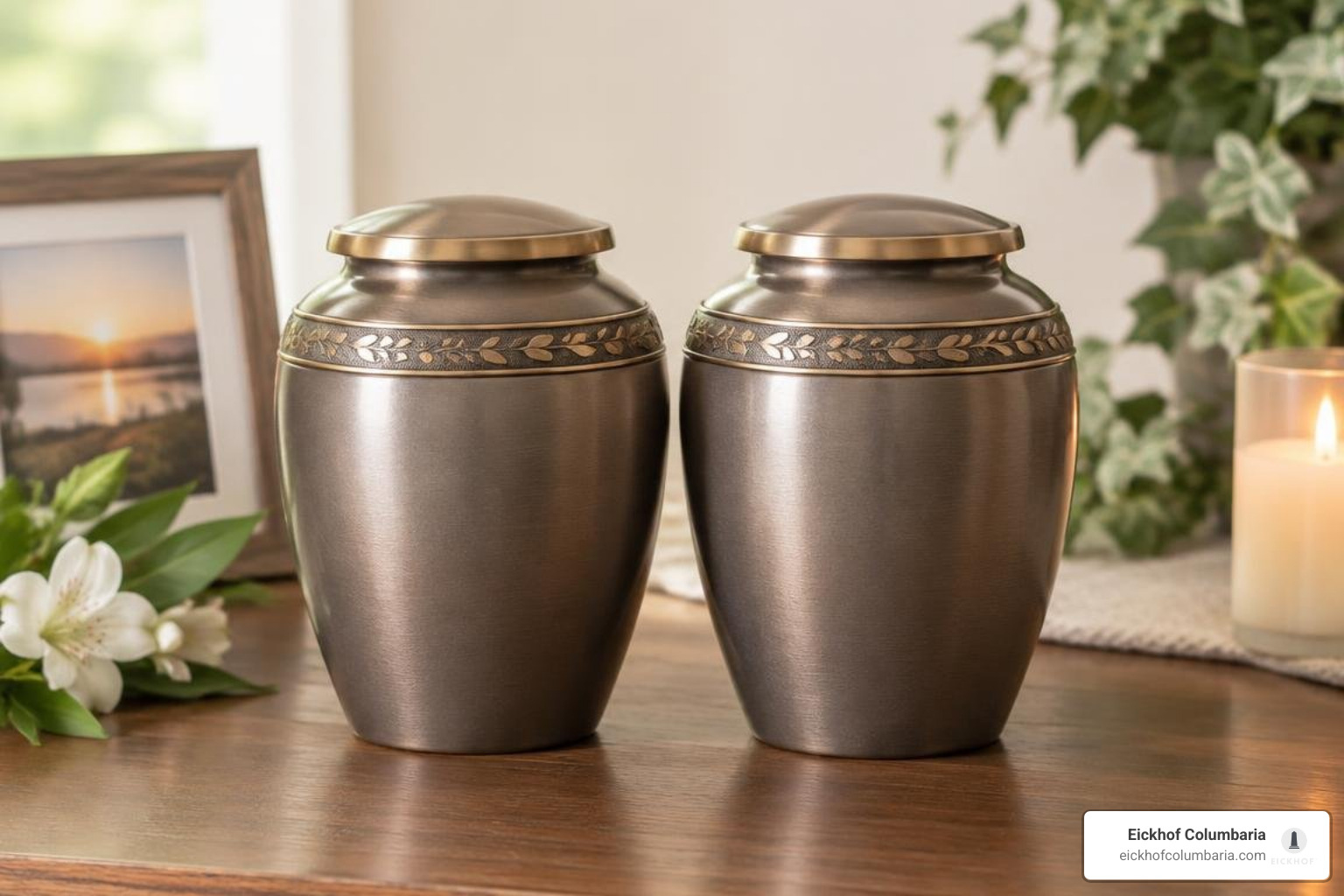
Deciding how to share a resting place also raises questions about physical mixing, private property interments, and historical family plots.
Is It Legal to Mix Two People’s Ashes Before Interment?
Commingling—the intentional act of combining two individuals’ ashes into a single container—is legal across most of the United States, provided the person authorizing the action possesses the legal right of disposition. However, it is an irreversible decision. Once mixed, the inert calcium phosphate mineral fragments cannot be separated.
Before combining remains, review established legal guidelines for combining cremated remains. While crematories take strict precautions to prevent accidental commingling during the cremation process itself, families can choose to combine the ashes afterward.
Important Exception for Veterans: The U.S. Department of Veterans Affairs (VA) maintains strict regulations regarding national cemetery interments. The VA treats commingled remains as inseparable. If an eligible veteran and a non-eligible individual have their ashes mixed, or if a veteran’s ashes are mixed before eligibility verification, it can complicate or disqualify placement in a VA national cemetery.
Can Cremated Remains Be Buried With Another Person on Private Property?
Burying cremated remains on private land or within a private family cemetery plot is generally permitted in rural and unincorporated areas, but municipal zoning codes often restrict the burial of human remains in suburban or urban neighborhoods.
Key considerations for private property burial include:
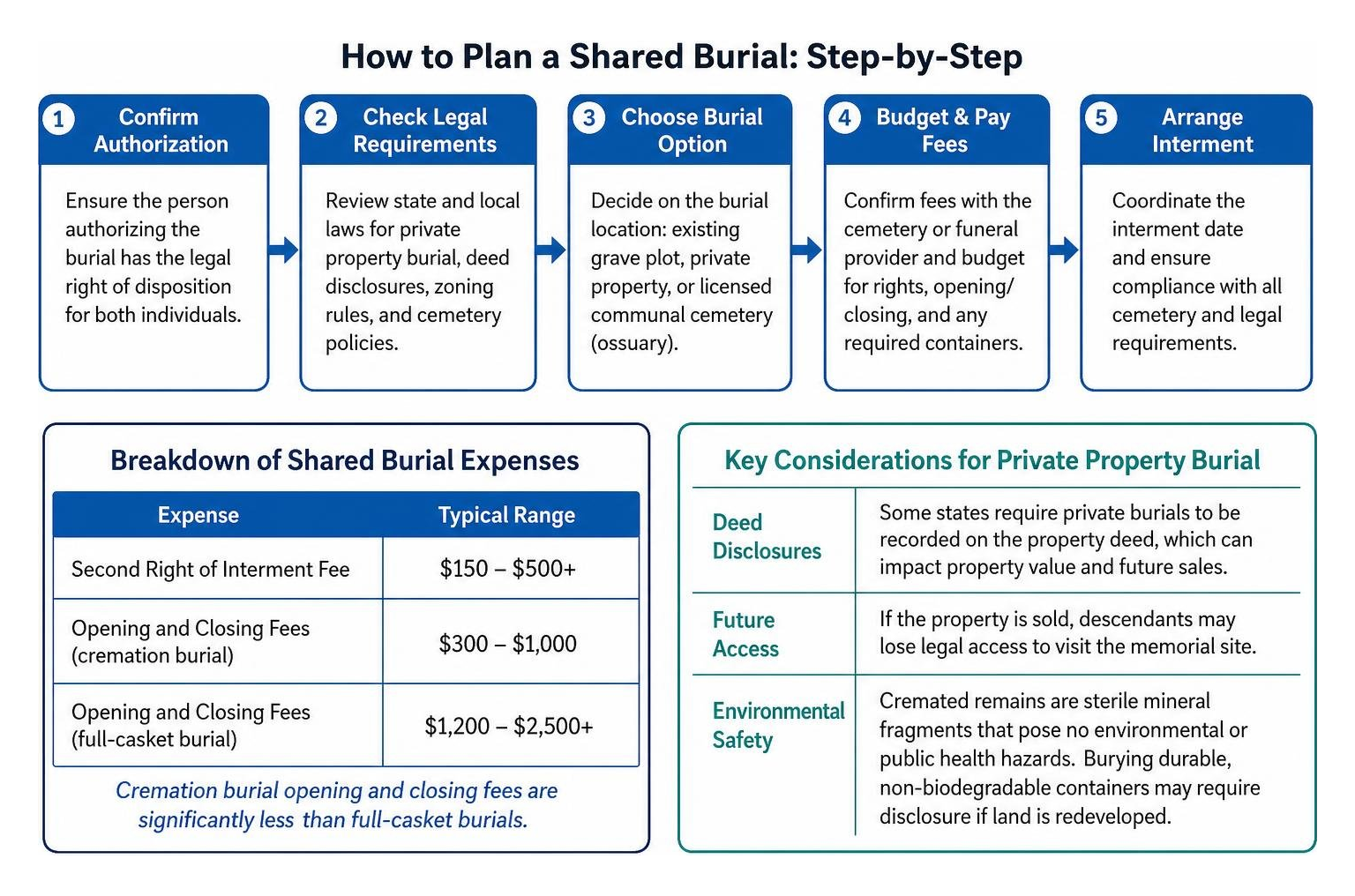
- Deed Disclosures: Some states require private burials to be recorded on the property deed, which can impact property value and future sales.
- Future Access: If the property is sold, descendants may lose legal access to visit the memorial site.
- Environmental Safety: Cremated remains are sterile mineral fragments that pose no environmental or public health hazards. However, burying durable, non-biodegradable containers may require disclosure if land is redeveloped.
What Happens to Unclaimed Cremated Remains?
According to industry data, approximately 26% of U.S. households and 19% of Canadian households hold cremated remains at home, often temporarily while deciding on a permanent resting place. But when families do not claim ashes from a funeral home, strict legal holding periods apply.
State regulations dictate how long a crematory or funeral home must store unclaimed remains, typically ranging from 90 days to several years (such as up to four years in certain states). If left unclaimed after exhaustive contact efforts, the law permits funeral providers to place the remains in a licensed communal cemetery crypt, an ossuary, or a dignified shared burial ground.
How to Plan a Shared Burial: Step-by-Step Costs and Authorizations
Planning a shared burial requires budgeting for logistical expenses beyond the initial purchase of the urn.
Navigating Cemetery Fees and Second Rights of Interment
When adding cremated remains to an existing grave, cemeteries assess specific fees:
- Second Right of Interment Fee: A fee for the legal right to place an additional individual into an existing lot. This typically ranges from $150 to $500+.
- Opening and Closing Fees: The labor cost of excavating and refilling the small grave. For cremation, this usually costs between $300 and $1,000, which is significantly less than the $1,200 to $2,500+ charged for full-casket burials.
- Urn Vault Cost: If required by the cemetery, an outer urn vault costs between $150 and $600.
- Administrative and Recording Fees: Standard filing charges ($50 to $200) to update the master cemetery registry.
For comparison, families looking at columbaria can review single niche options and capacity and evaluate how to select a niche to contrast above-ground fees against in-ground excavation costs.
Religious Perspectives and Inscription Rules
Different faith traditions have distinct guidelines regarding shared burials:
- Catholic Church: The Vatican’s instruction Ad resurgendum cum Christo states that while cremation is permitted, ashes must be laid to rest in a sacred place (a cemetery or columbarium). Commingling or scattering ashes is prohibited, but interring two individual urns in a shared family grave or niche is fully permissible.
- Protestant Traditions: Generally flexible, allowing shared graves, companion urns, and blended remains based on family preference.
- Jewish and Islamic Faiths: Traditional Jewish and Islamic laws strictly mandate full-body earth burial and discourage cremation. However, for families navigating mixed traditions, individual cemetery policies dictate memorialization.
When adding a name to a shared headstone or columbarium faceplate, review the cemetery’s rules for memorial inscriptions. Cemeteries often mandate specific fonts, character limits, and carving techniques to ensure visual harmony across the memorial.
Frequently Asked Questions About Shared Cremation Burials
Can a husband and wife be buried together if one is cremated and one is not?
Yes. This is very common. The spouse who passes first and receives a traditional casket burial is laid to rest in the standard manner. When the second spouse passes and is cremated, their urn is interred in the soil directly above the first spouse’s casket vault or placed in a shared monument space, provided the cemetery’s second right of interment rules are followed.
How much does it cost to add an urn to an existing grave?
The average total cost to add an urn to an existing grave typically ranges from $600 to $1,800. This encompasses the second right of interment fee ($150–$500), opening and closing labor ($300–$1,000), an urn vault ($150–$600), and headstone engraving fees ($150–$450). This represents significant savings compared to the national median cost of a funeral with burial ($8,300) or a standalone funeral with cremation ($6,280 in 2023).
Do you need an urn vault when burying ashes with another person?
In most commercial and municipal cemeteries, yes. While state laws do not legally require urn vaults, cemetery bylaws almost universally mandate them for in-ground interments. Urn vaults protect the urn from the weight of the earth and maintenance equipment, preventing the ground above from sinking over time.
Conclusion
Sharing a burial space provides a comforting, enduring way to honor the bonds of family and partnership. Whether you place an urn within an existing family plot, share an above-ground columbarium niche, or choose a companion urn, pre-planning ensures that all legal permissions, structural capacities, and cemetery authorizations are smoothly addressed.
At Eickhof Columbaria, we design, manufacture, and install handcrafted, concealed-hardware columbaria systems for cemeteries, churches, and memorial parks across the nation. To learn more about modern interment structures, read our guide on cemetery placement options and costs explained to find the ideal resting place for your family’s legacy.