

Choose Metal Flower Holders That Stay Secure and Cemetery-Ready
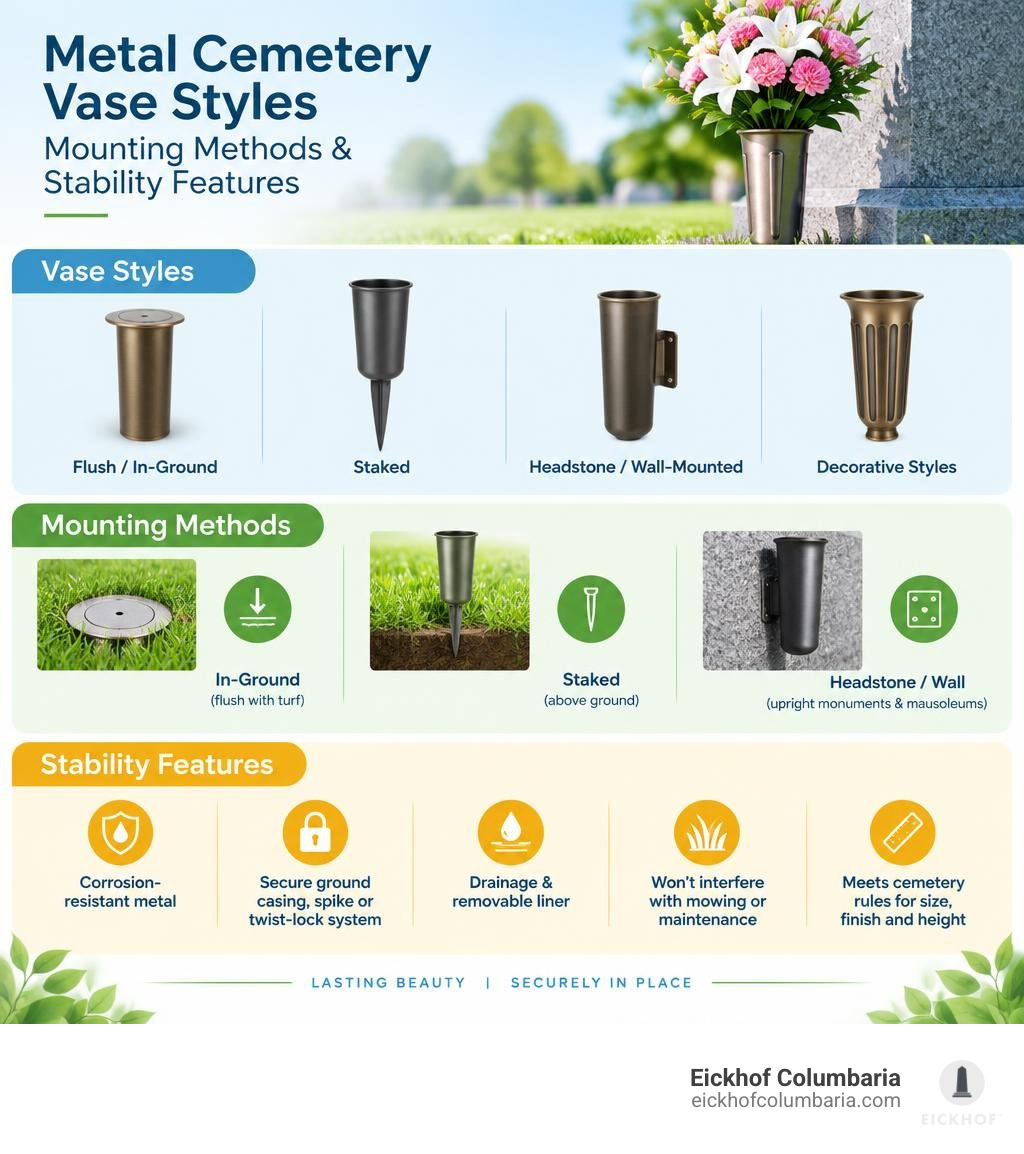
For a durable gravesite floral display, choose a metal holder that matches the cemetery’s rules and the installation surface. Flush, in-ground metal vases are best for lawn areas because they can sit level with the turf when not in use. Staked steel holders work well where above-ground displays are allowed, while headstone- or wall-mounted vases are made for upright monuments and mausoleum spaces.
When comparing cemetery flower holders metal options, prioritize:
- Corrosion-resistant metal, such as coated zinc or die-cast aluminum
- A secure ground casing, spike, or twist-lock system
- Drainage and a removable liner for fresh or artificial flowers
- A design that will not interfere with mowing or cemetery maintenance
- Approved dimensions, finish, and height under local cemetery rules
The right holder does more than hold a bouquet. It keeps flowers upright in wind and rain, creates a neater memorial area, and reduces replacement work for families and grounds teams. This guide compares practical metal vase styles, materials, installation methods, and theft-deterrent choices for long-term cemetery use.
Related content about cemetery flower holders metal:
Types and Styles of Cemetery Flower Holders Metal
Selecting the proper floral holder begins with understanding the physical layout of the memorial space and the specific demands of grounds maintenance. Whether installed at a flat lawn grave, beside an upright granite monument, or along a memorial walkway, different configurations offer unique operational advantages.

Flush-Ground and In-Ground Reversible Vases
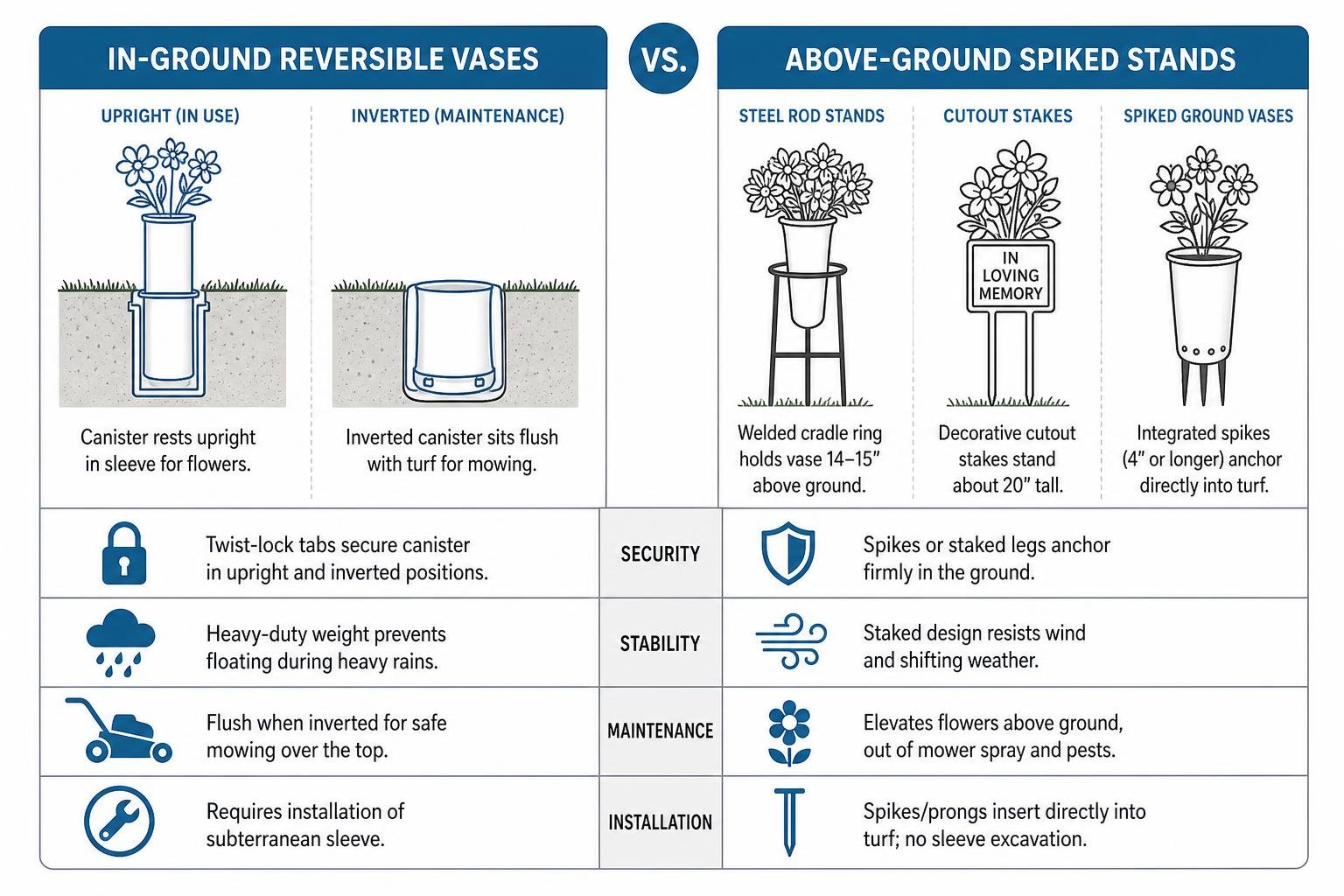
In-ground systems represent the gold standard for modern memorial parks and flat-marker cemetery sections. These units consist of an outer sleeve—often constructed from tough polymer or cast metal—permanently embedded into the turf, paired with an invertible inner canister.
When family members place bouquets, the vase canister rests upright in its casing. During winter months or routine lawn maintenance, groundskeepers invert the canister so it rests upside down inside the subterranean sleeve. In this reversed position, the heavy-duty base of the vase sits perfectly level with the turf line, allowing commercial riding mowers to roll directly overhead without clipping the metal or dulling their blades.
High-end models, such as die-cast zinc invertible units, feature substantial wall thickness and weight. This mass prevents the canister from floating out of its casing when torrential rains flood the surrounding turf. Integrated twist-lock tabs keep the canister firmly secured in both upright and inverted positions, eliminating accidental displacement by wind or equipment vibration.
Staked Stands and Cutout Memorial Stakes
For cemeteries that allow above-ground floral displays year-round or during designated holiday periods, staked metal holders provide elevated visibility and exceptional stability against shifting weather.
- Heavy-Gauge Steel Rod Stands: Built using 1/4-inch solid American steel rods, these stands feature welded cradle rings designed to hold standard flower vases roughly 14 to 15 inches above the ground. Elevating the arrangement protects delicate blooms from ground pests and mower spray while keeping the tribute clearly visible from access roads.
- Decorative Memorial Cutout Stakes: Fabricated from flat-cut steel plate, products such as the Flower Bouquet Stake – Metal Cutout Memorial Stake for Loved Ones combine structural strength with artistic silhouettes, offering durable tribute displays that stand roughly 20 inches tall.
- Spiked Ground Vases: Units with integrated ground prongs (often 4 inches or longer) anchor directly into compact turf without requiring permanent subterranean sleeve excavation.
Metal Durability and Material Comparison
Outdoor memorial hardware must endure extreme temperature fluctuations, direct ultraviolet exposure, driving rain, and corrosive soil chemistry. Selecting the appropriate metal alloy ensures the floral holder maintains its structural integrity and aesthetic appeal for decades.
Choosing Resilient Cemetery Flower Holders Metal Materials
Different metals provide distinct balances of tensile strength, weight, corrosion resistance, and manufacturing economy:
- Die-Cast Zinc: Zinc alloys are virtually immune to rust and atmospheric corrosion. Because zinc offers significant density, cast zinc units resist floating during heavy turf flooding. Powder-coated zinc remains one of the most widely specified materials for municipal and private memorial parks.
- Die-Cast Aluminum: Aluminum naturally forms a protective oxide layer that resists atmospheric degradation. Aluminum vases offer high tensile strength and sharp detail without excessive weight, making them well-suited for wall-mounted monuments and headstone brackets.
- Solid Steel Rod and Plate: Structural steel provides unmatched resistance to mechanical impact. When treated with an industrial powder-coat finish, heavy steel rod stands routinely survive 15 to 25 years in harsh northern winters without structural failure.
- Cast Iron: Traditional iron provides immense mass and classic weight. However, it requires a continuous, sealed surface finish to prevent surface oxidation when exposed to moisture.
| Material Type | Corrosion Resistance | Weight & Flood Stability | Mower Impact Safety | Primary Application |
|---|---|---|---|---|
| Die-Cast Zinc | Exceptional (Non-rusting) | High (Resists floating) | Excellent (In-ground flush) | Lawn-level grave markers |
| Die-Cast Aluminum | High (Oxide protection) | Moderate | Moderate to High | Upright stones, flush canisters |
| Powder-Coated Steel | High (When coated) | Moderate | N/A (Above-ground stake) | Holiday tributes, elevated vases |
| Cast Iron | Moderate (Requires finish) | Very High | High | Freestanding base fixtures |
| Polyethylene (Alt.) | Total (Immune to rot) | Low (Lightweight) | High | Scrap-theft deterrent units |
Rust Prevention, Coatings, and Liners
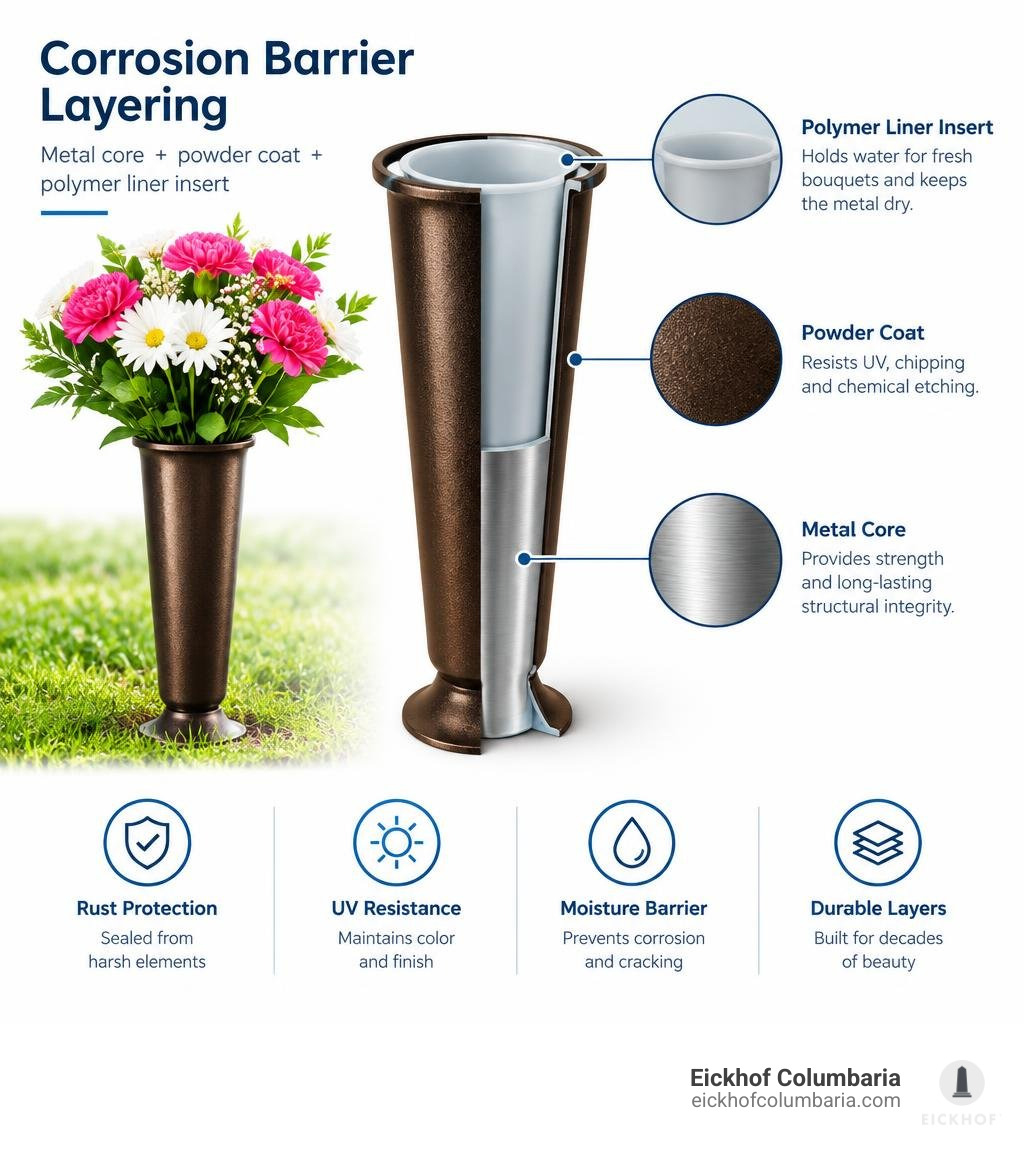
Uncoated ferrous metals quickly degrade when exposed to standing water, lawn fertilizers, and acidic soil. Premium metal cemetery flower holders employ multi-stage finishing processes to seal the underlying metal from environmental exposure.
Polyester-based powder coatings are electrostatically applied and cured under intense heat, creating a hard shell that resists chipping, ultraviolet degradation, and chemical etching from lawn treatments. Popular architectural finishes include antique bronze, pewter silver, textured hammertone, and classic gloss black.
To protect the interior cavity of metal holders from standing stagnant water—which can cause galvanic corrosion or freeze-thaw cracking during sub-zero winters—cemetery grounds operators often recommend that families choose the best plastic liners for cemetery vases. Internal polypropylene liners act as a sacrificial moisture barrier, holding the hydration water for fresh bouquets while keeping the metal casing completely dry.
Installation, Ground Stability, and Anti-Theft Features
A memorial flower holder must remain securely upright in high winds and resist unauthorized removal while allowing effortless bouquet replacement.
Securing Cemetery Flower Holders Metal Against Wind and Mowers
The primary failure point of lower-grade flower stakes is rotational loosening caused by wind gusts buffeting tall floral arrangements. When wind catches a full bouquet, the lateral force acts as a lever, twisting the stake loose from the soil.
To counteract rotational loosening, high-grade memorial holders implement engineered anti-rotation geometries. For example, historical engineering solutions like the Flower holder (US Patent 4094096) utilize a metal standard with a beveled lower end that mates directly against an angled receiving sleeve driven deep into the ground. This beveled interface creates a mechanical friction-lock that prevents the holder from spinning or tilting, even under heavy seasonal wind loads.
When installing ground sleeves or staked holders into dense or frozen soil:
- Locate Turf Clearance: Confirm that the location sits within the plot’s permitted floral zone, typically immediately adjacent to the headstone base or flush marker border.
- Pilot the Borehole: In compacted or clay-heavy turf, use a soil auger or masonry pilot rod to create an entry channel rather than forcing the holder directly into dry soil.
- Seat with a Rubber Mallet: Drive the mounting tube or ground stake into the turf using a dead-blow rubber mallet. Striking metal components with a steel hammer can crack the protective powder coat, exposing the core metal to premature rust.
- Verify Flush Alignment: For in-ground sleeves, ensure the top perimeter ring sits precisely 1/8 inch below the surrounding grass thatch line to ensure mower reels glide safely across the opening.
Theft Prevention and Headstone Mounting Options
Scrap metal theft remains an unfortunate reality for cemetery superintendents and grieving families. Polished brass, bronze, and copper accessories are frequent targets due to their high scrap commodity values.
To mitigate theft risks, modern installations rely on several proactive design strategies:
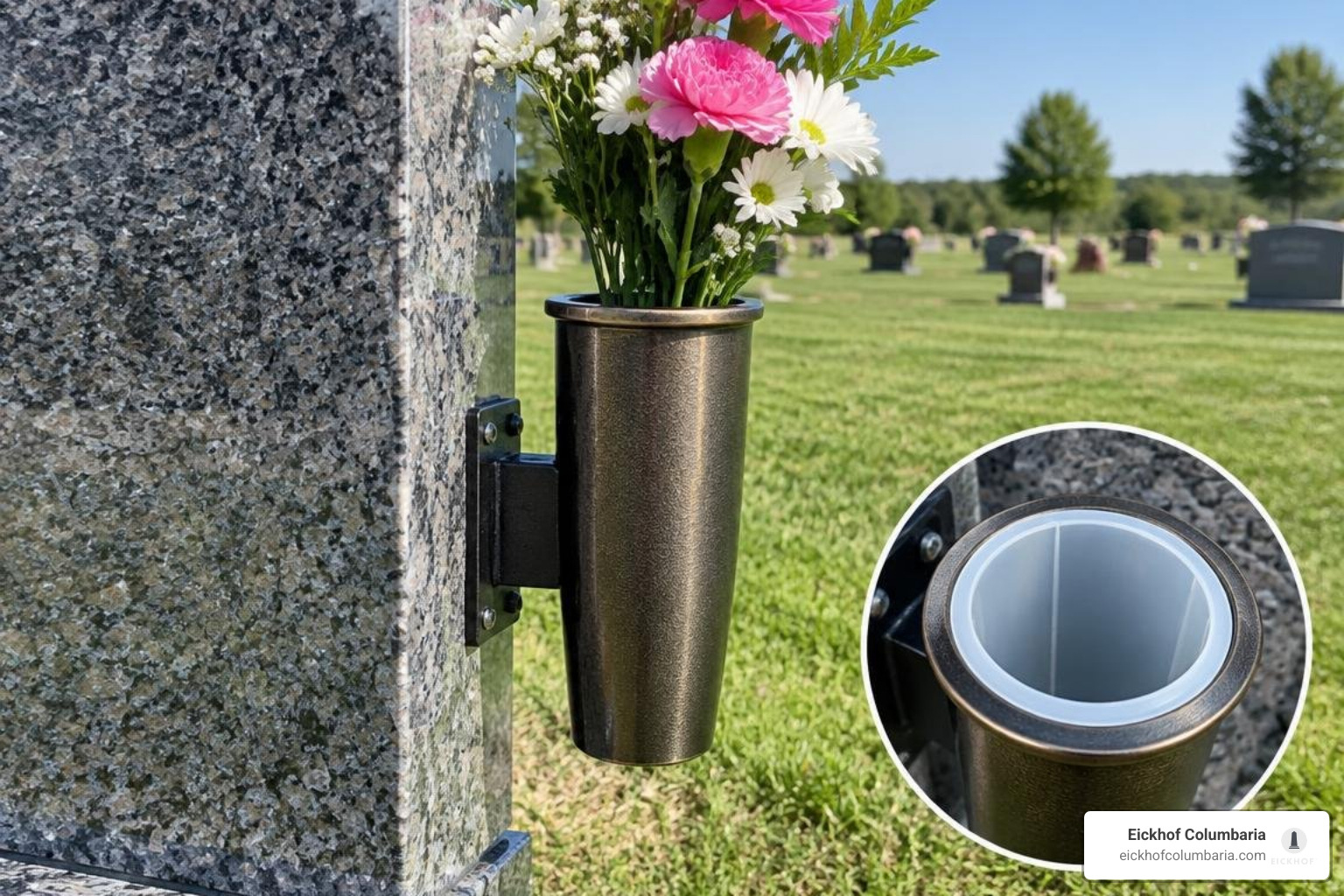
- Concealed-Hardware Mechanical Anchors: When mounting vases directly to granite memorials, secure mounting systems use internal expansion bolts and high-strength epoxy hidden beneath the base plate. To eliminate exterior bolt access, caretakers can upgrade headstones with all-weather permanent vase systems featuring concealed locking pins.
- Specialized Architectural Mounts: For vertical stone structures, you must mount your mausoleum flower vase holder correctly every time using core-drilled masonry anchors that cannot be pried loose with basic hand tools.
- Low-Scrap Value Zinc and Coated Aluminum: Modern die-cast zinc and aluminum alloys hold minimal value at commercial scrap yards compared to red metals, significantly reducing the incentive for opportunistic theft.
Frequently Asked Questions About Cemetery Floral Holders
How do in-ground reversible metal vases prevent water flooding and lawnmower damage?
In-ground reversible vases feature a dual-position canister system housed within a subterranean outer sleeve. When reversed for seasonal storage or lawn maintenance, the solid metal base of the canister seals the top opening of the sleeve flush with the turf line.
Because quality reversible canisters are manufactured from heavy die-cast zinc, their internal mass prevents hydrostatic pressure from lifting the unit out of the sleeve during intense ground flooding. Furthermore, the canister base is engineered with drainage channels that route surface water outward into the surrounding soil gravel bed, preventing standing water pools inside the assembly.
Can metal cemetery vases accommodate both fresh and artificial floral tributes?
Yes. Metal cemetery flower holders easily accommodate both fresh cut stems and artificial seasonal tributes when configured with proper internal inserts:
- For Fresh Bouquets: Use a watertight plastic liner insert filled with fresh water and floral preservative. This protects the outer metal casing from water-borne minerals and ensures your flowers have continuous hydration.
- For Artificial Tributes: Insert a block of dense closed-cell floral foam into the base of the canister or metal holder. Drive the wire stems of the artificial arrangement deeply into the foam block. Secure the foam block inside the vase using internal floral grips or florist wire to prevent updrafts from carrying the arrangement away during storms.
What cemetery regulations should you check before purchasing metal flower holders?
Before investing in a cemetery flower holder, consult the cemetery’s specific rules and regulations. Key policies to verify include:
- Permitted Mounting Styles: Many modern perpetual-care memorial parks prohibit all above-ground spiked stakes, permitting only flush-to-turf in-ground invertible canisters.
- Approved Materials: Some historic or uniform sections specify exact metal finishes (e.g., antique bronze or dark pewter) to maintain visual harmony across the memorial lawn.
- Mowing Clearance Requirements: If installing a headstone-mounted unit, verify maximum allowable protrusion distances to prevent interference with commercial trimming equipment.
- Seasonal Cleanup Calendars: Most cemeteries schedule mandatory biannual cleanup dates (typically early spring and late autumn) where grounds crews remove and discard all unapproved freestanding decorations.
Conclusion
A well-engineered metal flower holder preserves the beauty and dignity of a loved one’s gravesite through every season. By choosing durable materials like powder-coated zinc, die-cast aluminum, or heavy-gauge steel, you ensure the tribute remains secure against severe winds, driving rain, and routine grounds maintenance.
Whether you are managing a family plot or overseeing comprehensive cemetery grounds improvements, thoughtful hardware selection eliminates constant maintenance and protects memorial investments. For churches, cemeteries, and columbarium planners seeking architectural-grade memorial structures, you can explore innovative memorial niche and accessory solutions engineered for lifetime durability and timeless reverence.