

Choose a Secure Replacement Vase That Fits the Existing Marker
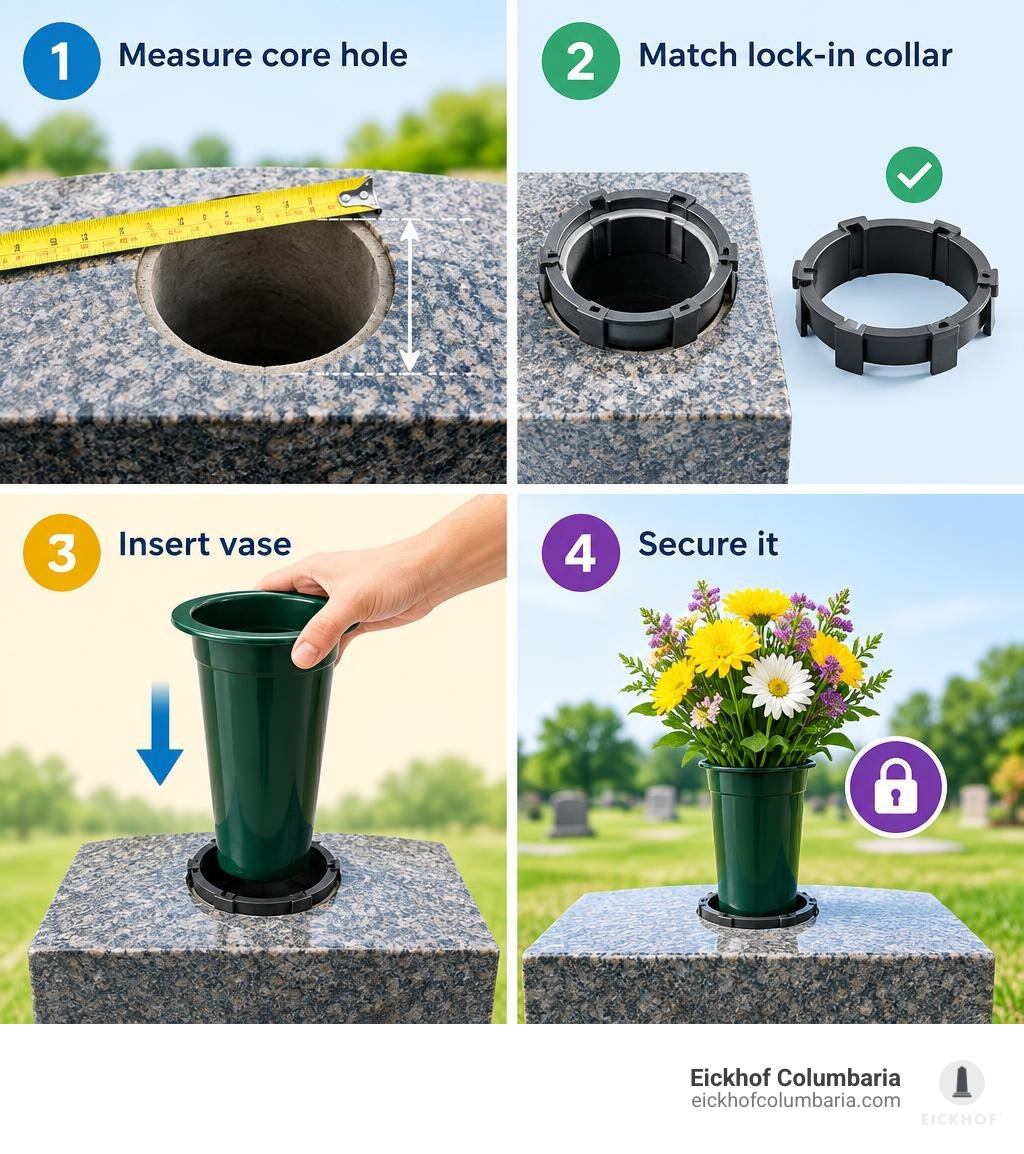
To replace a missing or damaged grave-marker vase, first measure the inside diameter and depth of the existing core hole or canister, then check whether it uses a collar or twist-lock system. Many markers use a roughly 4-inch core, but do not assume yours is standard. Match the new vase to the socket, locking tabs, finish, and cemetery rules before ordering.
A lock-in core insert is often the simplest choice for busy cemetery and church facilities teams. It drops into the existing opening and secures with a compatible flange collar or locking mechanism, avoiding major stonework. Select a durable, UV-resistant material and an invertible or recessed design when mower clearance and seasonal storage matter.
Vases commonly need replacement after theft, lawn-equipment damage, weather exposure, or cracking caused by standing water and winter freezing. The right insert restores a clean floral display while reducing ongoing maintenance.
Quick replacement vase for grave marker terms:
Why Memorial Vases Disappear and the Rise of Theft-Deterrent Inserts
Visiting a loved one’s gravesite only to discover an empty hole where a memorial vase once stood is a heartbreaking experience. Unfortunately, missing vases are one of the most common issues reported to cemetery groundskeepers across the country. Understanding the root causes of vase loss helps us choose solutions that permanently resolve the problem rather than repeating the cycle.
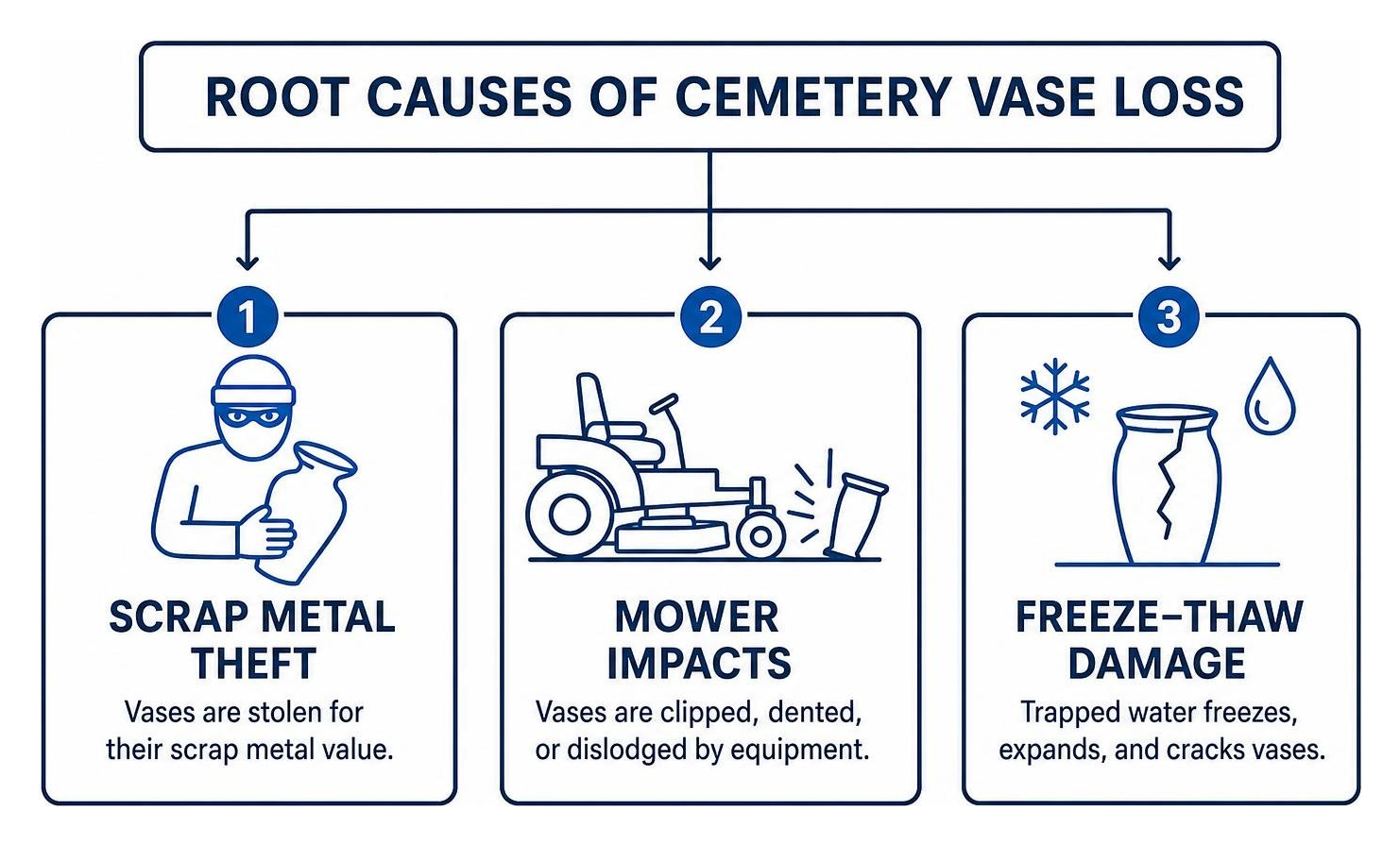
- Scrap Metal Theft: Traditional memorial vases cast from solid bronze or brass carry high intrinsic scrap metal value. Metal thieves target bronze markers and haul off metal vases overnight. Replacing solid metal with identical raw metal often creates an open invitation for repeat theft.
- Commercial Lawnmower Collisions: Cemetery maintenance crews operate heavy industrial mowers, multi-blade decks, and string trimmers. An upright vase protruding above the stone surface can easily be clipped, dented, or dislodged by heavy equipment during routine turf management.
- Freeze-Thaw Weathering: In temperate and northern climates, rainwater pools inside un-drained vases. When the thermometer dips below freezing, trapped water expands into ice. The hydraulic pressure easily cracks rigid stone, brittle metals, and thin plastics, rendering the container unusable.
- Vandalism and Displacement: High winds and wildlife can easily knock unanchored vases out of their sockets, scattering floral tributes across the lawn.
To permanently combat theft and displacement, facilities and families frequently secure gravesite floral displays with in-ground metal holders and switch to modern lock-in inserts. These systems feature invertible canisters, allowing the floral cup to turn upside down and rest completely flush inside the ground socket when not in use. This protects the tribute from high-speed mower blades, eliminates standing water during severe weather, and conceals the display safely beneath turf height.
Choosing the Right Replacement Vase for Grave Marker Memorials
Selecting the best replacement vase requires balancing aesthetic beauty with long-term structural durability. The market offers three primary materials: traditional cast bronze, impact-resistant polycarbonate, and heavy-duty rotomolded polyethylene.
| Feature / Metric | Traditional Cast Bronze | Impact Polycarbonate | Rotomolded Polyethylene |
|---|---|---|---|
| Average Cost | $600 – $700+ | $180 – $280 | $50 – $150 |
| Material Construction | Cast alloy bronze metal | Molded engineering polymer | 0.25-inch thick prime polymer |
| Scrap Resale Value | High (Target for scrap theft) | Zero scrap value | Zero scrap value |
| Impact Resistance | Susceptible to mower dents | High impact resistance | Extreme (Survives mower strikes) |
| Freeze/Crack Defense | Cracks if water freezes inside | High resilience | Non-porous, flexible expansion |
| Lead / Delivery Time | 6 to 8 weeks (Made to order) | 3 to 5 weeks | 1 to 2 weeks |
| Typical Fastener | Threaded stud / twist base | 3-flange lock / lug socket | Invertible ring / anchor spike |
Bronze vs Polycarbonate vs Polyethylene Materials
- Cast Bronze Vases: Solid cast bronze represents the historical gold standard for memorial accessories. It delivers unmatched historic authenticity and pairs naturally with vintage bronze-on-granite markers. However, made-to-order bronze replacements often cost upwards of $689.00 and carry manufacturing lead times of 6 to 8 weeks. Because solid bronze retains high metal scrap value, installing one in an unmonitored cemetery carries a persistent theft risk.
- Polycarbonate Vases: Modern engineering has produced tough polycarbonate options that provide an exceptionally rigid, impact-resistant shell priced around $187.95 (down from traditional list prices near $450.00). It mimics the appearance and weight of cast metal while holding zero scrap value, making it unattractive to thieves.
- Rotomolded Polyethylene: For outstanding durability on a budget, rotational molding produces non-porous polymer vases with uniform 0.25-inch thick walls. These units are built to endure direct weed-whacker impacts, relentless UV sunlight, and sub-zero freeze cycles without brittle fracturing.
Color Matching and Aesthetic Finishes
A replacement insert should harmonize naturally with the existing monument stone and memorial ledger. Modern composite materials are engineered with pigments and fine stone aggregates to mirror traditional memorial finishes:
- Satin & Metallic Bronze: Finished with rich metallic lusters, dark brown coatings, and antique gold highlights that match traditional cast plaques without the metal price tag.
- Granite Grain Textures: Polyethylene and polymer models blend speckled greys, jet blacks, terracotta hues, and mahogany tones to match Barre grey or Dakota mahogany granite bases.
- Verdigris & Antique Patinas: Chemically aged or pigmented green-bronze finishes designed to sit seamlessly beside mature, weathered vintage monuments.
Step-by-Step Guide: Measuring and Installing Your Replacement Insert
Securing a replacement vase does not require expensive stone masonry if you verify your dimensions beforehand. Many standard memorial markers feature a 4-inch core opening, but slight variances among manufacturers can cause fit issues if not measured carefully.
Cemetery Regulations, Care, and Winterization
Before installing any permanent fixture, verify your cemetery’s published decoration rules. Most memorial parks enforce strict guidelines regarding accessory heights, attachment styles, and seasonal removals to protect maintenance machinery and ensure visitor safety.
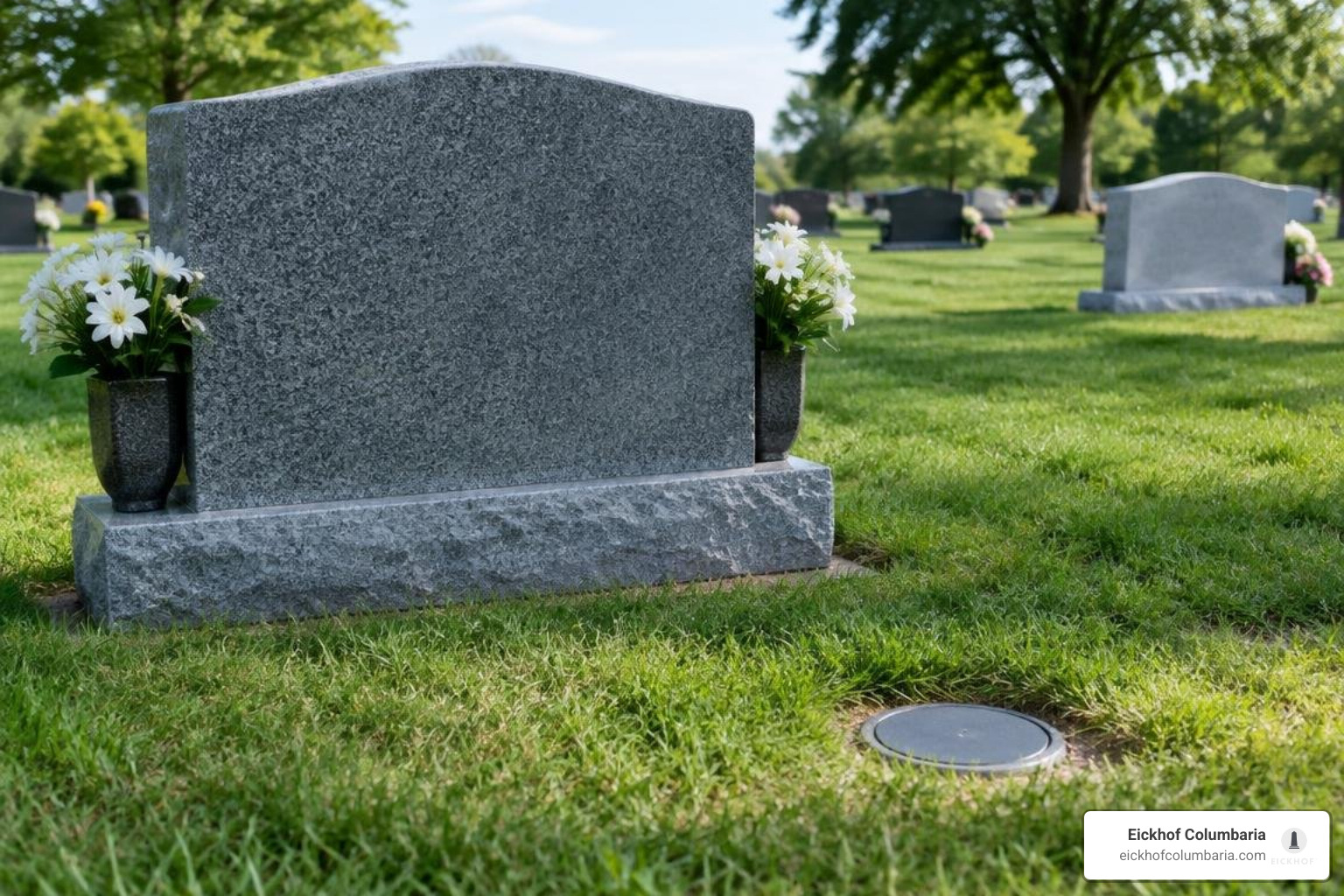
- Lawnmower Clearance Rules: Flush lawn-level memorial sections usually require all floral vases to sit completely below the turf line when flowers are not actively displayed. If an upright container cannot be inverted, grounds crews may remove it during routine mowing schedules.
- Drainage Hole Maintenance: Outdoor vases must allow rainwater to escape freely. Inspect the base of your vase canister periodically and clear away soil, decomposed leaves, and pine needles that block the bottom drain holes.
- Winterization Steps: In cold climates, always invert your vase before the first hard freeze. Turn the container upside down into its base canister, ensuring the flat protective plate sits flush with the marker. This simple step prevents ice expansion cracking and keeps the unit safe under heavy winter snowfall.
- Care and Cleaning: Clean polymer and bronze surfaces using a soft microfiber cloth with warm water and mild dish soap. Avoid wire brushes, abrasive powders, and harsh chemical solvents, which can strip protective UV sealants and factory patinas.
- Mausoleum and Wall Mount Upkeep: For raised structures and crypt settings, follow similar surface preparation techniques and make sure to mount your mausoleum flower vase holder correctly every time using non-staining outdoor structural adhesives.
Frequently Asked Questions About Grave Marker Vase Replacements
How do I identify if my marker uses a 3-flange twist-lock mechanism?
Inspect the interior top rim of your existing ground canister or bronze base plate. If the socket has three evenly spaced horizontal slots or receiving lugs positioned 120 degrees apart, it is engineered for a standard 3-flange twist-lock vase. These flanges allow you to seat the vase, twist it a quarter turn clockwise, and lock it firmly against accidental lift-off.
Can a replacement vase fit both flat lawn-level markers and upright monuments?
Yes, but the mounting mechanism differs. Flat lawn-level bronze and granite markers rely on deep, recessed ground canisters that permit the vase to invert and hide flush with the turf. Upright granite monuments do not use deep in-ground canisters; instead, they utilize pre-drilled 4-inch core holes, metal mounting lugs, or exterior surface brackets with specialized adapter plates.
What should I do if the new vase does not fit the existing socket?
If your replacement vase feels loose or will not seat completely into the core opening, do not force it. You can resolve fit differences using universal aluminum adapter plates, neoprene sizing shims, or manufacturer-specific base adapter rings. These hardware kits bridge minor dimensional gaps between different marker brands without requiring you to drill or alter the monument’s granite foundation.
Restoring Dignity and Permanence to Memorial Grounds
A missing cemetery vase leaves a memorial looking incomplete, but replacing it does not have to be stressful, complicated, or expensive. By measuring your existing core hole, choosing a theft-deterrent composite or classic bronze finish, and selecting an invertible lock-in design, you ensure your floral tributes remain beautiful, protected, and secure for years to come.
At Eickhof Columbaria, we bring over three decades of handcrafted precision, concealed-hardware engineering, and turnkey installation expertise to cemeteries, churches, and civic institutions across the United States. Whether managing traditional family memorial grounds or planning modern columbarium expansion, explore secure columbarium niche floral solutions to discover how our custom architectures elevate and preserve your sacred memorial spaces.