

Understanding the Core Differences: Mausoleum vs Ground Burial
Choosing a permanent resting place is one of the most significant decisions a family makes. While both options provide a dignified, sacred space to honor a loved one, the structural realities of above-ground entombment and in-ground burial differ fundamentally.
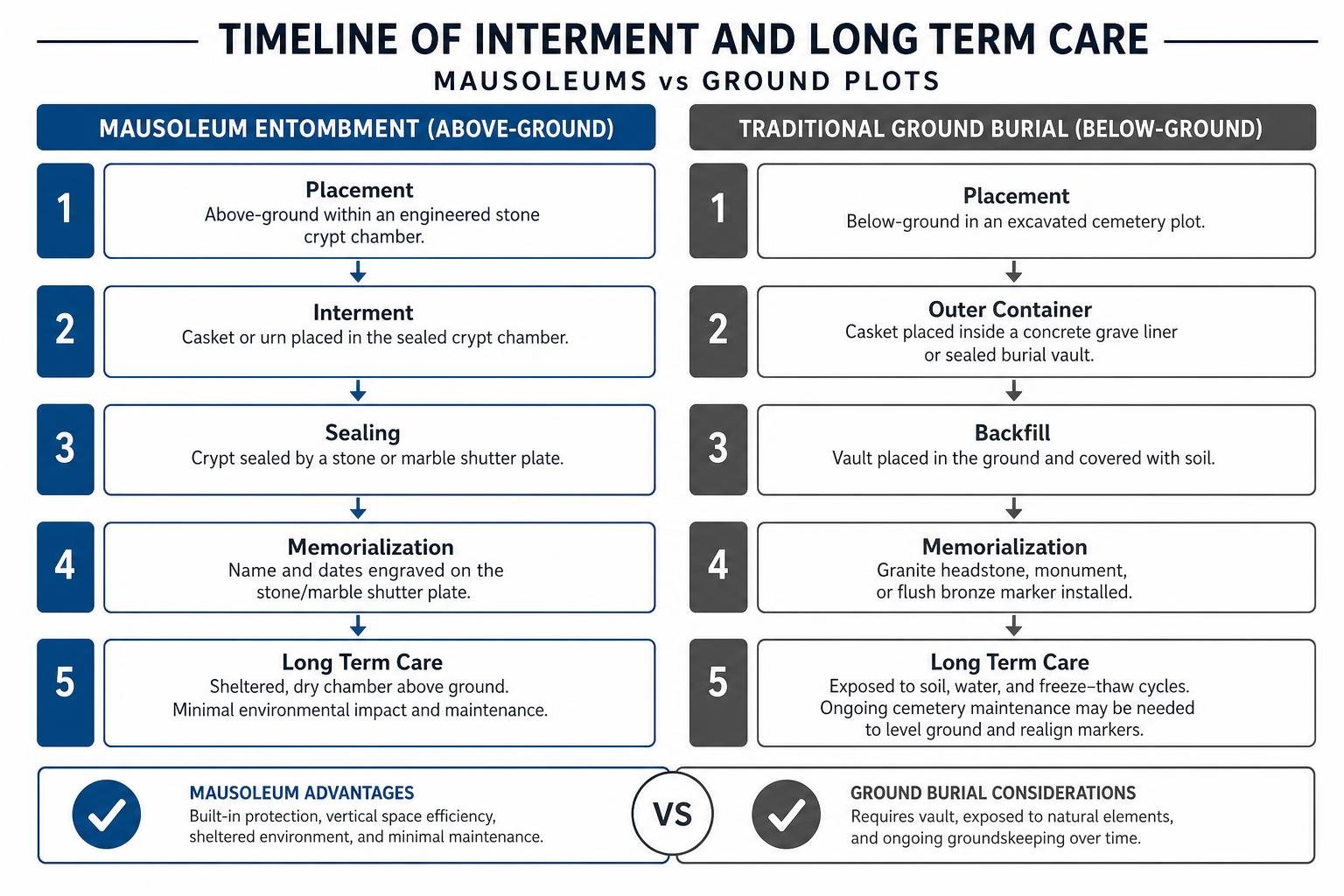
An in-ground burial involves interring a casket within an excavated cemetery plot. In modern cemeteries, this almost always requires placing the casket inside an outer burial container—such as a concrete grave liner or sealed burial vault—to prevent the earth from settling over time. Once covered with soil, the site is marked with an upright headstone or flat bronze marker.
In contrast, mausoleum entombment places a casket or urn above ground within an engineered stone chamber called a crypt. The building itself acts as the protective outer structure, shielding remains from soil contact, subterranean water movement, and earth pressure. Exploring a detailed guide to mausoleum entombment options helps illustrate how these structures are engineered to stand for centuries.
| Feature | Mausoleum Entombment | Traditional Ground Burial |
|---|---|---|
| Placement | Above-ground sealed crypt chamber | Below-ground excavated plot |
| Outer Container | Built-in stone crypt chamber (no vault needed) | Concrete grave liner or sealed burial vault required |
| Memorialization | Engraved stone/marble crypt shutter plate | Granite headstone, monument, or flush bronze marker |
| Environmental Exposure | Dry, clean chamber; sheltered from earth and water | Direct contact with surrounding soil and groundwater table |
| Space Utilization | Vertical stacking; highly land-efficient | Horizontal footprint; requires dedicated parcel of land |
| Weather Access | Often climate-controlled indoors or sheltered pavilion | Fully exposed to outdoor elements, mud, and snow |
Defining Above-Ground Entombment and Crypt Types
Mausoleums are not one-size-fits-all structures. They range from grand public edifices to intimate, standalone family monuments. Understanding the various above ground mausoleum options available today helps families select the ideal layout for their preferences:
- Public / Community Mausoleums: Large, shared buildings managed by cemeteries that house hundreds or thousands of crypts along interior hallways or covered outdoor loggias. They provide accessible, cost-effective entombment options for individual casket spaces.
- Private and Family Walk-In Estates: Custom-designed, freestanding buildings constructed exclusively for a single family. These walk-in structures often feature custom bronze doors, stained glass, and private seating.
- Garden / Outdoor Mausoleums: Open-air architectural structures where crypt fronts face exterior courtyard gardens rather than interior hallways, combining the aesthetics of nature with above-ground protection.
- Lawn Crypts: Pre-installed underground concrete chambers covered by turf. While below ground, they share the pre-engineered, modular design of above-ground crypt banks.
Traditional In-Ground Plot Burial Dynamics
In-ground burial remains deeply rooted in traditional cultural and religious ceremonies. When selecting a traditional plot, families purchase the interment rights to a specific parcel of cemetery land.
Beyond the earth excavation, modern cemeteries enforce strict structural regulations. Because natural soil decompaction and decomposition cause ground to collapse over time, cemeteries require rigid concrete vaults or liners around caskets to maintain level, manicured lawns. Over decades, freeze-thaw cycles, subterranean moisture, and soil settling can occasionally shift headstones, requiring ongoing groundskeeping and monument leveling by the cemetery staff.
Cost Comparison: Evaluating Crypts vs In-Ground Plots
At first glance, a single mausoleum crypt often carries a higher upfront price tag than a raw cemetery plot. However, evaluating the total cost of ownership reveals a much closer financial comparison. Traditional in-ground burials require multiple separate purchases—including the plot, concrete burial vault, opening-and-closing labor, foundation pouring, and monument carving—while mausoleum crypt pricing frequently bundles several of these elements together.
According to data from the National Funeral Directors Association (NFDA), the national median cost of a funeral with viewing and burial reached $8,300 in 2023, while a funeral with cremation was $6,280. When analyzing costs, pros and cons, and how to choose, families must look at itemized price lists to see where bundled crypt packages save money on exterior vaults and standalone headstones.
Breakdown of Mausoleum Costs and Maintenance Fees
Mausoleum pricing depends heavily on whether you choose a space in a shared public building or commission a private family monument:
- Community Mausoleum (Single Crypt): Typically ranges from $4,000 to $8,000, which generally includes the crypt chamber and exterior stone facing.
- Community Mausoleum (Companion/Double Crypt): Typically costs $10,000 to $20,000 or more, housing two caskets either side-by-side or end-to-end (true companion).
- Private 2-Crypt Mausoleums: Start at approximately $29,000 for a modest, freestanding granite estate structure.
- Private 4–6 Crypt Family Structures: Generally range from $40,000 to $55,000.
- Walk-In Estate Mausoleums: Large, custom walk-in private structures start around $95,000 and can exceed $1,000,000 depending on architectural scope, granite sourcing, and custom bronze accents.
- Annual Maintenance & Endowment Care: Shared or private structures may carry perpetual care contributions or annual maintenance fees ranging from $300 to $1,500 to fund ongoing climate control, roof maintenance, and structural upkeep.
Families exploring private mausoleum crypt options often discover that building a dedicated multi-crypt estate offers significant per-person savings across multiple generations compared to buying dozens of individual plots and monuments.
In-Ground Burial Costs: Hidden Fees Beyond the Plot
The headline price of a cemetery plot is only one part of the total bill. A standard in-ground plot usually ranges from $3,000 to $15,000, but complete interment requires several additional fees:
- Outer Burial Vault or Liner: Ranging from $1,000 to $5,000+, mandated by almost all modern cemeteries.
- Opening and Closing (Interment) Fees: Cemetery labor fees for excavation and backfilling, typically costing $1,200 to $2,500.
- Headstone or Monument: Custom granite or bronze markers range from $1,500 to $6,000+, plus cemetery foundation installation fees ($200 to $800).
- Endowment / Perpetual Care Fund: A state-regulated fee (usually 10%–15% of the plot price) dedicated to permanent lawn mowing and grounds upkeep.
When you add these requirements together, a traditional ground burial often equals or exceeds the total price of a single community crypt.
Weighing the Pros and Cons for Modern Families
Every family balances distinct emotional, aesthetic, and financial priorities. Comparing these factors side-by-side clarifies which environment best suits your family’s vision.
| Consideration | Mausoleum Entombment | Ground Burial |
|---|---|---|
| Pros | • Clean, dry, elevated resting place • Climate-controlled, sheltered visitation • No need to purchase a burial vault • Predictable, all-in-one memorial front • Prestigious multi-generational legacy | • Familiar, culturally traditional setting • Direct connection to nature and green lawns • Flexible monument and headstone styles • Lower entry price for bare plots • Abundant availability in rural cemeteries |
| Cons | • Higher initial upfront price for private builds • Limited availability in historic urban areas • Indoor spaces may feel less natural to some • Requires ongoing structural building maintenance | • Exposure to groundwater, soil, and mud • Outdoor visits disrupted by rain, snow, or heat • Mandatory vault and foundation expenses • Risk of plot settling or marker shifting |
Evaluating the Mausoleum vs Ground Burial Visiting Experience
One of the sharpest contrasts between these two choices is the visitation experience. Outdoor cemetery visits provide a natural, open-air connection surrounded by trees, birds, and open sky. For many, sitting on a blanket on a sunny spring afternoon creates deep solace. However, outdoor plots can be challenging during harsh winter freezes, sweltering summer afternoons, or rainy periods that leave lawns muddy and soft.
Indoor community mausoleums offer climate-controlled corridors, plush seating, soft lighting, and quiet reflection regardless of weather. For elderly relatives or individuals with mobility challenges, flat granite floors and sheltered hallways provide a safe, accessible, and peaceful environment year-round.
Environmental Factors, Preservation, and Maintenance Requirements
Environmental conditions also differ significantly between above- and below-ground interments. In-ground caskets—even within heavy concrete vaults—are subject to subterranean humidity, soil acidity, and groundwater fluctuations over time.
By contrast, properly designed above-ground crypts feature internal ventilation and drainage systems that keep the chamber dry. This dry, aerated environment promotes natural preservation in above-ground crypts, keeping caskets intact and free from mud and standing water. Modern architectural standards emphasize high-grade granite, concealed-hardware mounting, and durable ventilation to maintain these chambers for generations, as detailed in modern mausoleum entombment standards.
Cultural, Religious, and Cremation Considerations
Spiritual customs heavily influence burial decisions. Major Christian traditions—including Roman Catholicism and Protestant denominations—fully sanction both in-ground burial and mausoleum entombment. In fact, above-ground entombment has strong biblical roots, reflecting the rock-hewn tomb of Christ. Traditional Jewish and Islamic customs, however, emphasize natural in-ground burial with direct earth contact, generally precluding above-ground crypt entombment unless local water tables make ground burial impossible.
Integrating Cremation: Mausoleum vs Ground Burial Options
With the NFDA projecting national cremation rates at 63.4% in 2025 (and continuing to rise in 2026), modern families frequently blend casketed and cremated interments within the same resting place.
If you choose cremation, both settings offer dedicated placement:
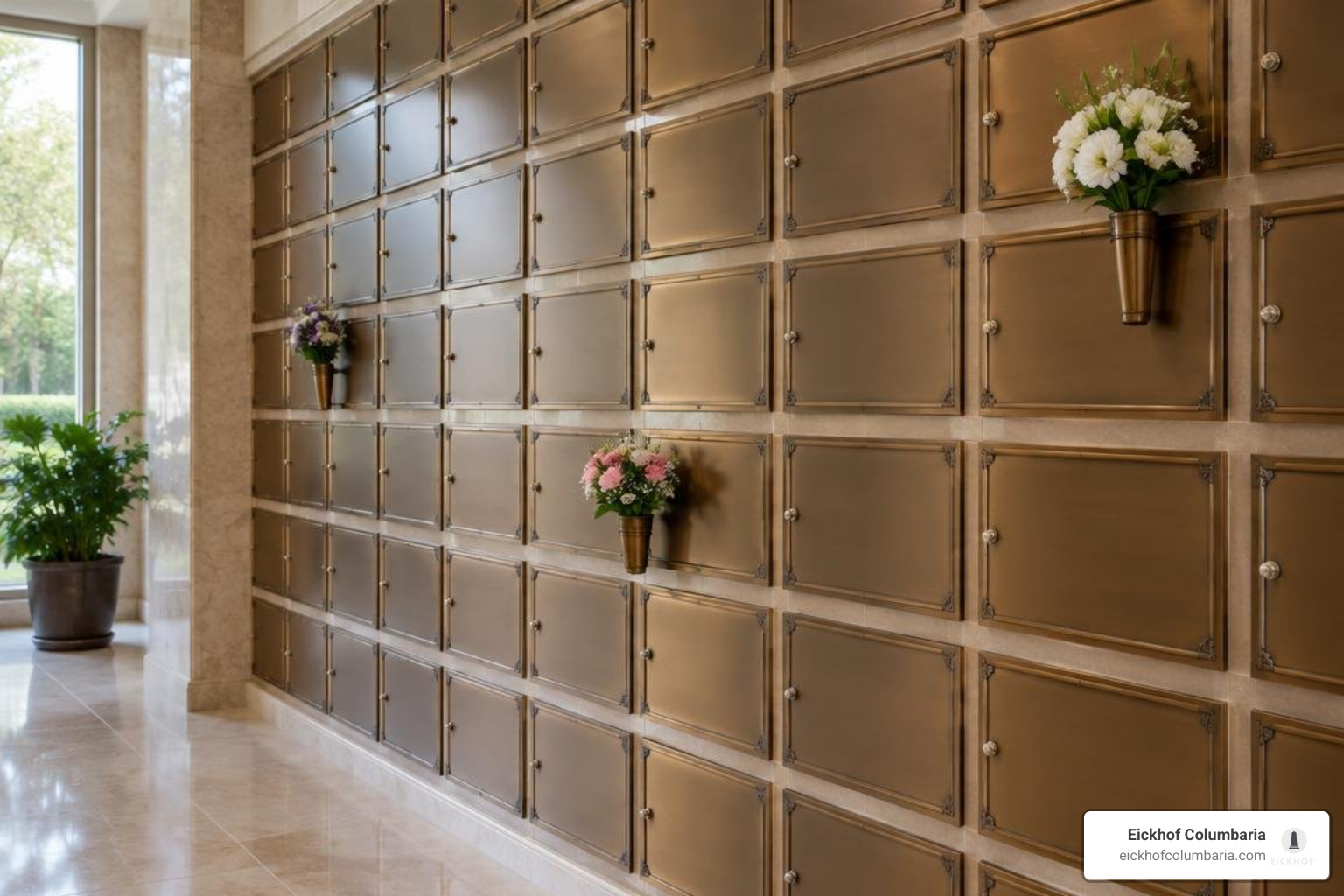
- Columbarium Niches: Mausoleums often feature integrated columbarium walls with individual, beautifully finished stone or glass niches for urns. We specialize in designing and installing custom, precision-engineered columbarium niche systems that fit seamlessly into indoor and outdoor mausoleum spaces.
- Urn Plots & Ground Interments: Families can inter urns in designated cemetery urn gardens or explore cemetery options for cremated remains across traditional plots.
- Shared Spaces: Many cemeteries permit sharing a plot after cremation by placing an urn over an existing casket burial, or choosing above-ground wall burial for urns alongside casketed family crypts.
Legal, Regulatory, and Cemetery Policy Requirements
Before finalizing any contract, families should review state regulations and cemetery bylaws. Under the Federal Trade Commission’s (FTC) Funeral Rule, funeral homes must provide itemized General Price Lists (GPLs), though independent cemeteries operate under state-specific commercial or non-profit regulations.
Key legal aspects include:
- Deed and Interment Rights: You purchase the legal right to be interred in a specific space, not direct ownership of the underlying land or physical building structure.
- Transferability: Verify cemetery rules regarding transferring, selling, or willing crypt or plot deeds to future heirs.
- Alternative Dispositions: If scattering ashes or selecting burial at sea as part of a hybrid family memorial plan, the U.S. Environmental Protection Agency (EPA) requires that sea burial of cremated remains takes place at least three nautical miles from land, with formal notification submitted to the EPA within 30 days.
Frequently Asked Questions About Burial Decisions
Is a mausoleum crypt more expensive than a traditional ground burial?
Not necessarily. While a private, custom walk-in mausoleum is a luxury investment, a single crypt in a community mausoleum ($4,000–$8,000) often costs the same as or less than a complete in-ground burial once you factor in plot costs, mandatory concrete vaults ($1,000–$5,000), opening-and-closing fees, and custom headstones.
Can family members choose different burial methods within the same estate?
Yes. Many modern memorial parks offer hybrid estate designs. A single family plot can accommodate traditional in-ground casket plots, a private above-ground crypt, and integrated columbarium niches for cremated family members. Understanding how casket placement in mausoleums operates alongside niche interments allows families to plan comprehensive multi-generational estates.
How do weather and climate impact above-ground vs. below-ground resting places?
In cold regions, frozen winter ground can sometimes delay in-ground interments or make outdoor graveside services difficult. Indoor mausoleums remain fully accessible, dry, and climate-controlled in any season. Modern exterior mausoleums constructed from solid granite withstand decades of extreme freeze-thaw cycles without the settling risks common to earth plots.
Conclusion: Making the Right Resting Place Decision
Deciding between a mausoleum and an in-ground burial ultimately comes down to your family’s personal values, budget structure, and long-term vision for memorialization. Whether you are drawn to the timeless, open-air tradition of a garden lawn plot or the clean, weather-protected permanence of an above-ground crypt, both paths provide a lasting sanctuary of remembrance.
At Eickhof Columbaria, we are dedicated to helping cemeteries, churches, and families create enduring, handcrafted stone resting places. If you are exploring modern memorial architecture, continue reading our guide on understanding resting places beyond traditional in-ground burial to find the perfect tribute for your family’s legacy.