

A Cemetery for Ashes Gives Families a Lasting Place to Visit
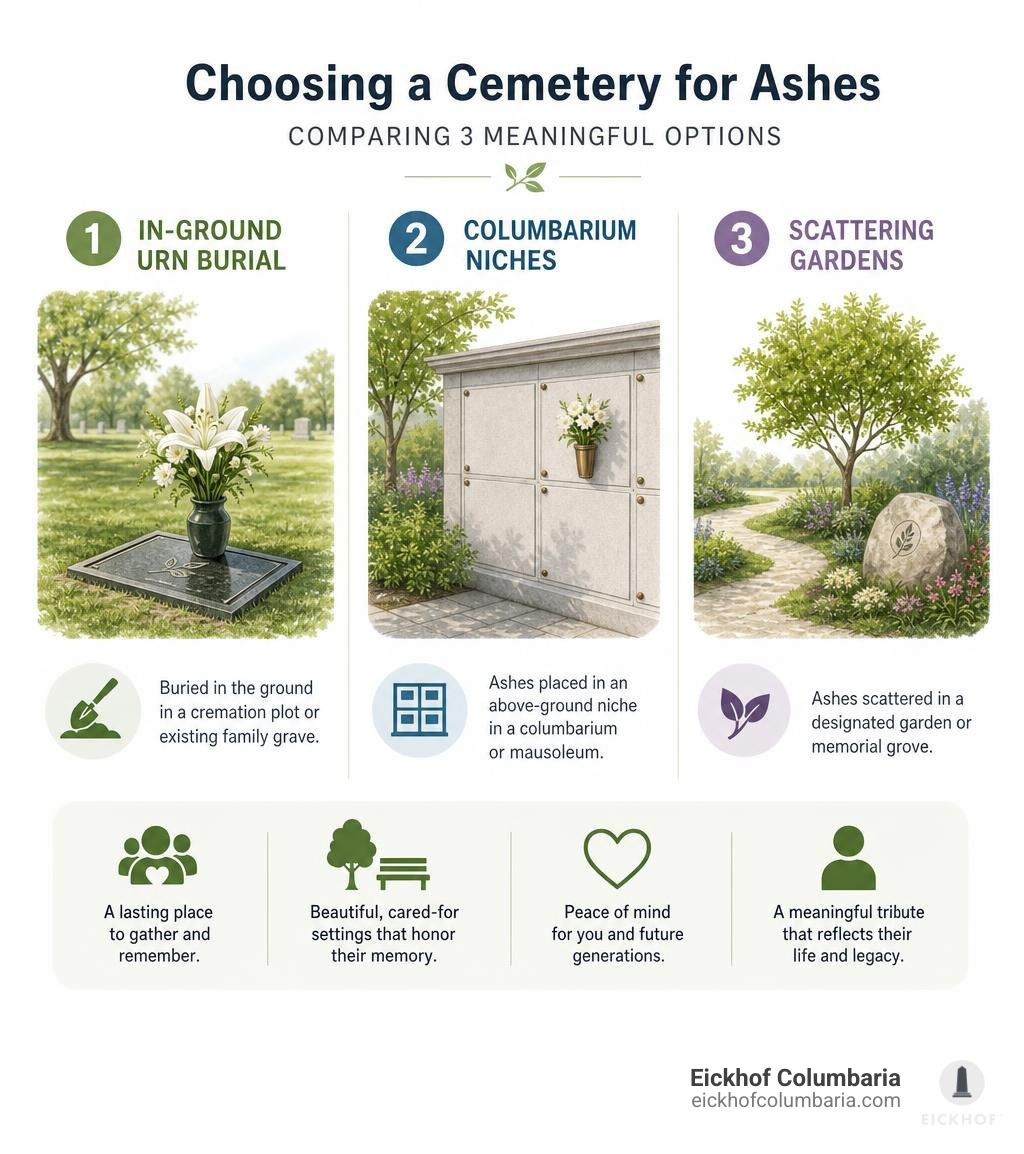
Yes, a cemetery for ashes can provide a permanent, cared-for resting place after cremation. The main choices are:
- In-ground urn burial in a cremation plot or existing family grave.
- Above-ground placement in a columbarium niche or mausoleum.
- A memorial grove or scattering garden for a more communal, nature-focused tribute.
For cemeteries and churches, columbarium systems are often a practical option: they use limited land efficiently, create a clear place for visitation, and can provide durable stone memorialization without the upkeep of many individual ground markers.
Families may keep ashes at home for a time, but many eventually want a defined place to gather, and leave a lasting inscription. Costs, urn-vault rules, burial depth, niche capacity, and permission to use an existing grave all vary by cemetery policy and local requirements.
This guide explains how each option works, what it may cost, and what to confirm before selecting a final resting place.
Cemetery for ashes vocabulary:
Choosing the Right Cemetery for Ashes: In-Ground and Above-Ground Options
Deciding on a final resting place is deeply personal. When cremation is chosen, families quickly discover they are not limited to a single path. In fact, modern cemeteries provide diverse memorial landscapes designed specifically to honor cremated remains.

About a third of people who receive a loved one’s ashes initially keep them at home. While an urn on a mantelpiece offers immediate comfort, families often find that as years pass, a dedicated memorial space offers a greater sense of permanence, shared heritage, and peace of mind. By understanding resting places beyond traditional in-ground burial, you can evaluate which environment best honors your loved one’s memory, accommodates future family members, and aligns with your financial budget.
In-Ground Burial Plots in a Cemetery for Ashes
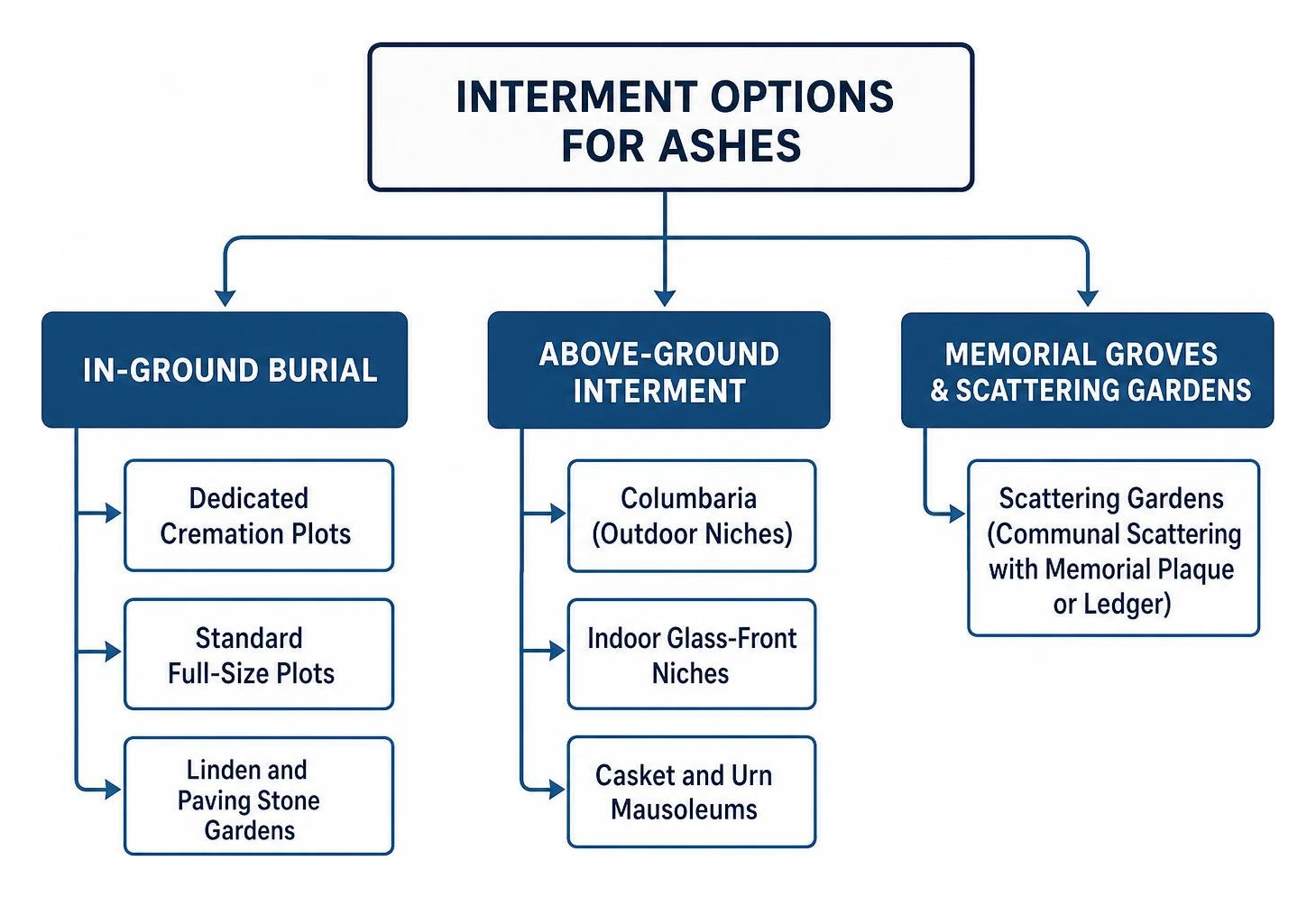
For many, earth interment remains the classic, comforting standard. In-ground urn placement takes place in designated areas of a cemetery:
- Dedicated Cremation Plots: Because an urn requires significantly less space than a full-size casket, many cemeteries offer smaller cremation plots (often 3×3 feet or 4×4 feet). These plots are generally much more affordable than full-size burial spaces and are situated within manicured lawn sections or quiet cremation gardens.
- Standard Full-Size Plots: Families can choose to bury an urn within a traditional full-size casket plot. This is an excellent choice if you wish to install an upright headstone or plan for future family interments within the same boundary.
- Linden and Paving Stone Gardens: Some cemeteries feature scenic walkways lined with flat, engraved paving stones beneath which urns are interred, blending architectural pathways with quiet memorial spaces.
When coordinating an earth burial, local regulations and municipal guidelines come into play. In places adhering to strict parish or city codes—such as those found in formal municipal spaces like Ash Cemetery interment guidelines—families must secure exclusive rights of burial, select approved memorial markers, and follow specific booking schedules for interments.
Above-Ground Columbarium Niches and Mausoleums
Above-ground interment has grown rapidly in popularity due to its elegance, accessibility, and clean aesthetic. The primary structures include:
- Columbaria: A columbarium is a freestanding structure or wall composed of individual compartments called niches. Each niche is engineered to hold one, two, or more cremation urns securely. To explore how these structures are designed and manufactured, see this walkthrough of columbarium structures and purposes. Outdoor columbaria are typically built with granite or stone niche fronts that are custom-engraved with names, dates, and meaningful epitaphs.
- Indoor Glass-Front Niches: Often located within climate-controlled mausoleums or historic crematories, glass-front niches allow families to see the urn on display alongside personal mementos, small photographs, or military medals. Facilities with deep historical roots, such as the historic Fresh Pond Crematory, have utilized glass-front niche columbaria for well over a century to offer protected, intimate spaces for visitation.
- Casket and Urn Mausoleums: Public or private family mausoleums can house cremated remains alongside traditional caskets. Urns can be entombed within dedicated wall crypts or placed within specialized companion spaces.
Choosing the right structure requires understanding dimensions, sealing methods, and granite face options. Reviewing everything families need to know about choosing a cremation niche can help you select a secure, weather-tight option.
Memorial Groves and Scattering Gardens
For those drawn to nature, cemeteries frequently offer communal scattering gardens and memorial woodlands:
- Scattering Gardens: These are landscaped sections—often featuring perennial flowers, tranquil ponds, and stone rockeries—where cremated remains are carefully scattered into the soil or under mulch. While individual grave markers are not placed on the ground, cemeteries typically offer a communal bronze plaque or granite ledger nearby where the deceased’s name and dates are inscribed.
- Woodland Glades and Ossuaries: Some cemeteries provide subterranean ossuaries or communal woodland spaces where ashes are gently returned to the earth among mature trees. A historic and world-renowned example is the communal memorial grove at Skogskyrkogarden, where staff inter remains among natural woodland hills without individual tombstones, preserving a serene, shared natural sanctuary.
- Book of Remembrance Chapels: Dedicated scattering areas, like those provided at the peaceful Southampton Crematorium, frequently pair outdoor gardens of remembrance with indoor memorial books, offering families both a physical natural setting and a formal historical record of their loved one.
Cost Breakdown of Cemetery Placement for Cremated Remains
One of the primary advantages of cremation is cost flexibility. While a traditional casket funeral and burial nationally averages between $8,000 and $15,000, burying or interring cremated ashes in a cemetery typically costs between $1,000 and $5,000 in total. Most families spend between $1,500 and $4,000 for a dignified cremation burial with an engraved marker.
What Does a Cemetery for Ashes Cost? Full Breakdown
The overall price depends on whether you select an in-ground plot, an above-ground columbarium niche, or a scattering garden, as well as whether you choose a public municipal cemetery or a private memorial park.
| Cemetery Expense Item | Typical Price Range | Key Factors Influencing Cost |
|---|---|---|
| Cremation Plot (In-Ground) | $200 – $2,500 | Public cemeteries charge $200–$800; private memorial parks charge $1,000–$2,500+. |
| Columbarium Niche | $700 – $4,000+ | Outdoor granite niches are generally $1,000–$2,500; indoor glass-front niches range higher ($2,000–$5,000+). |
| Opening and Closing Labor | $300 – $800 | Manual or machine excavation and backfilling for in-ground plots, or opening and resealing a niche faceplate. |
| Urn Burial Vault | $100 – $500 | Required by most cemeteries for ground burial to prevent soil collapse; non-biodegradable polymer or concrete. |
| Memorial Marker / Inscription | $500 – $2,000 | Flat bronze or granite lawn markers ($500–$1,500); columbarium niche faceplate sandblasting/engraving ($300–$800). |
| Scattering Garden Placement | $150 – $600 | Includes use of garden grounds and communal plaque inscription. |
For a comprehensive evaluation of niche pricing structures, tiers, and perpetual maintenance funds, read our guide on what you will pay for a cremation wall niche.
Hidden Fees: Vaults, Opening/Closing, and Permits
When budgeting, look beyond the initial purchase price of the plot or niche space. Cemetery quotes frequently separate essential administrative and labor services:
- Opening and Closing Fees: Even for a small cremation plot, the cemetery charges a fee ($300 to $800) for staff to excavate the earth, set up lowering equipment, backfill, and re-sod the lawn. For a columbarium, this fee covers the physical removal of the stone shutter, placing the urn inside, setting internal security fasteners, and sealing the weather gaskets.
- Weekend and Holiday Surcharges: Scheduling an interment service on a Saturday, Sunday, or holiday often adds an overtime surcharge of $100 to $300.
- Endowment Care Funds: Many states require cemeteries to place 10% to 15% of the property purchase price into an irrevocable perpetual care trust fund to maintain lawns, landscaping, and columbarium structures permanently.
- Burial and Transit Permits: Municipal administrative filings and local health department burial transit permits usually range from $20 to $100 depending on county guidelines.
Urn Placement Rules, Burial Depth, and Existing Grave Sharing
Cemeteries operate under strict bylaws designed to ensure safety, structural integrity, and long-term ground stability. Before finalizing arrangements, verify your chosen cemetery’s specific rules.

Adding Ashes to an Existing Family Casket Plot
If your family already owns an occupied traditional grave, you may not need to purchase new cemetery real estate. Most cemeteries permit what is known as a second right of interment (or multiple rights of interment).
- Capacity: A single standard full-size casket plot can often accommodate multiple urns—sometimes up to four or more—placed above or alongside an existing casket vault.
- Permissions: The deed holder (or their direct legal heirs) must sign an authorization permitting the additional interment.
- Costs: While you save thousands by avoiding a new plot purchase, you will still pay the cemetery’s second interment fee and standard opening/closing labor charges.
- Memorialization: You can typically add the new name and dates to the existing upright monument or install a flat companion marker flush with the lawn.
Burial Depth and Vault Requirements for Urns
Ground burial for ashes differs mechanically from traditional full-body burial:
- Standard Burial Depth: While caskets are typically interred five to six feet below the surface, cremated remains are buried approximately three to four feet deep (with the top of the container resting 18 to 24 inches below grade). This depth keeps the urn well beneath the winter frost line and protects it from lawn maintenance equipment.
- Urn Vault Mandates: Most conventional cemeteries require that in-ground urns be encased in an urn vault constructed from reinforced polymer, fiberglass, or lined concrete ($100 to $500). The primary purpose of an urn vault is not just protecting the ashes from moisture—it prevents the soil above from collapsing under heavy commercial lawnmowers and backhoes, keeping the cemetery grounds level and safe.
- FTC Funeral Rule Protection: Under Federal Trade Commission rules, cemeteries cannot require you to purchase an urn vault exclusively through them; you are free to purchase a compliant vault from an outside third party.
- Columbarium Security: In above-ground structures, external vaults are unnecessary. Instead, high-grade architectural systems utilize inner security seals and concealed hardware. You should ensure your facility chooses permanent columbarium niche holders that meet cemetery rules to ensure long-term structural weatherproofing and security.
Eco-Friendly, Pet Memorial, and Personalization Trends
Modern memorialization has expanded significantly beyond uniform rows of granite. Contemporary cemeteries increasingly accommodate green burials, shared family-pet spaces, and artistic personalization.
Biodegradable Urns and Living Tree Memorials
As environmental awareness grows, families often choose green burial methods that avoid concrete vaults and synthetic chemicals.
- Biodegradable Earth and Water Urns: Crafted from compressed salt, handmade paper, sand, cornstarch, or sustainably harvested bark, these urns break down naturally within weeks or months when placed in moist soil.
- Living Tree Groves: Specialized green cemeteries offer programs where ashes placed in biodegradable containers are mixed with nutrient-rich potting soil to nourish the root systems of young native trees. Pioneering sites like the Notre-Dame-des-Neiges Remembrance Grove allow families to plant native species like sugar maples, hackberries, and hickories, creating a living forest canopy in place of traditional headstones.
- Natural Burial Grounds: Comprehensive facilities, such as the natural burial meadows at Great Glen Crematorium and natural burial grounds, allow cremated remains to be directly returned to earth in untamed wildflower fields, providing a tranquil haven for local wildlife.
Pet Ashes and Custom Memorialization Options
The relationship between families and their companion animals has led to substantial evolution in cemetery rules.
- Pet Interment in Human Cemeteries: While historically separated by municipal statutes, many states and private cemeteries now allow cremated pet remains to be interred alongside their owners in family plots or columbarium niches.
- Dedicated Pet Cemeteries: Entire memorial parks now cater specifically to beloved pets, providing manicured urn gardens, bronze ground markers, and dedicated pet columbaria.
- Niche Personalization: Modern families choosing above-ground columbarium placement often select companion niches that provide ample capacity for multiple urns, laser-etched portraits, religious symbols, and personalized military insignia. You can review single niche columbarium options and capacity to determine what interior dimensions are needed for different urn shapes and companion vessels.
Frequently Asked Questions About Placing Ashes in a Cemetery
How deep are cremated ashes buried in a cemetery?
Cremated remains are usually buried about three to four feet beneath the surface, with the top of the protective urn vault resting 18 to 36 inches below ground level. This depth is shallower than a full-size casket burial (which is 5 to 6 feet deep) but deep enough to safeguard the container against freeze-thaw soil movement and heavy landscaping machinery.
Do you legally need an urn vault to bury ashes?
State and federal laws do not mandate the use of an urn vault; however, individual cemetery bylaws almost always require them for in-ground burials in standard lawn sections. The vault supports the weight of heavy cemetery maintenance equipment and prevents surface sinking. The only common exceptions are designated green cemeteries and natural burial grounds, which require direct earth burial using 100% biodegradable urns without an outer vault.
Can you place multiple urns in a single cemetery niche or plot?
Yes. A standard columbarium niche is typically built to hold either one urn (single niche) or two urns (companion niche), though larger family niches can hold up to four. For in-ground burial, many cemeteries allow between two and four urns in a single full-size casket plot by purchasing second and subsequent rights of interment.
Conclusion
Choosing a final resting place for cremated remains brings long-term closure, providing future generations with a tangible, well-cared-for monument to visit and remember. Whether you select a quiet in-ground cremation garden, an eco-friendly living tree memorial, or a distinguished above-ground stone niche, pre-planning your arrangements protects your family from emotional and financial stress while locking in property costs.
At Eickhof Columbaria, we partner with cemeteries, churches, and civic institutions nationwide to design, manufacture, and install handcrafted, stone-faced columbaria. If your organization is looking to expand its cremation memorial offerings with turnkey elegance and lifetime durability, explore our American-crafted custom columbaria systems today.