

How Above-Ground Burial in a Private Mausoleum Works
Above-ground burial in a private mausoleum places caskets, urns, or both in sealed crypts within a family-owned or family-designated structure. The practical process is straightforward: confirm cemetery rules and available space, choose the mausoleum’s capacity and materials, arrange construction or reserve an existing private crypt area, and document interment and care plans for future generations.
Unlike a shared community mausoleum, a private mausoleum is intended for one family. It can provide a protected place for visitation, reduce the land needed for multiple in-ground plots, and keep family memorials together in one durable structure.
For cemetery and church facilities, the key questions are often about footprint, long-term care, drainage, structural requirements, and a design that looks timeless without exposed hardware. For families, the decision also involves budget, faith traditions, privacy, and the kind of legacy they want to create.
This guide explains the crypt traditions behind private mausoleums and the modern options for planning, preserving, and personalizing an above-ground resting place.
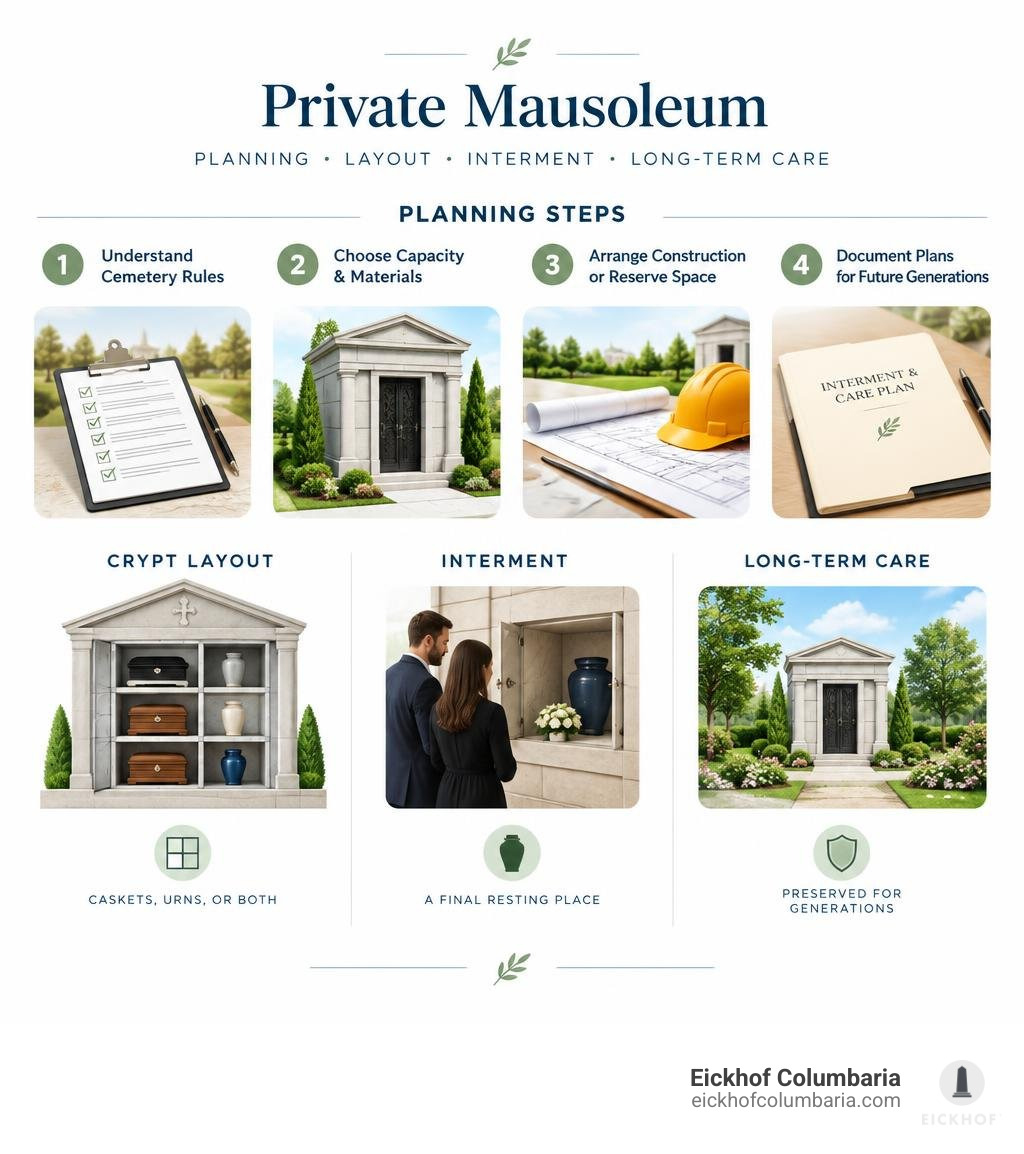
Defining Private Family Mausoleums vs. Public Resting Places
When exploring above-ground entombment, families often evaluate the differences between private estates and shared public structures. A private family mausoleum is an exclusive, standalone building custom-designed to shelter only members of a single family across generations. Unlike community mausoleums—large, public buildings housing hundreds or thousands of unrelated individuals—a private estate offers total seclusion and complete architectural control.
Modern memorial planning often involves resting places beyond traditional in-ground burial, bridging classical masonry with contemporary memorialization needs. A private structure lets families create an enduring gathering space surrounded by private landscaping, gated entries, or custom walkways, setting it apart from busy public cemetery sections.
Crypts, Sarcophagi, and Integrated Cremation Niches
Within a private mausoleum, remains are entombed inside individual chambers called crypts. Caskets are placed horizontally inside these reinforced concrete or stone compartments, which are then hermetically sealed before the decorative stone front is secured.
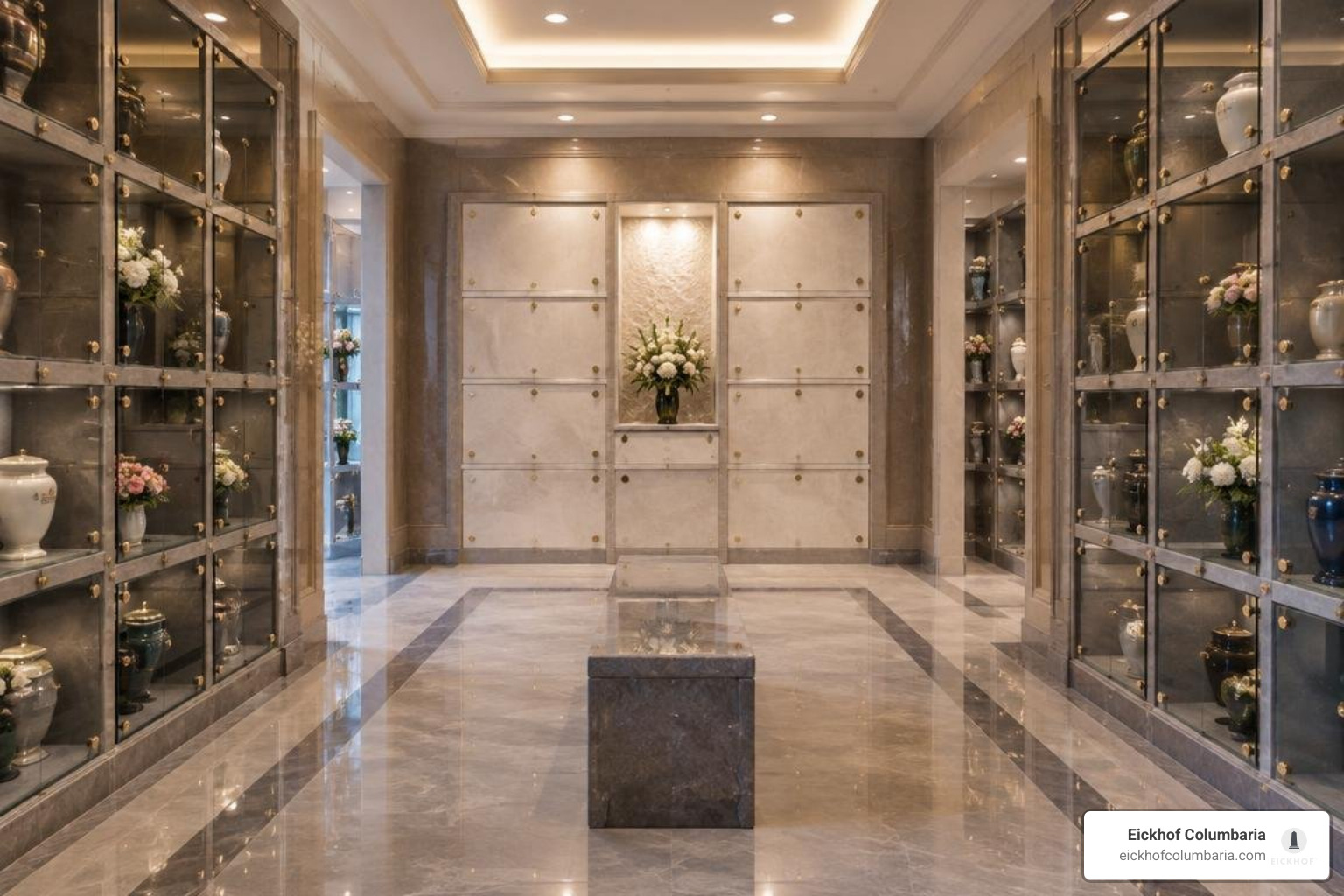
Private designs vary widely:
- Vestibule (Walk-In) Mausoleums: Enclosed structures with an interior chamber, offering a climate-protected, private space with benches and stained glass for reflection during inclement weather.
- Garden (Non-Walk-In) Mausoleums: Outdoor structures where crypt fronts open directly to the exterior landscape, surrounded by courtyards or gardens.
- Sarcophagi: Compact, solid-stone above-ground structures that house one or two caskets without walk-in interiors.
- Hybrid Cremation Niches: Many modern families choose to integrate dedicated urn spaces alongside traditional casket crypts. Reviewing columbarium memorials explained for families helps clarify how urn compartments coexist with casket crypts within a single architectural facade.
Historical Traditions of Above-Ground Entombment
Above-ground entombment is one of humanity’s most enduring architectural customs. The word mausoleum originates from the tomb of King Mausolus of Caria, built around 350 BCE at Halicarnassus—one of the Seven Wonders of the Ancient World. For centuries, monumental stone structures were reserved for royalty, civic leaders, and prominent dynasties seeking to preserve their names through permanent stonework.
As stone-quarrying techniques evolved, private above-ground tombs became accessible to private families seeking lasting heritage. Notable architectural examples, such as the historical case study of the Mostert Family Mausoleum, illustrate how 20th-century families specified durable sandstone masonry, vaulted basilicas, and secure vaults to honor multi-generational lineage. Today, modern engineering allows us to combine those classical stone traditions with precision-milled granite and concealed locking hardware.
The Architecture and Benefits of Above-Ground Burial in a Private Mausoleum
Choosing a private mausoleum offers significant practical and architectural advantages over conventional earth plots. Families seeking comprehensive guidance can refer to a detailed guide to family mausoleum burials when evaluating these options.
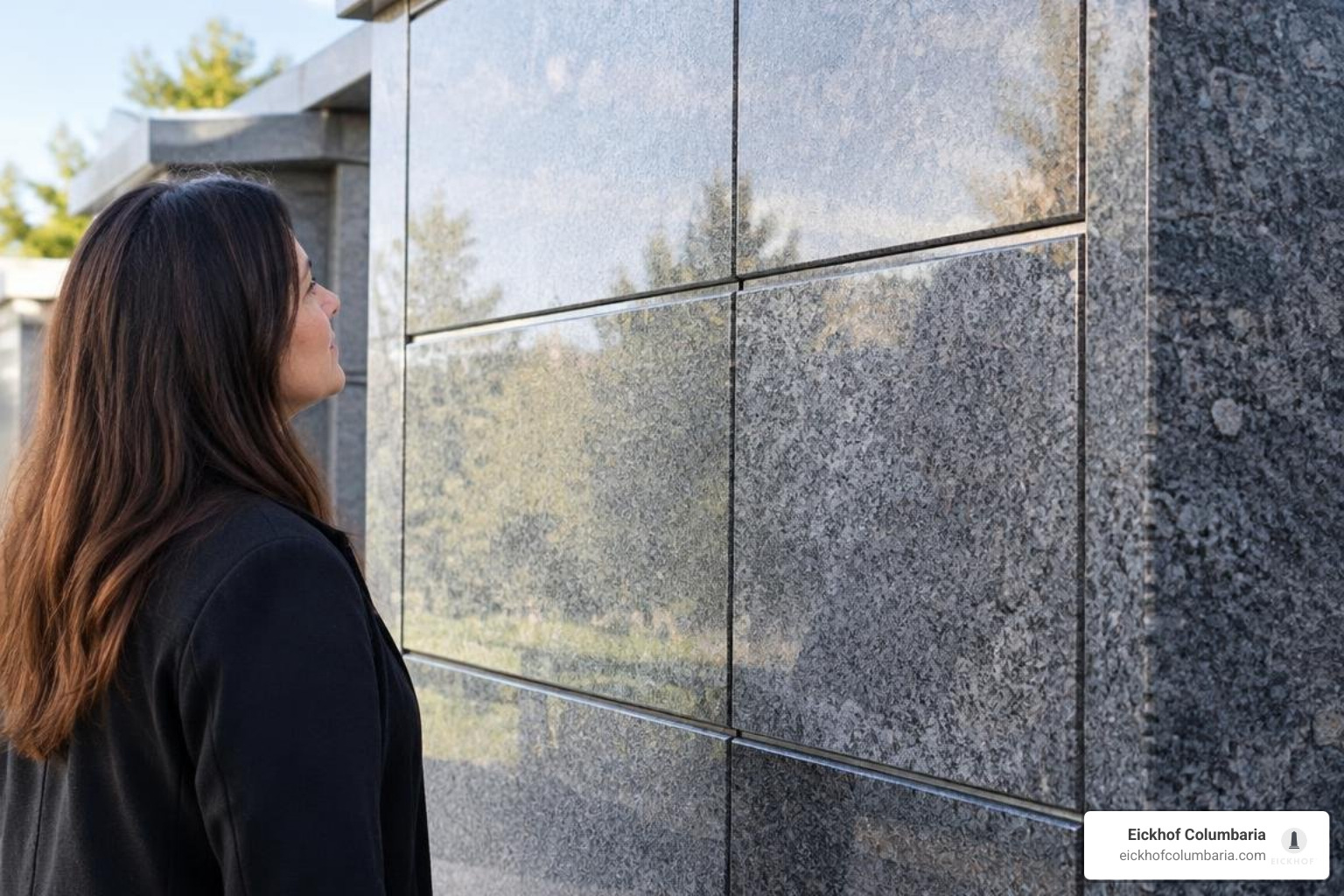
Modern private mausoleums are built primarily from architectural-grade granite, quarried to resist freeze-thaw cycles, atmospheric pollutants, and moisture. Unlike flat in-ground grave markers that are vulnerable to lawnmowers, foot traffic, and soil shifts, a private mausoleum stands as a prominent, dignified monument that requires minimal surface upkeep.
Preservation and Protection in Above-Ground Burial in a Private Mausoleum
A primary reason families choose above-ground burial in a private mausoleum is the superior preservation and protection it offers. In-ground interments place vaults directly in the dirt, where shifting earth, subterranean water tables, and high moisture levels can impact the site over decades.
Private mausoleums eliminate direct ground contact through engineered protective measures:
- Moisture and Flood Resistance: Raised structural foundations keep crypts elevated safely above surface water and local water tables, preventing flood-related damage.
- Hermetic Crypt Sealing: Each casket chamber is lined with concrete or polymer barriers, sealed with heavy-duty inner shutters, and finished with exterior granite panels.
- Engineered Ventilation: Specialized one-way breather vents and charcoal air filtration systems allow internal gases to safely equalize and dissipate while preventing moisture, pests, and external air from penetrating the crypt.
- Concealed Hardware: Advanced stone-mounting systems secure granite crypt panels using hidden, corrosion-proof aluminum or stainless steel hardware, preventing exterior tarnishing and tampering.
Environmental and Land-Use Advantages
As metropolitan cemeteries face increasing land scarcity, private above-ground structures maximize space efficiency. Stacking crypts vertically allows multiple family members to be interred within a single structural footprint that would otherwise require several adjacent ground plots.
Furthermore, above-ground entombment reduces continuous soil disruption. Because the structure is built once, there is no need for heavy excavation machinery to dig graves for every subsequent family burial. This preserves local turf and root systems, while precision-cut granite and stone provide an environmentally clean, non-leaching resting place.
Integrating Cremation Niches into Above-Ground Burial in a Private Mausoleum
Modern families rarely share identical end-of-life preferences; some members choose traditional casket burial, while others choose cremation. A private mausoleum easily accommodates both within the same monument.
A clear walkthrough of columbarium structures illustrates how dedicated niche assemblies are built directly into granite walls. When designing private family estates, incorporating custom interior or exterior urn spaces allows every relative to rest together. Learning about cemetery niche design features ensures your private estate blends casket crypt shutters with secure, beautifully finished niche fronts.
Cost Considerations: Private Mausoleums vs. Alternative Burial Methods
Building a custom private mausoleum is a premier investment that consolidates generations of memorial expenses into one upfront asset. While the initial investment is higher than purchasing a single ground plot, establishing a multi-crypt private mausoleum can offer long-term financial clarity by eliminating recurring opening, closing, vault, and headstone purchases for each family member.
| Memorial Option | Typical Initial Cost Range (USD) | Long-Term Maintenance & Care | Capacity / Land Efficiency |
|---|---|---|---|
| Private Family Mausoleum | $20,000 – $100,000+ (Custom) | Funded via upfront perpetual care trust; minimal stonework upkeep | High (vertical multi-crypt stacks and integrated urn niches) |
| In-Ground Earth Burial (Single Plot) | $3,000 – $15,000 per plot | Annual cemetery upkeep fees, vault fees, recurring excavation charges | Low (requires separate land parcels for each family member) |
| Community Mausoleum (Shared) | $2,190 – $8,000 per crypt | Covered under shared cemetery endowment | Medium (shared public building footprint) |
| Columbarium Niche (Cremation Only) | $1,000 – $4,000 per niche | Included in initial niche purchase or perpetual fund | Very High (ultra-compact vertical urn placement) |
Note: Costs reflect general industry estimates as of 2026. Custom engineering, rare granite selections, and ornate architectural features can increase custom mausoleum prices.
Factors That Influence Construction and Interment Costs
Several variables impact the overall budget for a private mausoleum estate:
- Material Selection: Domestic gray or pink granites are generally more accessible, whereas imported black, blue, or red granites with complex veining require higher material investments.
- Capacity and Configuration: A two-crypt garden sarcophagus requires fewer structural supports than an 8-crypt walk-in vestibule featuring a portico and interior seating.
- Architectural Elements: Bronze entry doors, custom stained-glass clerestories, relief carvings, and family crest engravings require specialized artisans.
- Pre-Planning Incentives: Many cemeteries and memorial developers offer pre-planning credits (often ranging up to $1,495 toward space development), allowing families to lock in current construction rates before inflation.
- Urn Integration: Reviewing resources on choosing a cremation niche and crypt options can help families determine how many cremation spaces to include alongside traditional casket crypts to optimize construction budgets.
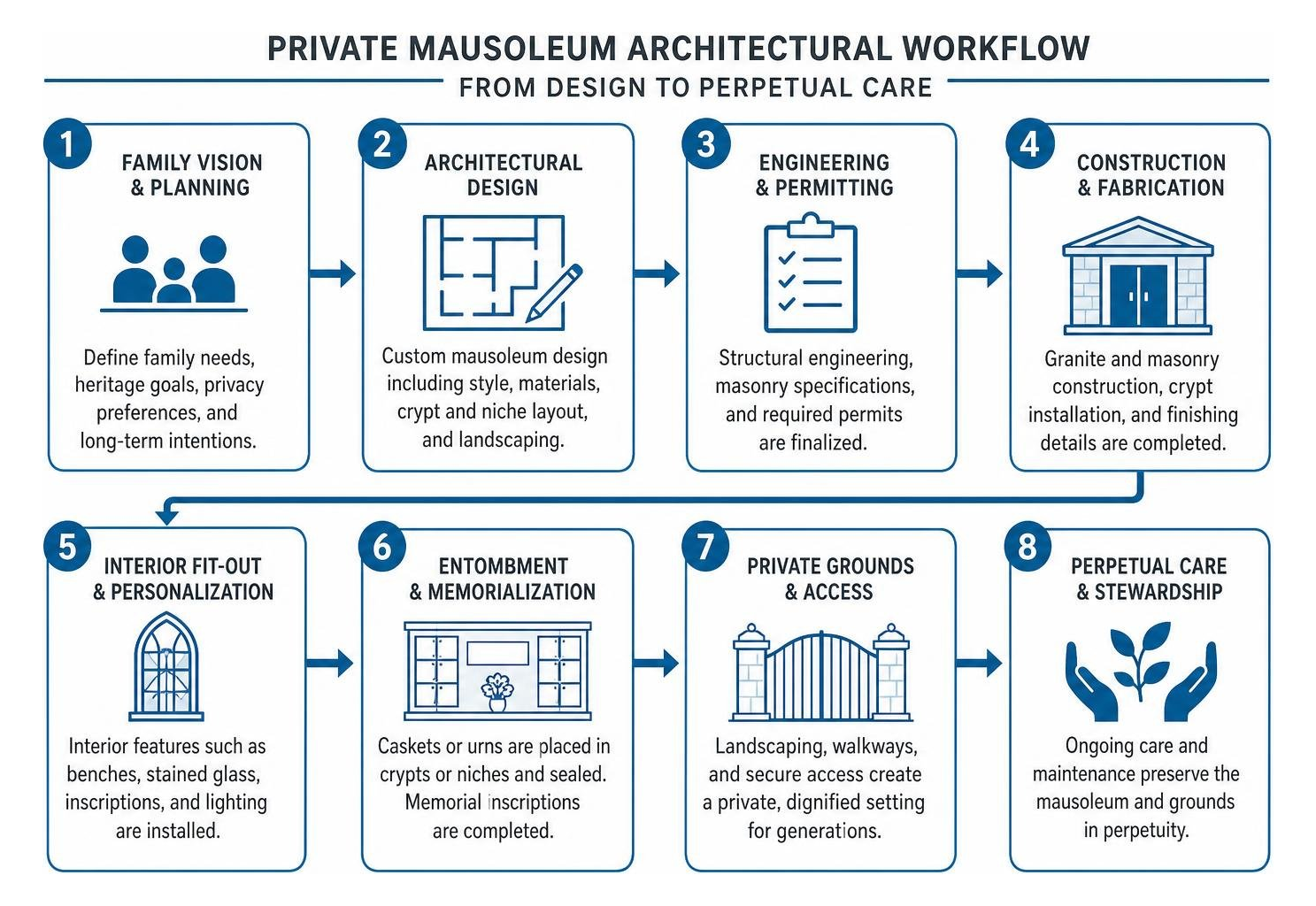
Step-by-Step Guide to Planning a Private Mausoleum Burial
Constructing a private family mausoleum requires coordinated engineering, legal diligence, and clear architectural vision. Pre-planning this process ensures that every regulatory standard is met long before the structure is needed.
- Evaluate Family Needs and Capacity: Determine how many family members will be interred, identifying the required balance between casket crypts and cremation niches.
- Select and Purchase Cemetery Property: Coordinate with cemetery administration to select an estate plot that permits private construction and meets structural foundation guidelines.
- Architectural Design and Engineering: Work with stone engineers and architects to draft blueprints, select granite finishes, and verify ventilation and drainage configurations.
- Obtain Permits and Approvals: Submit architectural plans to municipal building departments and cemetery governing boards to ensure compliance with local zoning and height bylaws.
- Foundation and Structural Installation: Pour a reinforced, deep-frost concrete foundation slab before assembling the pre-cut granite panels and interior crypt systems.
- Establish Perpetual Care Documentation: Finalize trust agreements with the cemetery to guarantee perpetual grounds maintenance, stone washing, and landscape care.
Cemetery Policies, Zoning, and Perpetual Care Agreements
Before breaking ground, families must review cemetery bylaws and local zoning rules:
- Lot Boundaries and Setbacks: Cemeteries maintain strict regulations regarding how close a private building can sit relative to pathways, trees, and adjacent family plots.
- Height and Sizing Limits: Maximum exterior height restrictions ensure private structures complement the overall cemetery landscape.
- Perpetual Care Endowments: Most cemeteries require a designated percentage (often 10% to 15%) of the construction value to be placed into an irrevocable perpetual care trust fund. This fund generates interest that pays for continuous groundskeeping, roof inspections, and exterior stone cleaning over the life of the cemetery.
Personalization and Architectural Customization
A private family mausoleum serves as a permanent architectural legacy. Families can personalize both the exterior facade and interior chambers to celebrate their shared heritage:
- Carved Family Crests and Epitaphs: Deep-relief sandblasting, hand-etched portraits, and bronze lettering create personal tributes on exterior pediments and crypt fronts.
- Stained-Glass Artistry: Walk-in vestibules often feature custom stained-glass windows or clerestories that illuminate interior marble benches with warm, colorful light.
- Artisan Bronze Gates: Hand-forged bronze doors and entry gates provide dependable physical security while adding classic Old-World character.
- Interior Materials: Polished marble flooring, granite flower vases, and integrated bronze medallion plaques create a peaceful environment for family visits.
Frequently Asked Questions About Private Mausoleums
How does ventilation work in an above-ground private mausoleum crypt?
Modern crypt ventilation systems rely on internal air passages and one-way valves connected to each sealed crypt chamber. These channels route air through activated charcoal filters before venting through discreet roof or wall outlets. This design allows air pressure to equalize naturally, prevents condensation build-up, filters all odors, and keeps external humidity, rainwater, and pests out of the crypt.
Can a private mausoleum accommodate both caskets and cremated remains?
Yes. Custom private mausoleums are frequently designed as hybrid resting places. They can combine traditional horizontal casket crypts with dedicated cremation columbarium niches built into the interior walls or outer granite facades. This flexibility allows each family member to choose their preferred method of interment while resting together in the same estate.
How do private mausoleum maintenance responsibilities work over time?
Long-term maintenance is managed through perpetual care agreements established with the cemetery during initial planning. The cemetery grounds staff oversees routine upkeep, such as lawn mowing, leaf removal, tree trimming, and basic structural washing. Deep structural preservation—such as repointing stone joints or repairing bronze hardware—is funded by the perpetual care endowment established during the building’s construction.
Conclusion
Choosing a private family mausoleum provides an enduring tribute that unites generations within a single, secure monument. Above-ground entombment shields loved ones from ground moisture, reduces long-term land disruption, and provides a peaceful, private sanctuary for family visitation.
At Eickhof Columbaria, we bring over three decades of engineering expertise to crafting custom granite resting places. By utilizing our proprietary concealed-hardware stone systems, we build clean, timeless columbaria and cremation niche integrations that honor family legacies without exposed, tarnishing brackets. Whether designing a freestanding multi-generational mausoleum or exploring personalized resting places beyond traditional in-ground burial, our team delivers turnkey precision to create enduring memorials. Contact our specialists today to discover how custom above-ground architecture can preserve your family heritage for generations to come.