

How Caskets Are Placed in a Mausoleum
Cemetery staff place a casket in an enclosed space called a crypt. They first confirm the burial records and prepare the crypt. Then they use a lift or rollers to guide the casket inside, check its position, and close and seal the crypt front. The exact equipment and sealing method depend on the mausoleum and cemetery rules.
This above-ground process keeps the casket in a dedicated chamber rather than a grave. The sections below explain each step, along with crypt layouts, casket requirements, and costs.
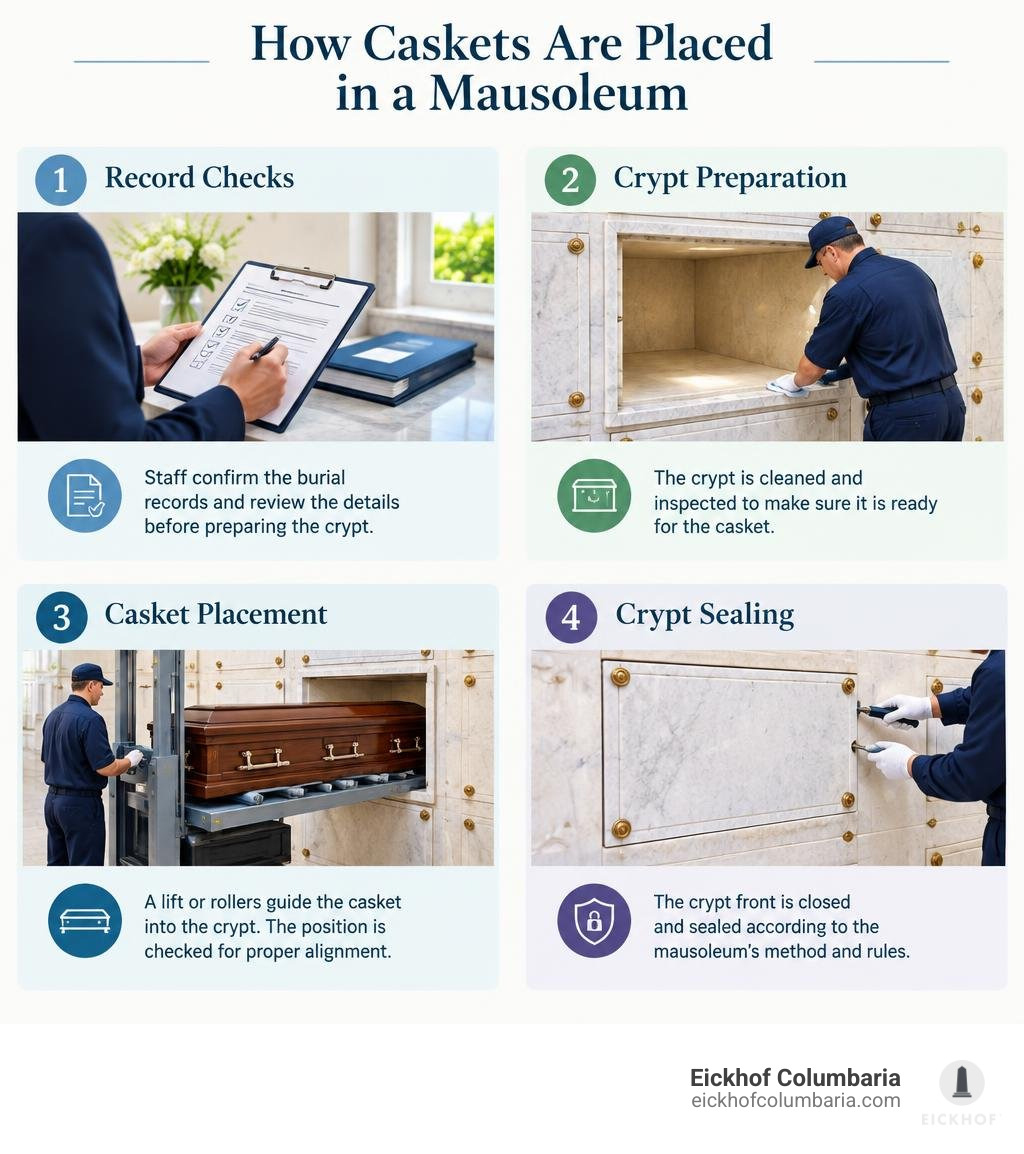
Basic how are caskets placed in a mausoleum vocab:
Understanding Mausoleums, Crypts, and Columbaria
Above-ground entombment is an enduring tradition dating back to 350 B.C. with the iconic Mausoleum at Halicarnassus. Today, modern mausoleums provide dry, dignified, climate-controlled environments for families choosing resting places outside traditional earth burial. Understanding above-ground wall burial for cremated and casketed remains begins with recognizing the distinct structures cemeteries build to house departed loved ones.
A mausoleum is a permanent, above-ground building constructed from reinforced concrete, structural steel, and natural stone (such as granite or marble). These structures house individual horizontal compartments called crypts designed to hold full-body caskets.
Public community mausoleums offer shared memorial spaces for hundreds of individuals within indoor chapels or outdoor garden walkways. In contrast, private family mausoleums serve as exclusive, walk-in memorial estates for multiple generations of a single family.
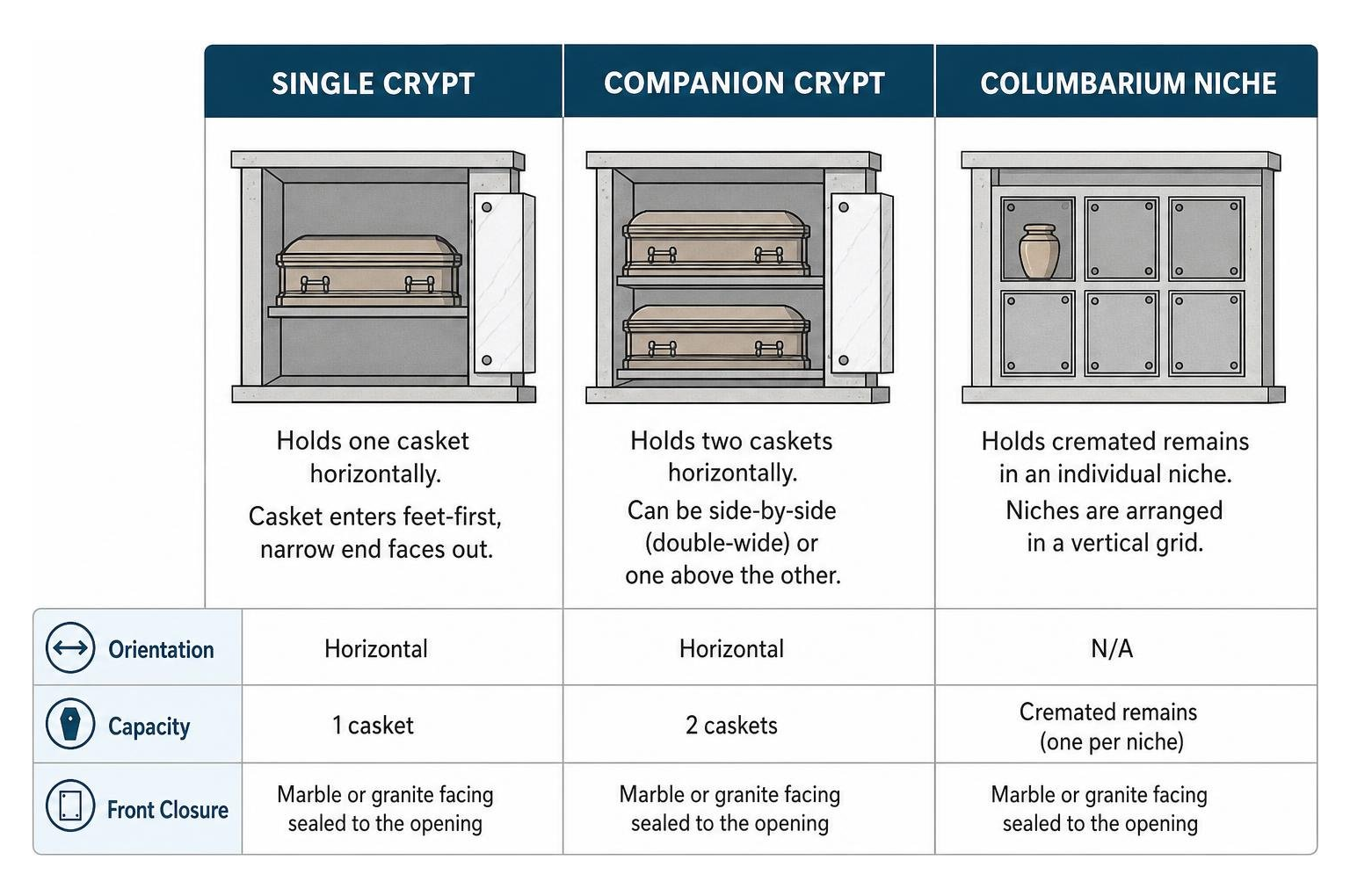
Crypt Configurations: Single, Companion, and Family Crypts
Mausoleum crypts are engineered to optimize space and accommodate different family preferences:
- Single Crypts: Designed to hold one casket horizontally. The casket enters feet-first, with the narrow end facing out toward the corridor.
- Companion Crypts (End-to-End / Tandem): A single-width chamber built twice as deep to house two caskets end-to-end behind one outer faceplate.
- Side-by-Side Companion Crypts: Two adjacent horizontal spaces that share a single wide faceplate, keeping partners alongside each other.
- Couch Crypts: Designed with the broad lengthwise side of the casket facing outward. These offer a wide profile and are common in private family walk-in mausoleums.
- Family Chambers: Multi-tier custom rooms within private mausoleums arranged to receive caskets across generations.
Mausoleum Crypts vs. Columbarium Niches for Cremation Urns
With the U.S. cremation rate reaching 60.5% in 2023 according to the Cremation Association of North America and continuing its upward climb, cemeteries have evolved to offer comprehensive cremation memorialization. Understanding the distinction between full-body crypts and cremation niches is essential:
- Crypts: Measure approximately 2.5 feet high, 3 feet wide, and 7.5 to 8 feet deep. They are engineered to bear the significant weight of steel or hardwood caskets.
- Columbarium Niches: Typically measure 12 inches by 12 inches by 12 inches. These compact compartments house cremation urns containing processed remains (inurnment).
Many modern mausoleums integrate dedicated columbarium walls directly inside their corridors. While urns are occasionally placed inside a casket crypt, specialized columbarium niches provide a more cost-effective option for cremation memorialization and above-ground alternatives.
How Are Caskets Placed in a Mausoleum: The Step-by-Step Entombment Process
Placing a casket into a concrete crypt requires specialized equipment, strict verification standards, and careful mechanical execution by trained cemetery technicians.
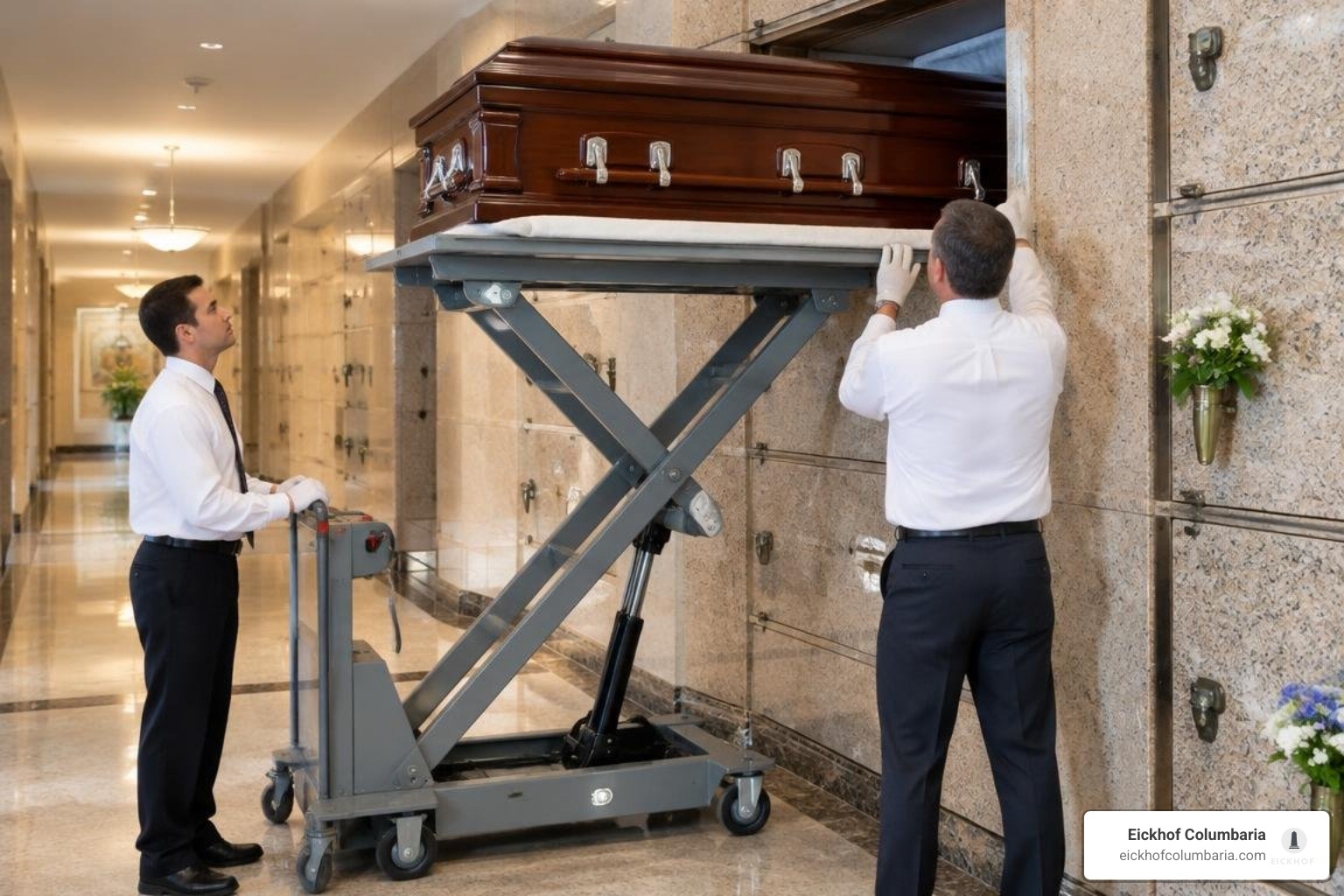
Preparing the Crypt: How Are Caskets Placed in a Mausoleum Safely
Before a funeral committal service begins, cemetery personnel prepare the crypt space:
- Record and Chain-of-Custody Verification: Staff cross-reference cemetery ownership records, death certificates, and ID tags attached to the casket to confirm exact crypt coordinates.
- Faceplate Removal: The exterior decorative marble or granite shutter is removed using specialized suction cups or non-marring tools to protect the stone finish.
- Interior Inspection: Technicians ensure the reinforced concrete chamber is clean, level, and dry, and verify that passive rear ventilation pathways are clear.
- Hydraulic Scissor Lift Setup: For crypts located above eye level (tiers 3 through 6), a hydraulic lift with directional transfer rollers is locked into position beside the open crypt aperture.
Sliding the Casket and Positioning Crypt Liners
The physical entombment follows a clear mechanical sequence:
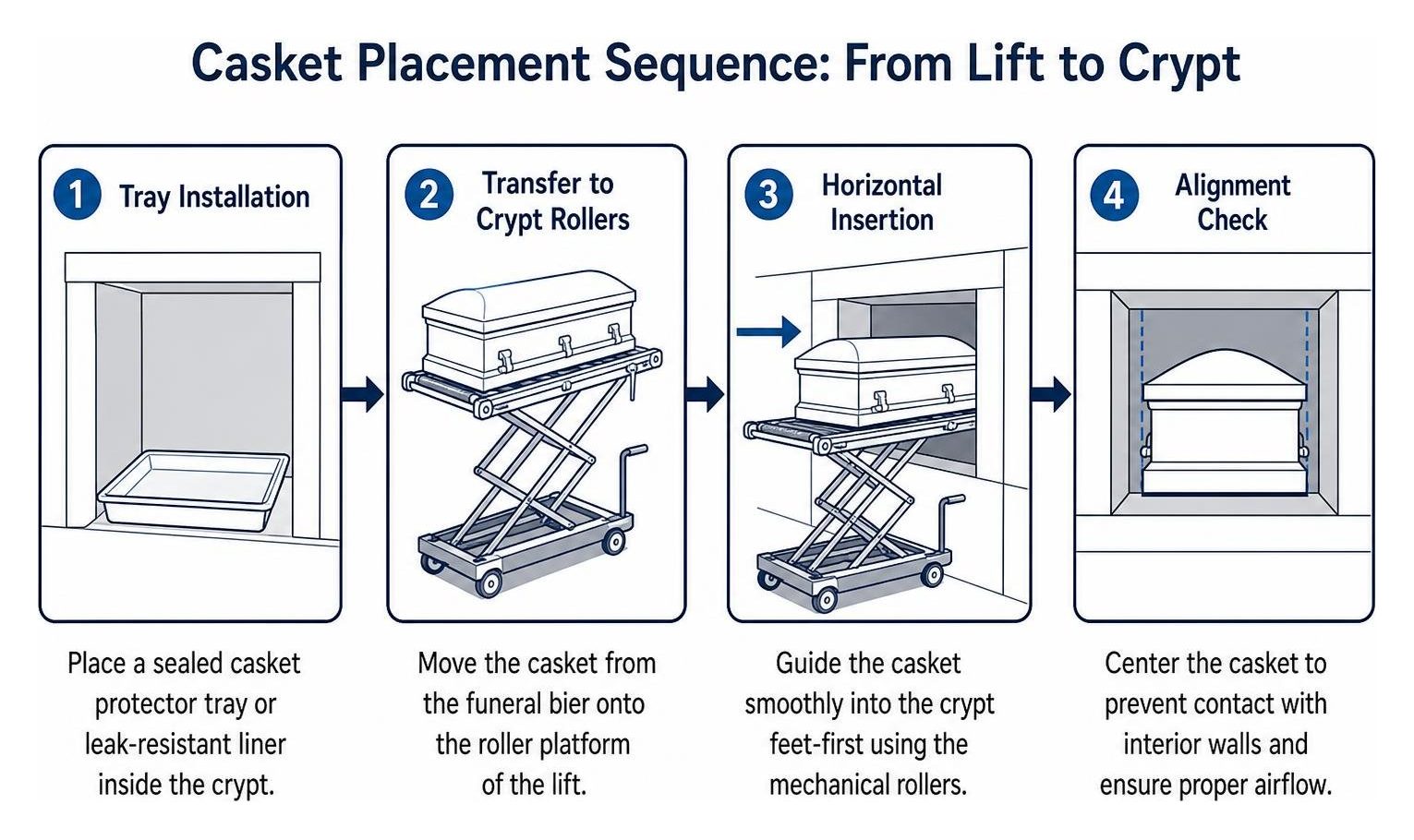
- Tray Installation: Many jurisdictions and cemeteries require a sealed casket protector tray or leak-resistant polyethylene liner placed beneath the casket inside the crypt.
- Transfer to Crypt Rollers: Technicians transfer the casket from the funeral bier onto the roller platform of the lift.
- Horizontal Insertion: Staff guide the casket smoothly into the crypt feet-first. The mechanical rollers minimize friction, eliminating jarring motions.
- Alignment Check: The casket is centered to prevent contact with the interior walls, allowing uniform airflow around the unit.
Sealing and Personalizing the Crypt Front
Once the casket is positioned inside, cemetery staff seal the compartment:
- Inner Sealant Plate (Closure Plate): A heavy-duty concrete, aluminum, or durable composite inner shutter is set into the crypt opening.
- Airtight Joint Sealing: Technicians apply specialized silicone caulk or butyl sealant around the perimeter of the inner plate, creating a secure barrier.
- Decorative Outer Shutter: The final granite or marble faceplate is mounted over the sealed closure plate using bronze or stainless steel mounting rosettes.
- Personalized Inscription: The faceplate is inscribed with the individual’s name, dates of birth and passing, and customized epitaphs, emblems, or bronze memorial plaques.
Crypt Requirements, Casket Selection, and Environmental Controls
Entombment conditions differ significantly from in-ground burial. Without direct earth contact, the crypt’s internal environment requires specific casket standards and engineering safeguards.
Caskets chosen for mausoleums include:
- Hardwood Caskets: Oak, cherry, mahogany, and walnut provide classic aesthetics and natural breathability.
- Metal Caskets: 18-gauge or 16-gauge steel, bronze, and copper offer lasting structural strength.
Note on Gasketed “Sealer” Caskets: Many modern metal caskets feature rubber sealing gaskets designed to lock out air and moisture. In an above-ground crypt, biological processes release natural gases. If sealed completely, pressure can build inside the casket. Modern mausoleum regulations often require unsealed gaskets or the use of protective crypt trays with integrated pressure-relief valves.
Ventilation and Drainage: How Are Caskets Placed in a Mausoleum for Long-Term Preservation
Proper airflow management prevents moisture accumulation and odor buildup inside public mausoleums:
- Passive Rear Air Ducts: Crypts connect to internal vent stacks that pull air through the rear of the chamber toward exhaust channels on the building roof.
- Bio-Filter Airflow: Vent systems route internal air through active carbon filtration units to eliminate odors before expulsion.
- Base Slope and Fluid Runoff: Crypt floors are cast with a slight downward slope toward the back, leading to drainage channels that direct moisture away from public corridors.
Under these climate-controlled, low-moisture conditions, remains undergo gradual desiccation rather than standard ground decomposition. This process is explained in detail in our article on resting above ground in mausoleums.
Multiple Casket Layouts in Companion Crypts
When couples or family members share a companion crypt, placement requires distinct operational steps:
- Tandem (End-to-End): The first casket is pushed to the back of the chamber. When the second entombment occurs, staff remove the outer shutters, slide the second casket into the front space, and reseal the unit.
- Side-by-Side: The chamber holds two caskets laterally, separated either by a low concrete divider or seated on independent structural trays.
Mausoleum Entombment Costs and Considerations
Choosing above-ground entombment involves evaluating upfront costs against long-term maintenance needs.
| Feature / Fee Component | Mausoleum Crypt (Single Casket) | Columbarium Niche (Cremation Urn) | Traditional In-Ground Burial |
|---|---|---|---|
| Initial Purchase Price | $7,000 – $8,000 (Average) | $500 – $3,000 | $1,000 – $5,000 (Plot only) |
| Outer Vault Required? | No (Crypt serves as vault) | No | Yes ($1,000 – $2,500 extra) |
| Opening / Closing Fees | $800 – $1,800 | $200 – $600 | $800 – $2,000 |
| Perpetual Care Fund | Usually Included | Usually Included | Varies by cemetery |
| Typical Total Range | $4,000 – $10,000+ | $700 – $3,600+ | $3,500 – $9,500+ |
For a broader evaluation of structure types, explore the complete guide to above-ground mausoleum options.
Advantages and Disadvantages of Above-Ground Entombment
Advantages:
- Year-Round Weather Protection: Indoor chapel mausoleums provide comfortable, heated, and air-conditioned spaces for visits during rain, snow, or heat.
- Land Conservation: Vertical crypt stacks accommodate multiple individuals on a smaller footprint than sprawling ground cemetery plots.
- Cleanliness: Crypt chambers eliminate concerns about water tables, ground settling, mud, or landscape erosion.
- Simplified Preparation: Families avoid purchasing separate outer concrete burial vaults, which are required for standard ground graves.
Disadvantages:
- Higher Initial Crypt Cost: Upper tiers and premium eye-level (“heart-level”) crypts carry higher price points than basic in-ground plots.
- Placement Rigidity: Once sealed, reopening a crypt requires specialized technicians and formal legal authorization.
Frequently Asked Questions About Mausoleum Placement
Can an urn share a mausoleum crypt with a casket?
Yes. Many cemeteries allow a cremation urn to be placed inside a companion casket crypt, subject to space availability and cemetery bylaws.
Is embalming legally required for mausoleum burial?
Embalming is not mandated by federal law, but many cemetery bylaws require it for above-ground entombment to slow decomposition and manage biological odors. Where embalming is omitted due to religious or personal preferences, cemeteries generally require a heavy-gauge, sealed protective liner tray.
Can a mausoleum crypt be reopened after placement?
Yes, a crypt can be reopened, but it requires legal disinterment permits, state health department approvals, and written consent from all legal heirs. Reopening is typically done to add a second companion casket or relocate remains.
Conclusion
Understanding how caskets are placed in a mausoleum helps clarify the engineering, care, and reverence behind above-ground entombment. From strict record checks and hydraulic lift maneuvering to durable inner seals and personalized stone faceplates, every step provides permanent protection for departed loved ones.
As cemeteries expand their above-ground offerings, many complement casket crypts with dedicated columbarium walls to support growing cremation preferences. At Eickhof Columbaria, we design, fabricate, and install premium, handcrafted stone columbarium systems with concealed hardware for cemeteries, churches, and civic memorials nationwide.
To explore the right memorial structure for your community or family, explore our guide to understanding resting places beyond traditional in-ground burial and contact our team to discuss customized memorial solutions.