

Columbarium Inscriptions: Clear Rules, Lasting Meaning
Effective columbarium inscriptions do two jobs at once: they identify the person memorialized and preserve a consistent, readable appearance across the whole niche wall. Start with a standard format – name, birth and death years, and one short phrase or approved symbol – then apply the same font, letter size, spacing, and date style to every niche.
For cemetery and church facilities managers, the key is to set these rules before niche sales begin. Clear standards reduce proofing delays, make later companion inscriptions easier to match, and help the columbarium remain dignified for decades.
As cremation becomes more common, permanent niche memorials give families a defined place to visit while using far less space than traditional burial. But a niche front is small and permanent. Every word, line break, and lettering choice needs review before engraving begins.
This guide explains how to create inscription standards that balance family personalization with durable materials, practical maintenance, and visual harmony across the memorial.
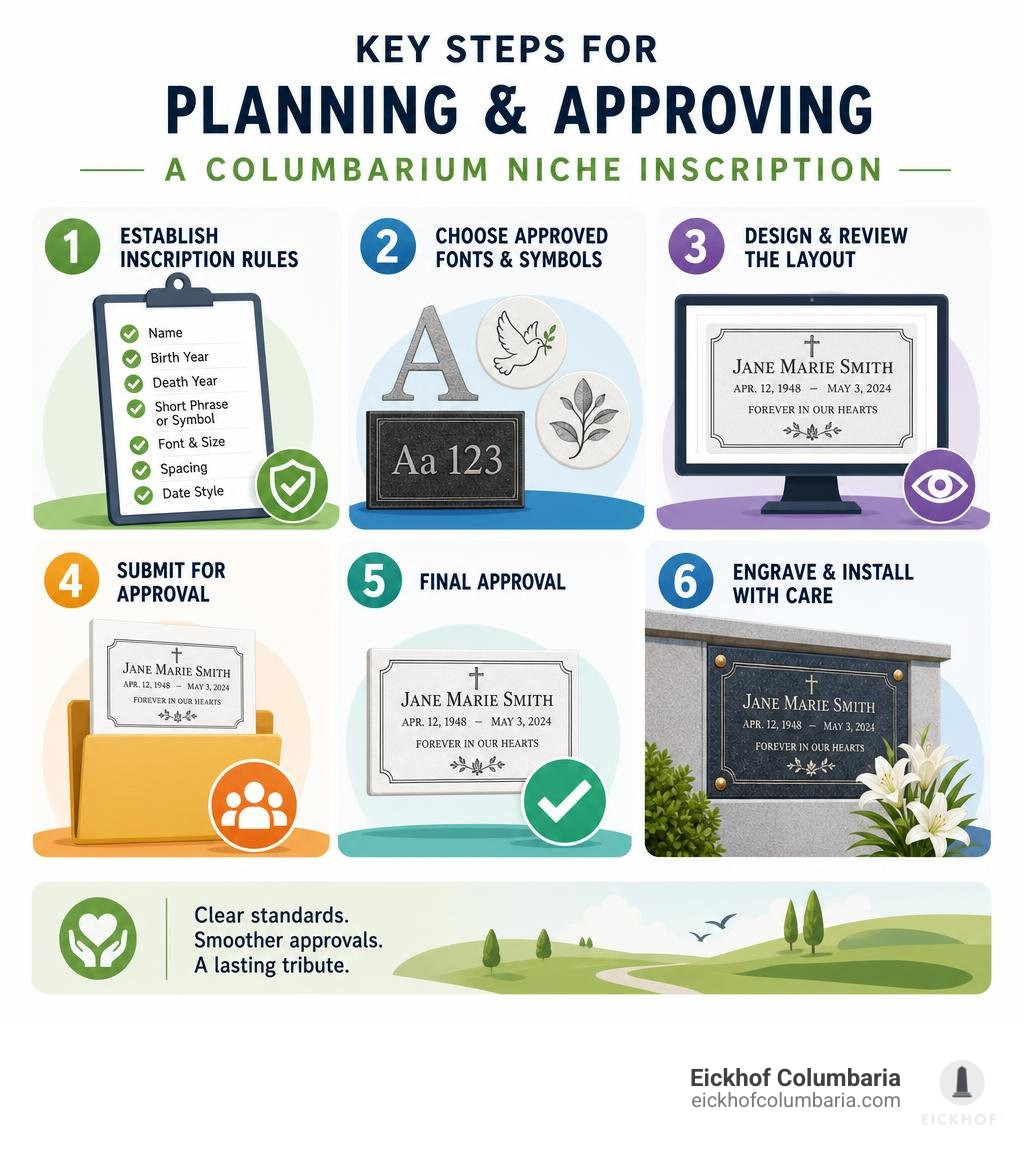
Quick columbarium inscriptions definitions:
Essential Elements and Standards for Columbarium Inscriptions

The transition toward cremation has transformed how we approach modern memorial spaces. With the U.S. cremation rate reaching 61.8% in 2024 and projected to climb past 63.4% in 2025 (compared to just 31.6% for traditional in-ground burial), more families than ever are choosing above-ground resting places.
According to data from the National Funeral Directors Association, the 2023 national median cost of a funeral with cremation was $6,280, compared to $8,300 for a funeral with viewing and burial. Furthermore, among individuals who express a preference for cremation, 37.8% choose interment in a cemetery niche or columbarium, while 37.1% keep an urn at home and 33.5% opt for scattering.
As families evaluate their memorial choices, understanding resting places beyond traditional in ground burial helps put the role of the columbarium into perspective. Unlike a sprawling cemetery plot where headstones vary widely in size and shape, a columbarium presents a unified architectural façade.
Because hundreds of individual niche covers sit inches apart on a shared wall, every letter cut into the stone contributes to the overarching aesthetic. Striking a balance between honoring individual identity and maintaining collective dignity requires a clear framework of essential elements.
Anatomy of a Niche Inscription
A successful niche inscription communicates deep significance within tight physical boundaries. While traditional ground monuments offer expansive granite faces for lengthy poems and elaborate artwork, a standard granite or bronze niche front (typically ranging from 8×8 inches to 12×12 inches) requires thoughtful editing.
The time-tested standard follows a structured three-line format:
- Primary Name Line: The full legal name or preferred recognizable name of the deceased.
- Date Line: The years of birth and death (e.g.,
1948 – 2026) or full calendar dates (March 14, 1948 – August 2, 2026). - Personal Tribute or Symbol: A concise phrase, military branch insignia, faith emblem, or fraternal icon.
Managing names on stone involves specific administrative rules. Nicknames, maiden names, prefixes (such as Dr., Rev., or Capt.), and generational suffixes (Jr., III) can quickly cause line crowding. A standard policy helps families navigate these choices:
- Prefixes and Titles: Place formal civilian or ecclesiastical titles on a dedicated line above the name or integrate them immediately preceding the first name in a slightly reduced point size.
- Maiden Names: Center the maiden name within parentheses or include it as a middle name to preserve lineage clarity.
- Nicknames: Place recognizable names in quotation marks between the first and last name (e.g., Robert “Bob” Miller). If space is constrained, our general inscription info outlines how keeping the full legal name in official cemetery records while using the familiar name on the stone provides a clean solution.
- Short Phrases: Choose words that reflect authentic speech rather than ornate, generic filler. Phrases like “Grace and Courage,” “In God’s Care,” or “Forever Loved” maintain dignity without crowding the stone.
Historical Precedents of Columbarium Inscriptions
Communal cremation memorialization is far from a modern invention. The architectural term columbarium originates from the Latin word for “dovecote,” because the neat grids of recessed wall niches closely resembled nesting boxes for doves.
In Augustan Rome, high-capacity subterranean columbaria were established by trade guilds, domestic staff associations, and burial clubs. These collective tombs allowed individuals of modest means—such as freedmen, domestic staff, and artisans—to secure an eternal resting place with lasting dignity. Epigraphic research reveals that in Roman columbarium tombs, 21% of the deceased were commemorated as freedmen, approximately 5% as slaves, and less than 2% as freeborn citizens.
Unlike elite Roman monuments that faced outward along busy public thoroughfares to broadcast wealth and political status, historical Roman epitaphs within columbaria faced inward toward a semi-private, reflective space.
Space constraints were as real in antiquity as they are today. Ancient stonecutters developed formulaic abbreviations to save room on compact marble tablets:
- D.M. (Dis Manibus): “To the spirits of the departed,” a universal opening dedication.
- H.F.C. (Heres faciundum curavit): “The heir took care of having this made,” identifying the family member responsible for commissioning the stone.
From the late 4th-century BC Greek columnar grave markers in Athens to ancient commemorative epigraphy found on 3rd-century AD Phrygian doorstones, families have consistently recorded patronymics, life relationships, and terms of endearment within disciplined layouts. Modern columbarium standards preserve this ancient tradition: providing equal, dignified remembrance through orderly, beautiful craftsmanship.
Cemetery Regulations, Space Constraints, and Visual Cohesion
A columbarium is an architectural whole, not a collection of isolated plaques. When individual families are granted unrestricted freedom over font choices, letter heights, raw custom graphics, and layout alignments, the collective wall quickly loses visual harmony. Differences in cut depth, spacing, and unapproved paint finishes create a cluttered, disorganized look that detracts from the memorial’s peaceful atmosphere.
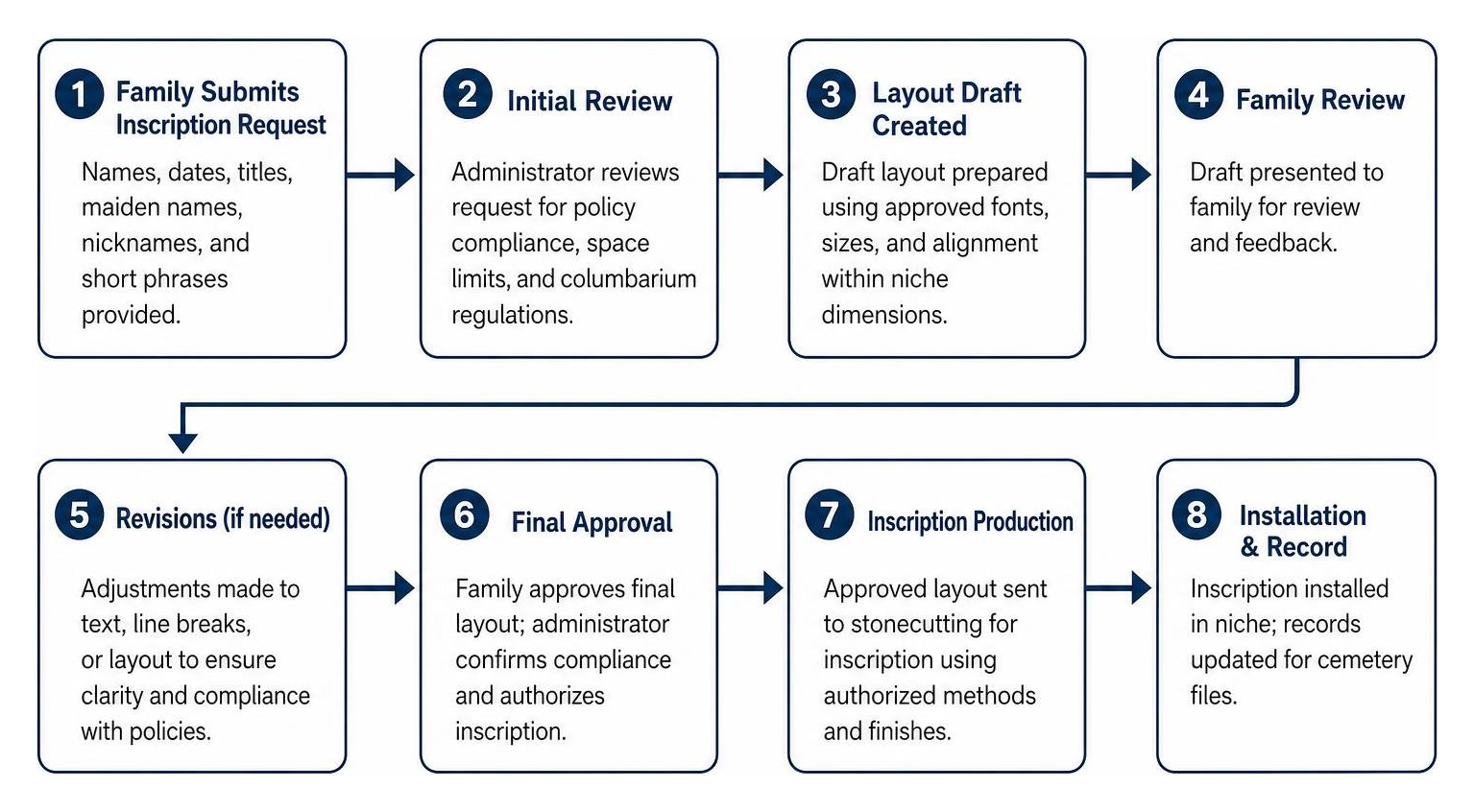
Columbaria maintain architectural integrity over decades when administrators establish clear operational bylaws before the first niche is inscribed. For a broader overview of how these structures serve communities, see our guide on how columbarium memorials explained for families considering cremation balances long-term cemetery planning with family needs.
Single vs. Companion Niche Layouts
One of the most critical structural decisions in columbarium management is defining the layout for single versus companion niches. Single niches hold the cremated remains of one individual, while companion niches accommodate two urns behind a single shared stone faceplate.
To maintain visual balance across the structure, companion faceplates require specialized layout planning:
- Stacked Alignment: The first individual’s full name and dates occupy the upper half of the faceplate, while the second individual’s details occupy the lower half. A shared surname or subtle decorative line often separates the two.
- Side-by-Side Symmetry: Names are placed left and right, with life dates centered directly beneath each respective name.
- Shared Date Line: If space is restricted, simplifying the dates to birth and death years (rather than full calendar months and days) ensures the typography remains large enough to read from standing height.
When companion niches are purchased, the inscription is often completed in two distinct stages years apart. Setting precise typographic standards ensures that when the second name is engraved decades later, the font, incision depth, and highlight color match the original lettering perfectly.
Proper niche hardware also plays a key role during this process; selecting permanent columbarium niche holders that meet cemetery rules allows covers to be detached and re-installed cleanly without damaging surrounding niches.
Readability, Viewing Distance, and Contrast Matching
A columbarium wall is viewed from standing height, typically from a distance of three to six feet. Letters that look adequate on a computer proof can become difficult to read on stone if the contrast between the incised lettering and the polished granite face is too low.
To guarantee high visibility under changing outdoor sunlight and indoor ambient lighting, specialized monument coatings such as Lithichrome Shadow paint are applied directly into the carved stone recesses.
| Granite Shade / Material | Recommended Highlight Color | Engraving Technique Best Practice | Visual Result |
|---|---|---|---|
| Dark Granite (Absolute Black, Charcoal) | Crisp White or Gold | Skin frosted letters or deep V-cut incision | Maximum contrast; high legibility at long distances |
| Light Granite (Barre Gray, Sierra White) | Jet Black or Deep Charcoal | Sunk letters centered inside a frosted panel | Prevents washed-out lettering under direct sunlight |
| Cream & Rose Granite (Colonial Rose, Morning Rose) | Rich Brown, Dark Bronze, or Gold | V-cut incised lettering with shadow highlighting | Warm, traditional contrast that emphasizes stone grain |
| Cast Bronze Faceplates | Polished Raised Letters on Dark Patina | Cast background with hand-burnished relief | Classic architectural depth with natural contrast |
Technical Craftsmanship and Engraving Methods
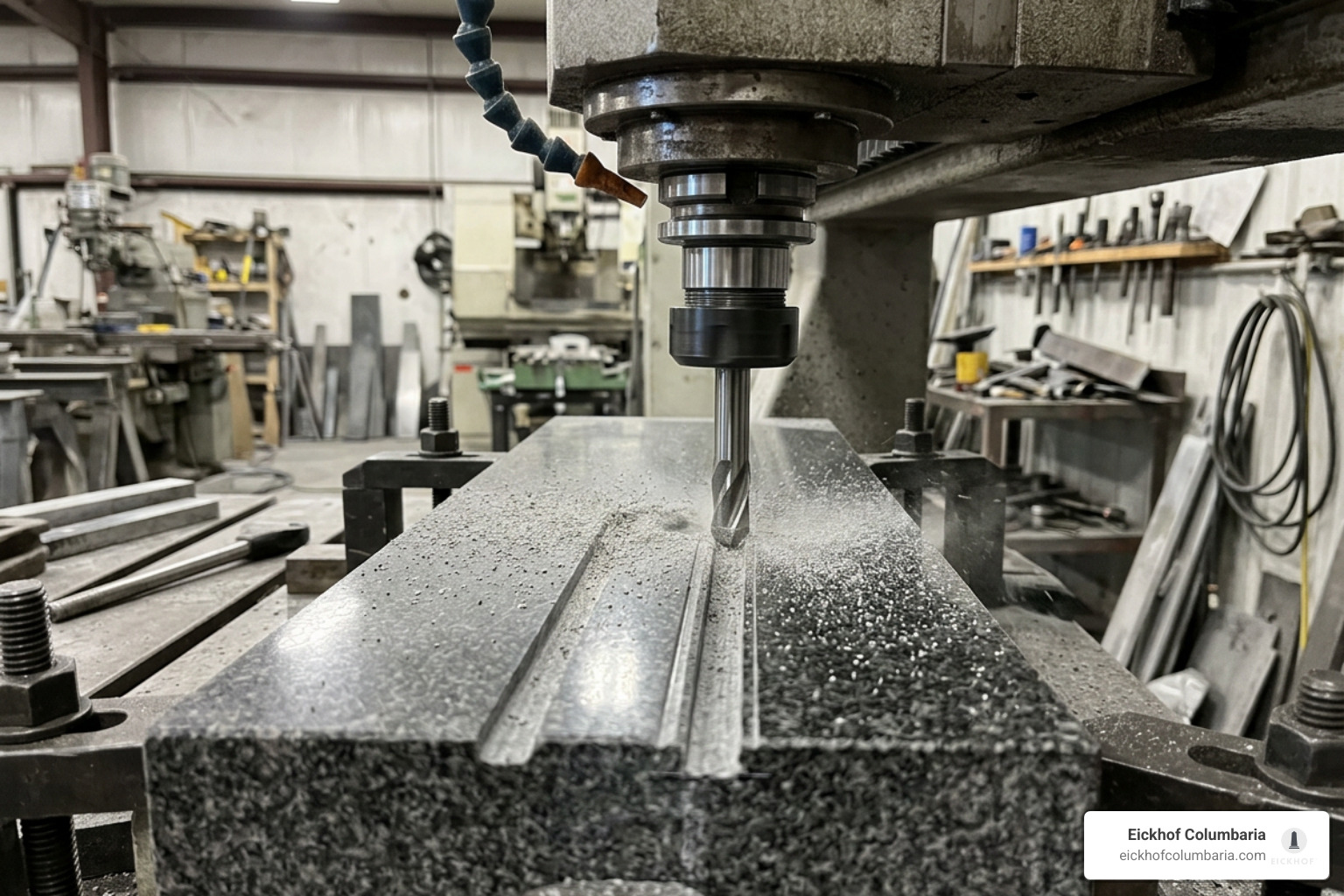
Creating permanent lettering on stone requires precise mechanical execution. The primary methods used for columbarium niche covers include sandblast incision, rotary mechanical diamond carving, and laser etching:
- Deep Sandblast Incision: The standard in memorial stonecraft. A computer-cut rubber stencil is applied to the granite, and high-pressure abrasive media carves sharp, deep channels into the stone. Sandblasting provides the depth required to hold highlighting paint securely over decades of outdoor exposure.
- Laser Etching: Best suited for jet-black granites. A laser beam fractures the polished surface of the stone, creating white micro-fractures. While effective for intricate artwork, portraits, or signatures, laser etching lacks the physical depth of sandblasting and is less visible on lighter or variegated stone types.
- Cast Bronze Relief: For bronze niche fronts, the letters are cast as raised elements directly from the metal mold, then burnished to a bright luster against a dark, oxidized background.
In government veterans’ cemeteries, the National Cemetery Administration transitioned away from surface lithichrome paints on marble in 2009 in favor of deeper, incised mechanical engraving to ensure legibility in perpetuity.
For private, municipal, and church columbaria, deep sandblast engraving paired with factory-applied Lithichrome highlights offers the best combination of readability, weather resistance, and visual elegance. For more details on coordinating stone craftsmanship with niche elements, browse our urns inscriptions guide.
Urn Compatibility and Memorial Coordination
An inscription on the outside of a niche represents only part of a complete memorial plan. The interior chamber must comfortably hold the selected urns without crowding the locking hardware or structural frame.
Standard single niches typically measure 12″ x 12″ x 12″ or 10″ x 10″ x 10″, while companion niches are often configured deeper or wider to accommodate two urns.
When planning a niche, consider these interior dimensions alongside the exterior inscription:
- Container Dimensions: Sheet bronze urns, spun brass vessels, and compact natural stone urns maximize usable interior volume while meeting cemetery material requirements.
- Keepsake Urns and Jewelry: Many families choose to place a primary urn within the columbarium niche while keeping smaller keepsake portions in miniature vessels or memorial jewelry at home.
- Internal Inscriptions: Direct engraving on an interior bronze or hardwood urn can feature intimate personal dedications, nicknames, or extended poetry that might not fit on the exterior niche plate.
Administrative Workflows and Inscription Management
Managing a columbarium wall across multiple generations requires rigorous administrative oversight. Without a standardized system, names added over decades can drift in sizing, kerning, and baseline alignment.
To prevent errors and maintain design standards, columbarium operators benefit from a structured management program:
- Centralized Layout Archives: Standardized templates are stored securely in a digital portal. Every new inscription request is validated against established structural guidelines before fabrication begins.
- Single Approver Workflow: Designating a single cemetery administrator or committee lead to review all requests avoids communication breakdowns and prevents unauthorized format changes.
- Protective Transit Systems: When granite faceplates are inscribed off-site, dedicated, custom-padded shipping containers protect the stone during transit.
- Rapid Turnaround Timelines: Standardizing the engraving process allows niche covers to be picked up, precision-engraved, and re-installed within days, keeping committal services on schedule.
Understanding how management systems affect pricing is also key for facilities managers calculating overall cemetery revenue; see our breakdown of what you will pay for a cremation wall niche for operational cost context.
Proofing and Approving Columbarium Inscriptions
Because stone carving is permanent, proofing errors must be caught on paper before the stencil is cut. A single transposed digit in a birth year or an incorrect letter in a maiden name requires expensive faceplate replacement.
Never accept verbal or handwritten inscription orders over the phone. Every request should be drafted on a standardized digital proof showing the exact letter placement, line breaks, and emblems.
A single designated family representative must sign the proof, confirming all details before engraving begins.
Sustainable Pricing Models and Logistics
Columbarium operators frequently face financial challenges when inscription costs are bundled directly into the initial niche sale price. Due to inflation and long-term labor cost changes, an inscription performed twenty or thirty years after a pre-need niche purchase can cost significantly more than the funds initially allocated.
To ensure long-term financial sustainability:
- Unbundle Inscription Fees: Sell the niche chamber and the eventual inscription service separately, charging the current market rate for engraving at the time of need.
- Fixed Inscription Allowances: If bundling is required by local policy, establish a capped allowance tied to inflation adjustments within the perpetual care trust fund.
- Standardize Emblem and Line Additions: Establish fixed per-character or flat-rate line fees for non-standard additions to keep pricing clear and predictable for families.
Frequently Asked Questions About Niche Lettering
How many characters typically fit on a columbarium niche front?
Most 12″ x 12″ granite niche fronts comfortably accommodate three to four lines of text, with approximately 18 to 22 characters per line (including spaces) using standard 0.75-inch to 1-inch lettering. Companion niche covers generally support six lines of text.
What font is most commonly used for niche engraving?
Optima Bold is the industry standard, chosen by roughly 90% of our clients for its clarity, balanced stroke weight, and durability when cut into granite. Modified Roman is also popular for traditional, classical columbarium installations.
Can inscriptions be added or updated later for a companion niche?
Yes. When the first individual is interred, the stone is engraved with their details while reserving space for the second name. When the companion is placed, the faceplate is removed, engraved using the exact matching font and depth template, and re-installed.
Conclusion
A columbarium wall serves as a lasting tribute to the individuals resting within, offering a peaceful, permanent space for future generations to visit. By establishing clear inscription guidelines—from font selection and stone contrast pairing to disciplined companion layouts and secure proofing workflows—cemetery operators and church leaders can preserve the visual harmony and dignified character of their memorial grounds for decades to come.
Whether you are establishing a new memorial garden or expanding an existing installation, our team provides the handcrafted quality and turnkey guidance needed for a seamless project. Discover how our custom columbaria systems, patented concealed hardware, and dedicated inscription services can support your organization’s vision.